
Wave energy has a new place to face its hardest test: the ocean itself. About 11 kilometres off Oregon, the newly opened PacWave South facility gives developers somewhere to connect experimental machines to the electricity grid and see how they cope with real conditions. Oregon State University marked its opening on 27 August after more than 15 years of work. OSU’s opening announcement.
That sounds less dramatic than a new power station. But for a technology trying to graduate from impressive prototypes to dependable electricity, a properly equipped stretch of sea could be a consequential piece of infrastructure.
A shared socket for wave energy
PacWave South has four offshore testing areas, each connected to shore by a cable capable of carrying five megawatts. Its licence allows up to 20 wave energy converters at once, with a combined maximum export capacity of 20 megawatts. These are the facility’s limits, rather than a statement of electricity currently being produced. National Laboratory of the Rockies’ 10 September update.
For developers, the attraction is practical. A company with a promising machine can use shared infrastructure and an established permitting framework, instead of having to create an entire offshore test site around one design. The US Department of Energy describes PacWave South as the first fully operational, pre-permitted, grid-connected wave testing facility in the continental United States. DOE’s facility announcement.
There is a customer for the eventual electricity, too. Bonneville Power Administration signed a purchase agreement in 2025, and the local utility will distribute power from testing to nearby homes and businesses. DOE’s 1 September announcement said preparations for the inaugural tests were under way. Opening the facility therefore does not establish that a fleet of wave machines is already generating.
The machine has to survive its fuel
Waves provide motion that engineers can turn into electricity. They also impose the conditions the equipment must endure. PacWave’s testing areas sit in roughly 65 to 78 metres of water, exposed to the open Pacific. The National Laboratory of the Rockies describes this as a setting for testing durability, resilience and endurance, alongside the ability to deliver power safely to the grid. NLR’s technical overview.
The useful results will extend beyond the biggest number on a generator’s specification sheet. How consistently a device works, how it responds to rough conditions and how much attention it needs will help determine whether it belongs in a future power project. A successful demonstration needs a record of behaviour over time.
PacWave also supports research into how the technology interacts with marine life and the wider ocean environment. Those observations belong alongside electrical measurements when judging a design’s prospects. OSU’s account of the research programme.
An Australian idea beneath the surface
Australia has its own example of how different wave machinery can look. Carnegie Clean Energy’s CETO design uses a buoy sitting a few metres underwater. Wave motion moves the buoy, and a system called the power take-off converts that movement into electricity. The generating equipment can therefore operate beneath the surface, rather than resembling a row of wind turbines. Carnegie’s description of CETO.
Carnegie has already pursued the shared testing approach in Europe. In April 2025, its subsidiaries signed an agreement for CETO installation and testing at Spain’s Biscay Marine Energy Platform. The agreement covers access to offshore cables and connections as well as an onshore substation. It is evidence of a route into testing; the contract itself is not proof of commercial performance. Carnegie’s BiMEP announcement.
The connection to Oregon is the engineering problem these facilities address: getting a new machine into useful ocean trials without making every developer build the supporting infrastructure from scratch.
The evidence comes after the opening
Wave generators would add another way to produce electricity. Projects such as Australia’s proposed Wala Wala pumped hydro scheme address a different part of the system: storing energy for use later. Both ultimately need to fit the places and networks around them.
PacWave’s immediate contribution is a place to learn which wave designs deserve to go further. The next meaningful news will come from machines in the water, measured electricity onshore and the operating record that connects the two.
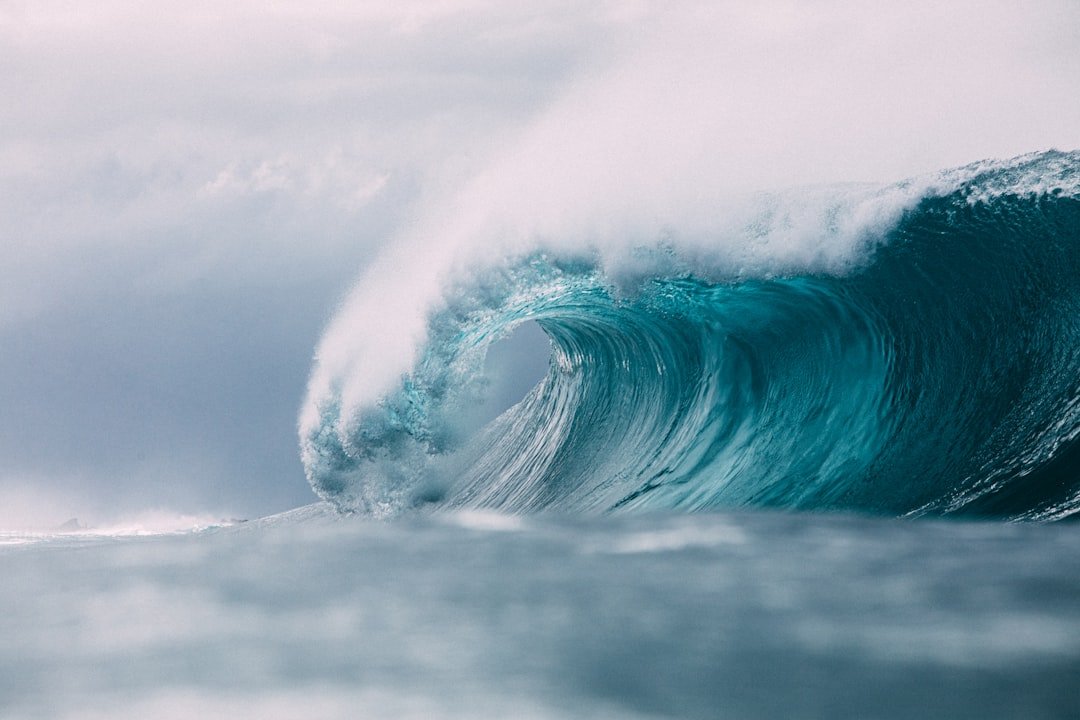
Featured image: Ocean waves, shown for illustration. Photo by Matt Paul Catalano on Unsplash.
Leave a Reply