
These newly identified X-ray sources reveal how the universe can hide an energetic object by putting most of its light somewhere our telescopes struggle to see. Astronomers searching NASA’s Chandra archive have now found 84 objects that appear to exploit that blind spot, showing up at exceptionally low X-ray energies and largely disappearing at higher ones.
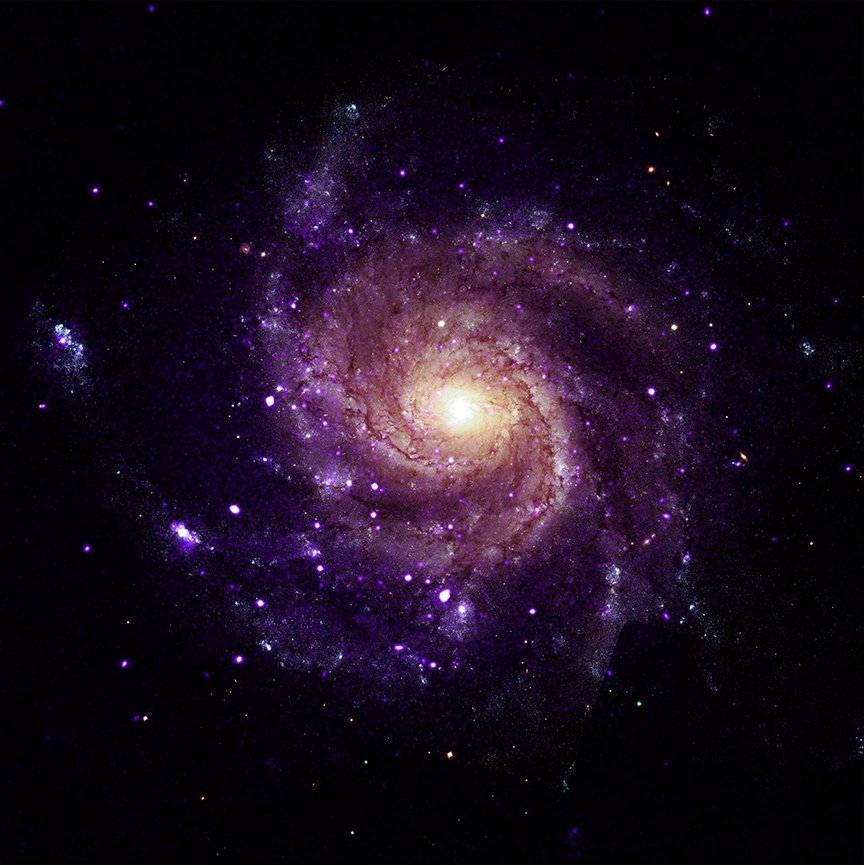
NASA announced the discovery on September 9, 2026. The objects, called hypersoft X-ray sources, were identified in six galaxies, including Andromeda and the Pinwheel galaxy. Researchers found them in both regions of recent star formation and places dominated by older stars. Their identities remain unresolved, but some could offer a missing view of stellar systems before they produce the explosions used to measure cosmic expansion. NASA’s discovery announcement sets out the possibilities.
X-ray sources at the edge of sight
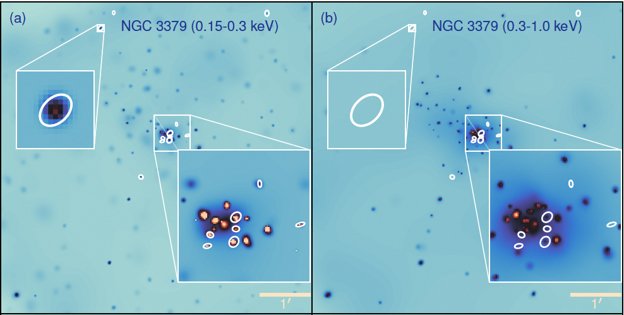
“Soft” describes the energy of an X-ray photon. These sources are detected mainly, or entirely, below 0.3 kiloelectronvolts, beneath the energies where typical X-ray binaries emit most strongly. The brightest examples radiate enormous amounts of energy even within the narrow X-ray band studied. Their previously overlooked status is a reminder that brightness depends on where you look.
The important qualification is that Chandra has not directly measured all the light these objects produce. Models fitted to their spectra suggest much greater total luminosities, with most of the energy emerging in extreme ultraviolet light. That is an inference from the detected X-rays, rather than a direct observation of the full ultraviolet output.
The Nature Astronomy paper therefore establishes a distinctive observational population. It proposes several possible physical explanations, including material falling towards white dwarfs or black holes. A new category of signal does not necessarily mean every member has the same engine.
The stars before the explosion
There is already one useful clue. Lead author Mustafa Muhibullah reports that several of the less luminous sources in Andromeda are associated with novae: eruptions caused when hydrogen collected on a white dwarf ignites. Other sources might involve more sustained nuclear burning. An expanded outer emitting surface could make such a system appear cooler, shifting more of its radiation towards the ultraviolet.
That offers a possible connection to Type Ia supernovae. A white dwarf gaining enough mass might eventually explode, making hypersoft sources candidates for a previously overlooked stage before some of these events. It does not mean the team has identified 84 imminent supernovae, or established how every Type Ia explosion begins.
There is another possible consequence. Energetic photons can remove electrons from atoms in gas between stars. The ultraviolet output of these sources could help explain ionization that ordinary stellar populations struggle to account for, particularly for helium. Both ideas remain open in Muhibullah’s account of the research.
The brightest objects complicate the story
White dwarfs may struggle to explain the most luminous members. Black holes offer more power, but create a different puzzle: gas approaching a black hole usually becomes hot enough to emit higher-energy X-rays. Those are precisely what these sources lack.
One proposed answer involves two closely orbiting black holes drawing material from a third star. Their motion could clear the centre of the surrounding disk, leaving little gas near either black hole to produce the missing energetic X-rays. These have been nicknamed “zombie” disks.
It is an inventive possibility, not a confirmed discovery of such systems. Chandra’s explanation of the model stresses that researchers still need to establish whether enough of these systems could form and survive. The underlying theoretical proposal was published earlier in 2026.
Astronomy repeatedly turns indirect clues into opportunities: a star’s orbit can probe a black hole’s effects on space, while an unusual spectrum can expose objects that earlier searches missed. For the hypersoft sources, the immediate achievement is a new set of targets. Finding out what powers them is the next, harder discovery.
Featured image: M101, the Pinwheel galaxy, combines Chandra X-rays in purple with Hubble optical observations. Seven of the newly classified sources were identified in this galaxy. Credit: X-ray: NASA/CXC/Univ. of Alabama/M. Muhibullah et al.; Optical: NASA/ESA/STScI; Image Processing: NASA/CXC/SAO/N. Wolk.
Leave a Reply