
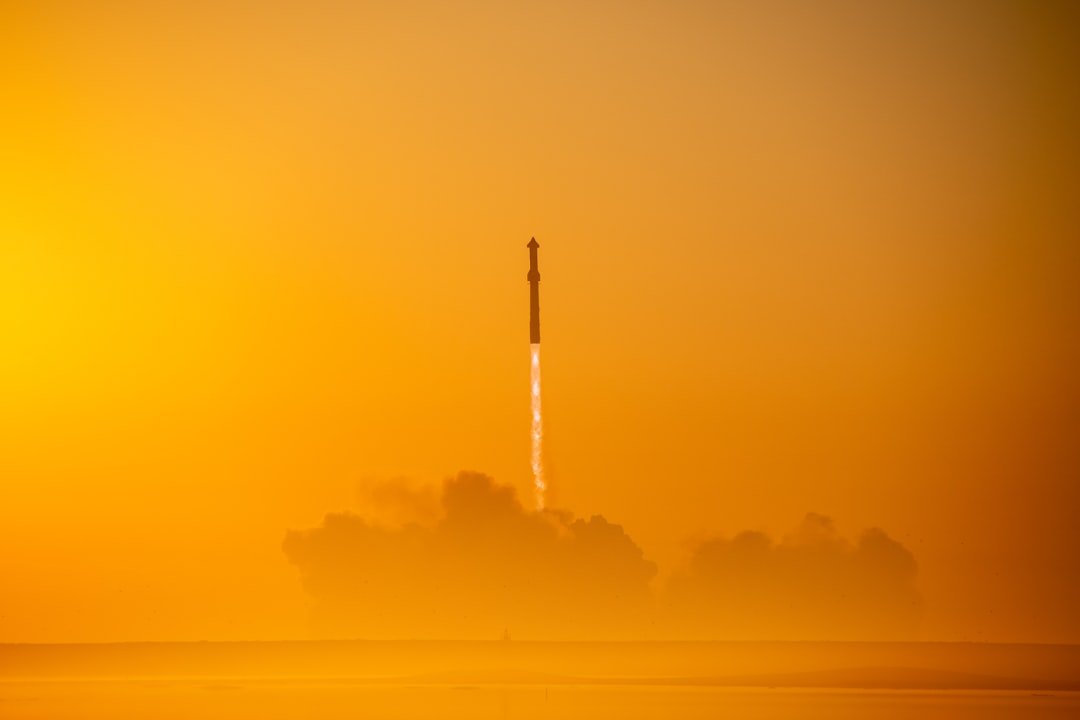
Featured image: Archive launch photograph, not a future Starlink V3 deployment. Photo: nader saremi / Unsplash.
SpaceX’s most compelling advantage may be the way its businesses fit together. It builds the satellites, operates the internet service and develops the rockets that carry the network into orbit. Improving one part can make the others more useful.
The next expression of that strategy is Starlink V3. SpaceX says its new satellite design, combined with Starship’s carrying capacity, could add roughly 20 times more network capacity per launch than Falcon 9 missions carrying V2 satellites. This is a company projection for the new system, rather than a measured twentyfold improvement in anyone’s home internet speed. Starlink’s V3 technical overview
That distinction does not diminish the ambition. It explains where the real opportunity lies: giving an expanding network much more room to serve people.
A stronger satellite, built for a bigger ride
SpaceX specifies one terabit per second of downlink capacity for each V3 satellite, approximately ten times its stated V2 figure. Downlink is traffic travelling towards customers. The capacity is shared across connections, rather than delivered to one household.
Its design also includes more communication beams, higher-capacity laser links between satellites and more powerful solar arrays. These improvements address different parts of the same problem: moving more information through the network while supplying the power to do it. Starlink’s satellite specifications
Think of upgrading a busy transport network. Larger vehicles help, but so do better junctions, more routes and enough fuel to keep everything moving. The appeal of SpaceX’s approach is that it can develop several of those elements together.
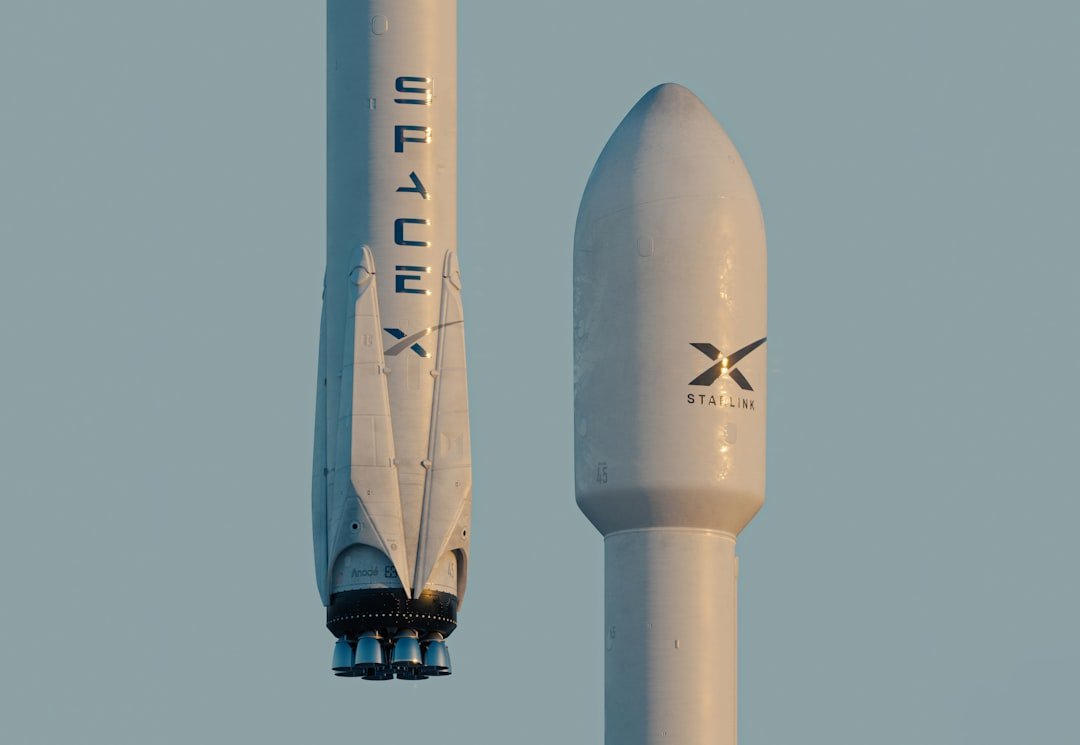
Starship has a customer inside the company
SpaceX’s Starship V3 update describes changes extending beyond the engines. The satellite dispenser has new actuators and electronics intended to increase deployment speed. That is an unusually direct example of a rocket being refined around the needs of its own payload business. SpaceX’s Starship development update
The company also says demand for new Starlink satellites will help drive Starship improvements and launch rates. It is a persuasive commercial connection: a developing launch vehicle has a large internal customer, while that customer wants the capabilities the vehicle is being built to provide. SpaceX’s development strategy
Our interpretation is that this coordination is a substantial advantage. Satellite designs and launch plans can be developed within the same organisation, with information from operations feeding into the next generation. It does not remove engineering risk, but it gives SpaceX several ways to improve the complete service.
There is already a substantial network to improve
The opportunity builds on an operating business. In its 2025 progress report, Starlink said it added more than 4.6 million active customers during that year and expanded into 35 additional countries, territories and markets. Those are historical figures reported by the company, not a September 2026 subscriber count. Starlink’s 2025 progress report
That existing demand gives the next generation a practical purpose. For people beyond reliable terrestrial broadband, additional usable capacity could support more connections and better service during busy periods. Results will still depend on location, customer equipment and how the network is deployed.
Starship’s full-reusability objective adds another potential benefit. SpaceX is designing both the spacecraft and booster for reuse, with the aim of lowering the cost of transporting payloads. Achieving dependable, frequent operation is the essential step between that design goal and its full commercial value. SpaceX’s Starship overview
The positive case for SpaceX is therefore bigger than a spectacular launch. It is a company trying to improve the economics of reaching orbit and the usefulness of what it places there at the same time. If Starship becomes a dependable delivery system for the new satellites, the most important result may be experienced far below the rocket: a stronger internet connection where people need one.
Leave a Reply