
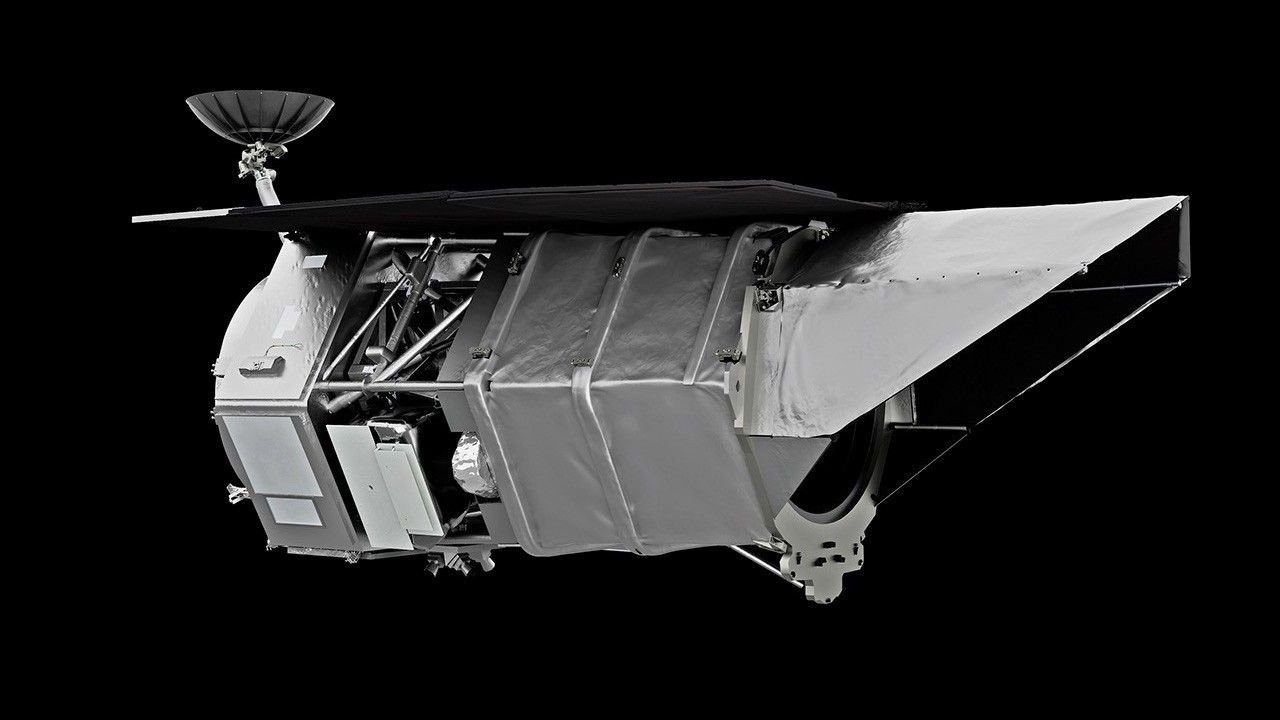
Illustration of NASA’s Nancy Grace Roman Space Telescope. Credit: NASA’s Goddard Space Flight Center/Conceptual Image Lab.
Finding another planet is difficult. Photographing one beside its dazzling parent star is a different challenge altogether.
NASA’s newest major space telescope is preparing to take that challenge much further. On 1 September 2026, the Nancy Grace Roman Space Telescope team successfully powered on its Coronagraph Instrument, an intricate system designed to suppress starlight so that faint planets and dusty disks can emerge from the glare. NASA says months of testing and calibration now come before full science operations. NASA’s activation update
That makes this an important engineering milestone. The announcement does not contain a newly photographed Earth twin. What it marks is the start of a demanding attempt to prove that a much more ambitious kind of planet imaging can work in space.
The problem is the star beside the planet
An exoplanet is simply a planet beyond our solar system. Astronomers often find these worlds indirectly, watching a star dim as a planet passes in front of it or measuring other clues to its presence. Direct imaging means separating the planet’s own incoming light from everything surrounding it.
The trouble is contrast. A planet can be billions of times fainter than its star. A telescope may gather light from both, yet the star overwhelms the weaker signal. NASA describes blocking that glare as the route to seeing planets that would otherwise disappear beside their suns. NASA’s direct-imaging explanation
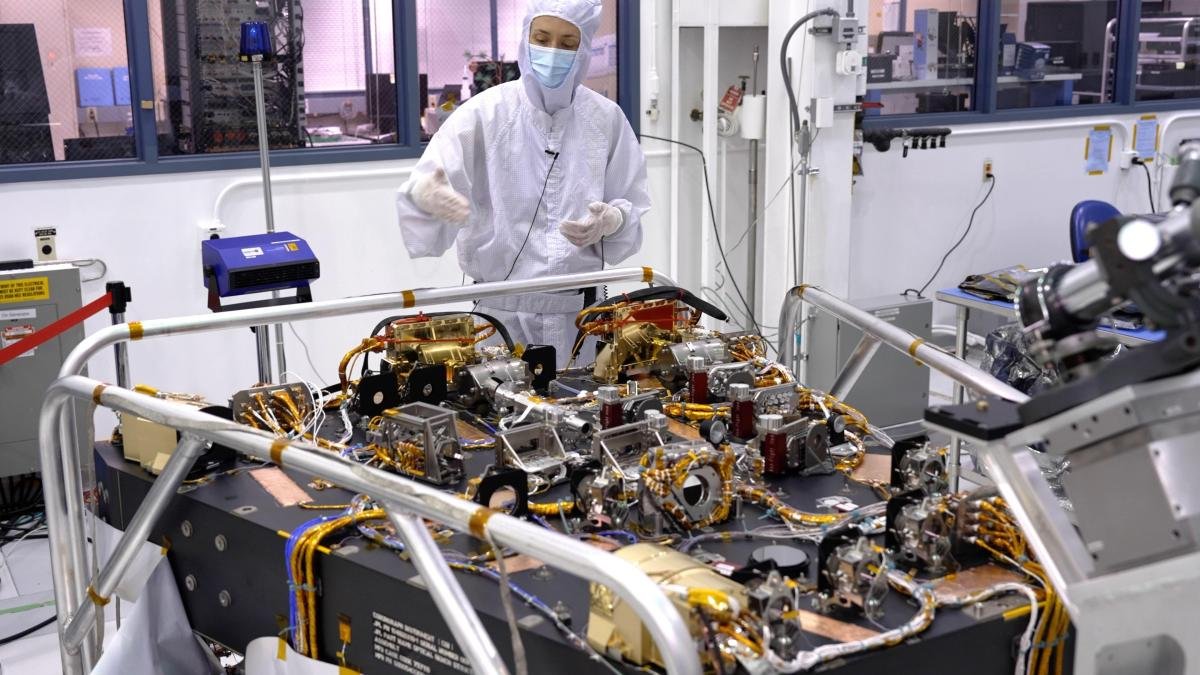
Roman’s answer involves far more than putting a dark spot over a bright object. Specially shaped masks control unwanted starlight, while two flexible mirrors make minute changes to their surfaces to compensate for optical imperfections. Thousands of actuators adjust those mirrors, helping control light that would otherwise contaminate the image. NASA expects the instrument’s starlight-suppression capabilities to substantially exceed those of earlier space coronagraphs; those expectations still need to be demonstrated in operation. NASA’s instrument overview
Older worlds could finally step into view
Many directly imaged exoplanets have been young, enormous and conveniently bright in infrared light because they still retain heat from their formation. They also tend to orbit far from their stars, making the competing light easier to separate.
Roman aims to expand that picture toward cooler, older giant planets in tighter orbits. It will observe reflected visible light, potentially bringing into view Jupiter-like worlds around Sun-like stars. The distinction matters: a survey dominated by hot, youthful giants gives us an incomplete impression of the planetary neighbourhoods that exist across the galaxy. NASA’s direct-imaging science goals
The instrument is also designed to study disks of dust and gas around stars. Their shapes can offer clues to how planetary systems develop. More broadly, testing these techniques could help engineers build future observatories able to examine smaller and fainter worlds. Roman’s immediate demonstration focuses on giant planets and surrounding material; the search for Earth-like worlds is the larger ambition it supports. NASA’s coronagraph programme
Switching on is the start of the hard part
Roman launched on 30 August 2026 aboard a SpaceX Falcon Heavy. Its successful departure was followed by the less visible work of preparing a precision observatory for its scientific mission. NASA’s launch coverage
During commissioning, engineers turn on systems, adjust them and check their performance. NASA’s commissioning guide says the schedule can change as the team assesses what the spacecraft needs. That is why a successful power-on should not be confused with a fully calibrated instrument or a completed observing programme. NASA’s commissioning guide
The coronagraph team plans roughly three months of observations spread across the mission’s first 18 months of operations. This is a targeted technology demonstration within a much broader telescope mission. NASA’s activation update
Roman will also search for planets through other methods. Its microlensing observations will look for temporary brightening when a foreground object’s gravity bends light from a background star, while transit observations will watch for telltale dips in starlight. These approaches reveal different kinds of worlds and help build a fuller picture of planetary populations. NASA’s exoplanet programme
The next compelling images may begin as tiny points beside carefully suppressed stars. Their scientific value will come from the light astronomers can finally separate and study. After decades of discovering worlds through their effects on other objects, the prospect of seeing more of them directly is reason enough to watch Roman closely.
Leave a Reply