
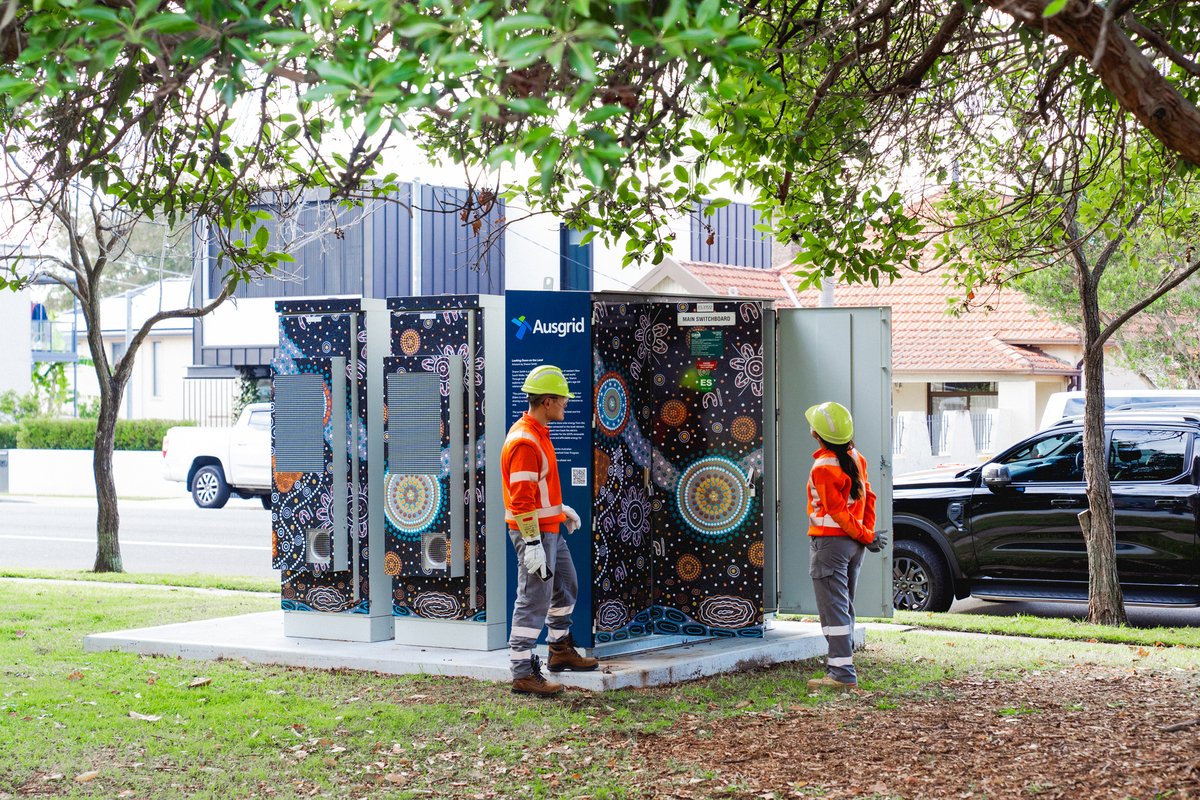
Image credit: Ausgrid.
A battery can save the solar power a house makes at lunchtime for the moment someone starts cooking dinner. The awkward part is that buying one still means finding the money, the space and, for renters, the permission.
Community batteries offer another route: put the storage in the neighbourhood and share its benefits through the electricity network.
On 2 September 2026, the Australian Renewable Energy Agency said its Community Batteries Funding Initiative had reached 100 installations. ARENA also committed A$23.2 million to three further projects. The 100 figure covers this initiative, rather than every community battery in Australia. ARENA’s announcement
The interesting number is not only how many cabinets have arrived. It is how many people can benefit without putting hardware on their own property.
Community batteries move solar power into the evening
Think of a street where several roofs are producing electricity while their occupants are away. Later, the panels fade just as people return, switch on appliances and prepare dinner. Storage helps bridge that mismatch.
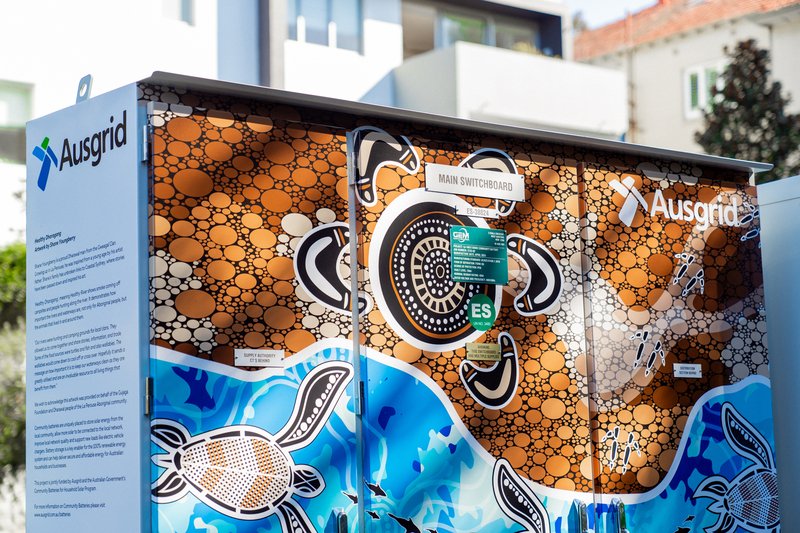
A community battery connects to the local distribution network—the part of the grid serving nearby homes and businesses. It can absorb surplus generation and release energy later. Ausgrid says the equipment can also help manage voltage and reduce local network constraints, potentially allowing more rooftop solar and electric-car charging to connect. Ausgrid’s community battery guide
That makes it more than a communal version of the battery in someone’s garage. Its location and operating schedule can help solve a problem shared by a whole area.
The scale also sits between familiar extremes. A household system mainly serves one property, while the huge installations in our look at Tesla’s grid-storage factory work at a much larger scale. Neighbourhood storage brings the same basic idea closer to the streets producing the solar power.
Renters can have a place in the battery story
Owning the equipment and receiving a financial benefit are separate things.
Ausgrid’s Energy Storage as a Service offers an example of how that separation can work. Eligible customers join through a participating electricity retailer, with benefits provided through a bill rebate or discounted pricing plan. The arrangement can include renters, apartment residents and households without solar panels. Ausgrid’s service explanation
There are conditions. Customers must be in an eligible battery catchment, accept a participating retailer’s offer and have a suitable smart meter. The specific benefit varies between retailers. A battery appearing nearby does not automatically create a discount on every local bill. Ausgrid’s eligibility requirements
This is where the idea becomes worth watching. A technology programme is easier to celebrate than a useful electricity offer is to design. For households, the test is whether the full bill improves after the terms are taken into account—not whether the box outside has impressive specifications.
The next 47 batteries are a funded plan
The newly announced projects cover 14 batteries through YES Group in regional South Australia and New South Wales; 21 through Ausgrid across Sydney, the Central Coast and Hunter; and 12 through the City of Newcastle, integrated with embedded solar networks. Together, that is 47 planned batteries. The funding announcement does not establish that these new units are already installed or operating. ARENA’s project breakdown
ARENA also says the programme is collecting evidence on performance, costs, customer benefits and business models. That evidence matters because a successful trial must eventually become something that can be repeated affordably. ARENA
Shared storage does not automatically mean blackout backup
There is another distinction people can easily miss. Ausgrid states that its community batteries operate in grid-connected mode and switch off when the grid goes down. They should not be assumed to keep nearby homes running through an outage. Separate microgrid arrangements are needed for that kind of backup. Ausgrid’s battery FAQ
The promise here is more everyday: use local solar more effectively, ease pressure on the network and build ways to share the value.
Australia’s solar story has often started with what a household can put on its own roof. Community batteries could broaden that story to people whose roof is shared, rented or unsuitable. The next milestone worth celebrating will be straightforward offers and demonstrated savings that make the technology useful to those people too.
Leave a Reply