
The most consequential new camera feature may be one that makes a photograph harder to change.
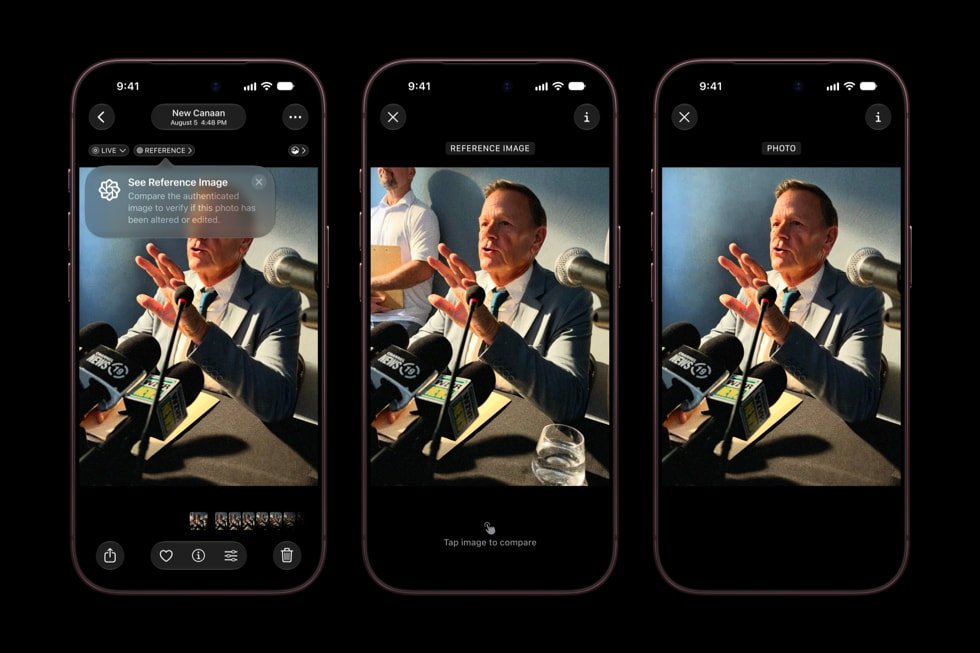
Apple Reference Image, announced with the iPhone 18 Pro family and explained in a technical post on 15 September 2026, is designed to preserve a verifiable version of what the camera saw. It arrives at a moment when a convincing picture, by itself, feels less like proof. Apple Security Research
The idea deserves attention because it tackles the origin of an image. It provides evidence about a particular capture, rather than trying to decide whether every suspicious picture on the internet was generated or edited.
A digital negative for the modern camera
In Apple’s account, the main camera sensor on iPhone 18 Pro and Pro Max signs its pixel data immediately when Reference mode is used. That creates a protected digital negative. Apple’s Private Cloud Compute then develops the negative into a viewable reference image using processing that security researchers can inspect. The system also records bounds on when capture occurred; those bounds should not be confused with a guaranteed exact timestamp. Technical explanation
Think of it as keeping an authenticated starting point beside the version someone chooses to share.
Apple says users can view the reference alongside the main photograph in Photos and compare them visually. It is an opt-in feature, not something automatically attached to every existing iPhone picture. Availability is also limited: Apple says Reference Image will not launch in China, and capture will initially be unavailable in the EU. Apple’s product announcement and availability notes
A real photograph can still tell a false story
Here is the limitation that matters most: authentic pixels do not establish an honest explanation.
A camera can photograph a staged scene. A real picture can receive a misleading caption. A person can photograph another image displayed on a screen. Even an accurately dated photograph may leave out crucial events just outside the frame.
Those examples are our analysis of what capture verification can establish. They do not describe a demonstrated security flaw in Apple’s implementation. They show why image provenance—the record of where an image came from—is one piece of evidence rather than a verdict on everything a post claims.
For example, a verifiable photograph of a damaged parcel could strengthen evidence that the damage existed when the image was taken. It would not, on its own, identify who caused it. Newsrooms face the same distinction on a much larger scale.
There is another trap to avoid. A photograph without an Apple reference should not automatically be labelled fake. Most cameras, older phones and existing photographs will not supply this particular evidence. Trust systems become less useful when a missing credential is treated as proof of wrongdoing.
The social test comes after the technical one
Apple says its design also aims to prevent outside observers from linking two reference images to the same device, while protecting image contents during cloud processing. Those are design claims that deserve continued security scrutiny. Apple Security Research
Our view is that adoption will be just as important as engineering. Verification only helps if a person receiving a photograph can find the reference, understand it and preserve it when sharing the image elsewhere.
The promise is a stronger starting point for checking evidence. The danger is a badge that people mistake for certainty. Apple has put a potentially useful tool into that gap; the way it is presented to everyday users will determine how much trust it earns.
Featured image: Apple Reference Image comparison in Photos. Image: Apple.
Leave a Reply