
Solar panels and an industrial production schedule do not automatically keep the same hours. A useful energy system has to bridge that mismatch.
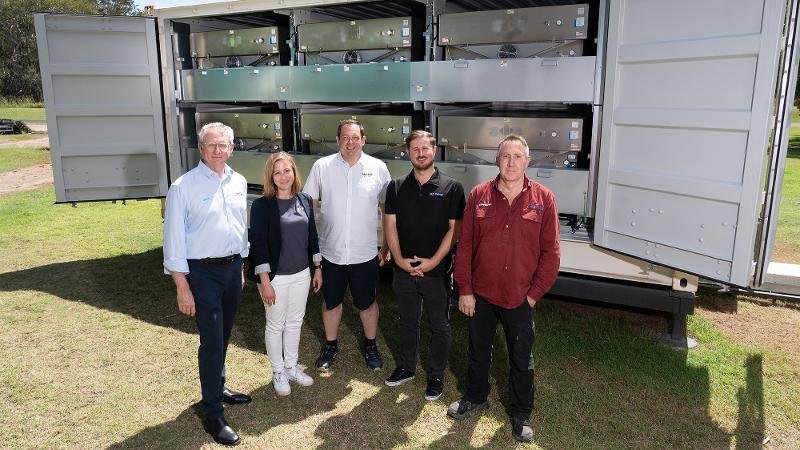
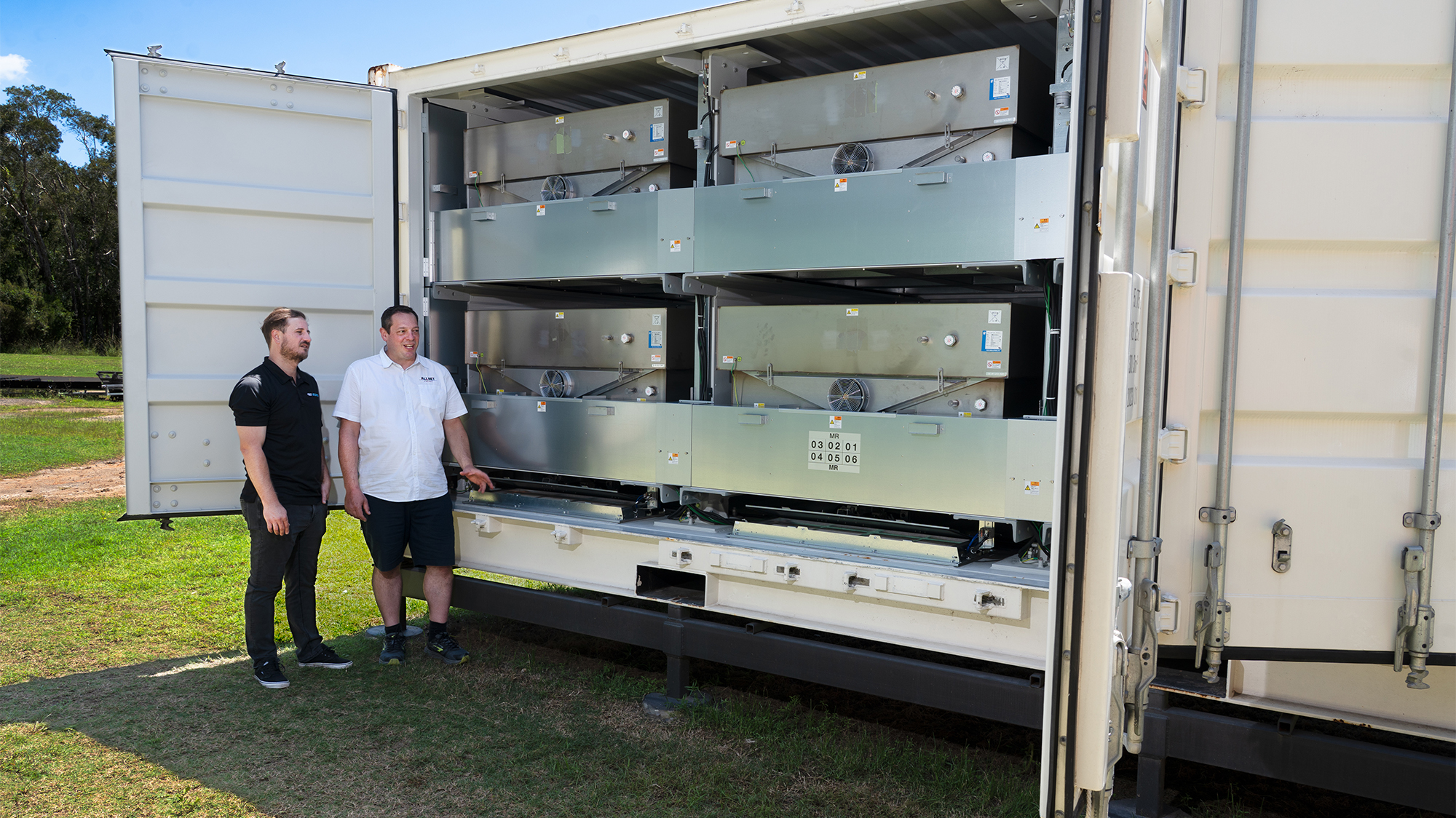
A recently commissioned battery at Lava Blue’s PRiSM facility in Brisbane is testing one route. In a 16 September 2026 announcement, Queensland University of Technology described the 250kW, 1.45MWh installation as Australia’s first sodium-sulfur battery connected to the National Electricity Market. It supports a facility developing processes for high-purity materials. QUT’s commissioning announcement
The distinction is specific. This is a grid-connected Australian milestone for an established battery chemistry, rather than the invention of a new battery.
The number that matters is the duration
Power and energy describe different things. The 250kW rating describes the rate at which the system can supply electricity. Its 1.45MWh rating describes stored energy.
Dividing 1.45MWh by 0.25MW gives 5.8 hours. That is a simple ratio of the published ratings. It is not a guarantee of usable operating time, because losses, reserve settings and the load profile affect the result.
Even that calculation is more informative than treating every large battery as interchangeable. A device designed to cover a brief power spike and one intended to support work for several hours are solving different problems.
For this project, the useful comparison is therefore an operating day: when solar output arrives, when the factory needs electricity and how much energy must be carried from one period to the next.
The factory is part of the story
Lava Blue describes PRiSM as a flexible research and demonstration facility, producing high-purity material samples and developing methods for larger plants. Sensors, quality testing and machine learning are built into its approach. Its purpose is to learn how production can be scaled, rather than simply run one fixed demonstration and close. Lava Blue’s description of PRiSM
That makes the setting particularly useful. Storage can be evaluated alongside a changing industrial process, where the energy requirements are tied to actual equipment and production decisions.
QUT says Allset Energy installed the battery and Advanced Converter Solutions supplied Queensland-made power converters. It reports more than 80% Australian content in the purpose-built control unit. That figure refers to the control unit, not the entire battery installation. QUT
The next result should be an operating record
Commissioning is the start of the most useful evidence. The next questions concern delivered energy, reliability, maintenance and the cost of each useful unit of electricity after losses.
Those numbers will determine whether another industrial operator can make a convincing case for the same approach. A successful connection alone cannot demonstrate that this chemistry beats lithium-ion or every other storage option.
The attraction is more practical: give a factory more control over when it uses its solar electricity. If the installation proves reliable and economical through sustained operation, the lesson could travel well beyond this one Brisbane site.
Related reading: how flexible AI data centres could help the power grid.
Featured image: The project team at Lava Blue’s PRiSM facility. Image: QUT.
Leave a Reply