
The future of electricity is often pictured as batteries, solar farms and smarter demand. In Indiana, officials are extending the working lives of machines that were supposed to stop burning coal last year.
New US emergency orders keep three Indiana coal units available to operate from 20 September through 18 December 2026. Issued on 18 September and announced the following day, they cover two units at NIPSCO’s R.M. Schahfer station and one at CenterPoint Energy’s F.B. Culley station. This extends an existing intervention rather than restarting plants that had already been dismantled. Department of Energy announcement; official order register.
The immediate issue is keeping electricity available during difficult hours. The larger question is whether repeated extensions are buying useful transition time—or delaying the work needed to make them unnecessary.
Nearly a gigawatt that was heading for retirement
Schahfer Units 17 and 18 each have a nameplate rating of 423.5 megawatts. Culley Unit 2 adds 103.7 megawatts. Together, that is approximately 951 megawatts, calculated from the ratings in the orders. All three had been scheduled to cease operations in December 2025. Schahfer order, page 1; Culley order, page 1.
That total describes rated generating capability, not electricity delivered continuously or a guarantee that every unit will work when called upon.
The distinction matters because the orders require availability. They also direct MISO, the regional grid operator, to use economic dispatch: deciding when generation should run with costs in mind. Culley’s order explicitly limits operation to the times and parameters determined by MISO. It is not a blanket instruction to run the unit at full output around the clock. Culley operating conditions, page 11.
The grid needs more than a promising construction pipeline
The North American Electric Reliability Corporation’s 2025 Long-Term Reliability Assessment describes a MISO system facing rising demand, including large data centres, while older generating equipment retires. Its analysis also accounts for the possibility that generators will be unavailable because of unplanned outages. Reliability is about what can actually deliver, rather than simply adding up equipment ratings. NERC assessment, MISO section.
There is an important qualification in the same report. New projects entering MISO’s expedited approval process were not included in its resource-adequacy modelling. NERC says those additions could reduce the identified shortfall risks if they reach operation as expected.
That makes the findings a planning warning, not a prophecy of inevitable blackouts. It also does not prove that extending these particular coal units is the cheapest available response.
A reliability measure can still bring an expensive bill
The cost dispute predates this weekend’s extension. In April, Reuters reported that NIPSCO estimated keeping its plant open would cost US$100 million. It also reported that CenterPoint had asked the government to end the Culley requirement, citing expense and the unit’s deteriorating reliability. That earlier estimate should not be presented as the verified cost of the new September–December period. Reuters, 16 April 2026.
The September Culley order provides for rate recovery. An instruction to dispatch economically therefore does not establish that customers’ total bills will fall: operating decisions and the cost of keeping equipment available are different questions. Culley order, page 11.
There is also an environmental cost. Burning coal produces carbon dioxide and pollutants including sulfur dioxide, nitrogen oxides and particulates. Controls can reduce some emissions, but keeping coal generation available is not an emissions-free solution. EIA’s explanation of coal’s environmental effects.
The alternative has to work at the right time
Batteries can move electricity from one time to another. Their usefulness depends on both power—the rate at which they can supply electricity—and energy capacity, which determines how much they can deliver before needing another charge. A large megawatt number alone does not tell you how long storage can cover a shortage. EIA’s guide to electricity storage.
Demand can become more flexible, too. Our recent article on Nvidia and Google’s flexible data-centre initiative examines efforts to shift computing loads away from stressed hours. Such flexibility needs measurable commitments; it is not a substitute for electricity simply because an alliance has announced it.
The useful test for Indiana is now practical: how often the retained units are needed, what keeping them costs, and which replacements become operational before the next deadline. An extension can preserve an option. A durable energy strategy must explain when that option will no longer be necessary.
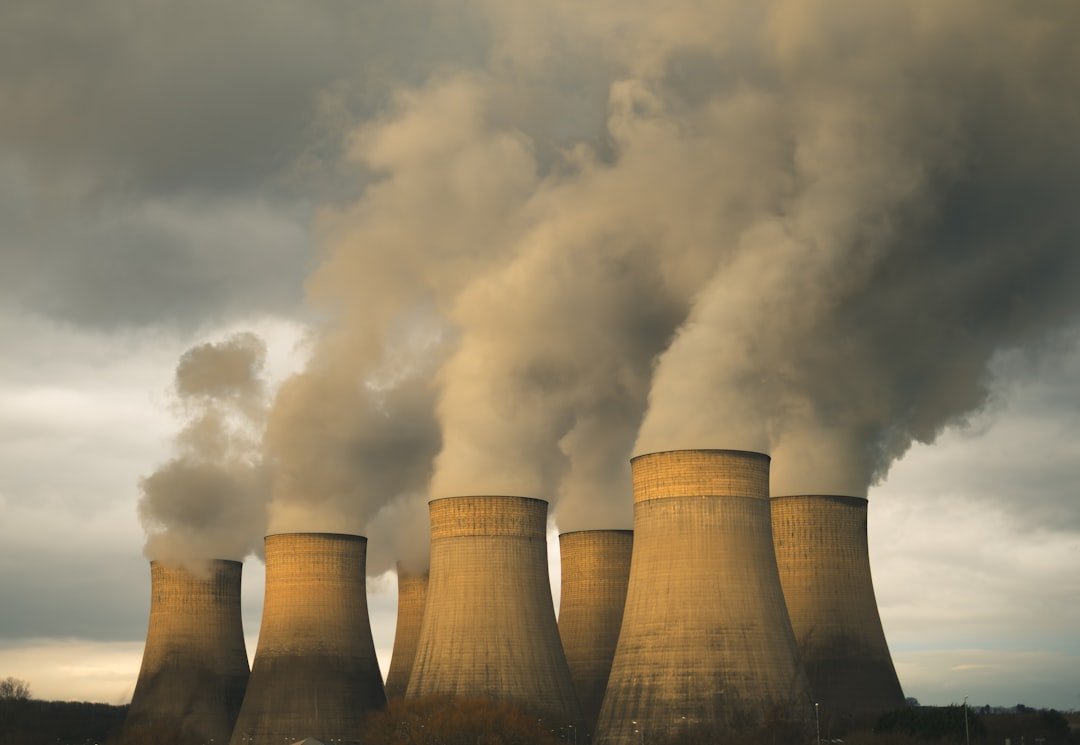
Featured image: Ratcliffe-on-Soar power station in the UK, used as an illustrative stock photograph. Photo by Johannes Heel / Unsplash.
Leave a Reply