
The next major energy upgrade could be hiding in plain sight: the electricity lines already crossing the landscape. Replacing their wires and changing how they are operated can open up room for more power without starting every project with a new transmission route.
On 24 September 2026, the US Department of Energy announced plans to support 31 grid-improvement projects across 26 states through its SPARK initiative. The proposed package combines US$1.9 billion in federal funding with US$3.35 billion from recipients. DOE expects the work to make more than 23 gigawatts of additional grid capacity available. DOE announcement, 24 September 2026
That figure describes an expected improvement in the network’s ability to move electricity. It does not mean 23 gigawatts of new power stations have been built, or that the extra capacity is available today.
Better wires, familiar routes
The central technique is reconductoring: replacing a transmission line’s existing electricity-carrying wires with higher-capacity alternatives. DOE expects the selected projects to reconductor or rebuild more than 1,500 miles of lines—roughly 2,400 kilometres—and deploy grid-enhancing technologies across nearly 21,000 miles. Programme scale
Advanced conductors can increase the capacity of an existing route. DOE’s technical background explains that some can offer up to twice the capacity of traditional conductors. That is a technology capability, rather than a promise that every SPARK line will double its output. DOE background on grid technologies
Reusing a route matters because a completely new transmission corridor can take years to plan, approve and win community acceptance for. Upgrading the network already in place offers another way to tackle a bottleneck. It also makes the engineering less visually dramatic: a familiar line may become more useful without a new row of towers appearing across the horizon. DOE explanation of existing-line upgrades
The weather can change a power line’s limits
Another tool is dynamic line rating. Electricity heats a wire; wind and cooler air help it shed that heat. Instead of relying only on fixed assumptions, operators can use weather and operational data to estimate how much electricity a line can safely carry under current conditions. DOE technical explanation
This is a variable opportunity. Favourable weather can create extra headroom, but that does not make the additional capacity a constant, all-weather entitlement.
A separate technology, power-flow control, helps steer electricity towards routes with spare capacity. In everyday terms, one approach improves the wires, another measures their usable capacity more accurately, and another helps the wider network share the load. How grid-enhancing technologies work
A concrete test in New Mexico
The selected applications include Kit Carson Electric Cooperative’s proposal for the Questa–Taos corridor in northern New Mexico. It combines line upgrades with a rating system using sensors and data analysis. The application lists approximately US$38.1 million in requested federal support and a total project value of about US$50.8 million. DOE selected applications, page 6
This illustrates why the programme combines hardware and operating tools. Better conductors and better information address different constraints; a project can use both.
The next milestone is delivery
These are funding selections. DOE’s project document explicitly says the application details may change while formal financial assistance agreements are finalised. The programme page lists expected award dates from October 2026 to January 2027. Those are funding milestones, not dates when every upgraded line will begin operating. Selection caveat; award timetable
Our assessment is that the meaningful test will be what the completed projects deliver: usable transfer capacity, reliable operation and demonstrated cost benefits. The announcement sets an ambitious target; it does not establish a household bill saving.
For a technology sector increasingly dependent on electricity, the significance is straightforward. New generation needs a route to its customers. Making existing routes work harder could become one of the most practical parts of the next energy buildout.
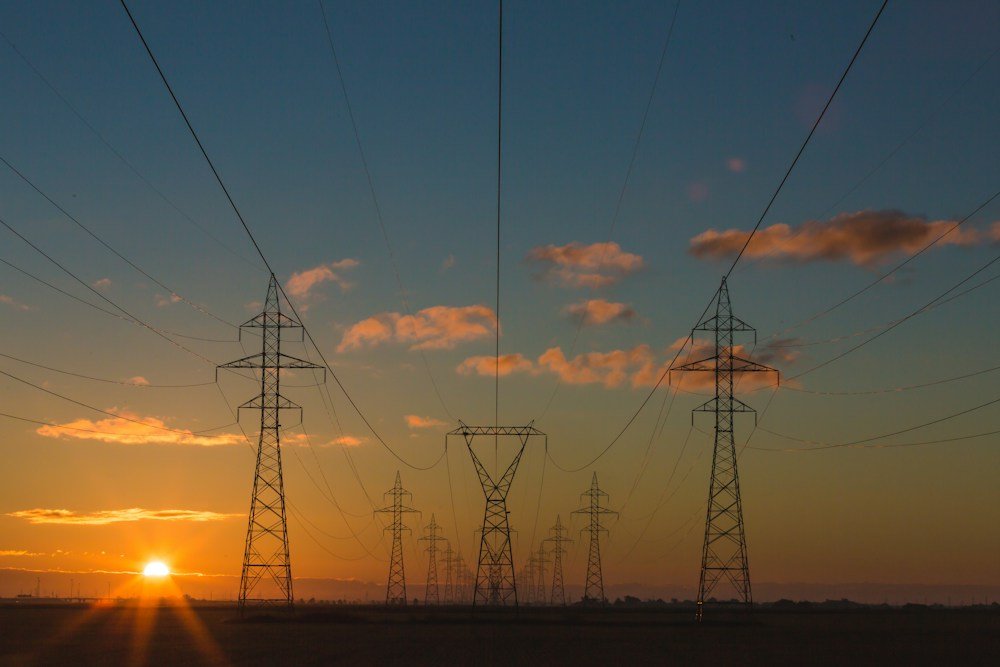
Featured image from the FutureTechDose archive, shown for context: Electricity transmission towers and power lines against a sunset.
Leave a Reply