
The power race behind artificial intelligence is reaching beyond new server buildings. An agreement in Maryland shows another route: backing upgrades at a nuclear plant that already generates electricity.
On 30 September 2026, Amazon and Constellation announced a 20-year power purchase agreement supporting the expansion of the Calvert Cliffs nuclear plant. A power purchase agreement is a long-term arrangement to buy electricity. Reuters reporting
Constellation says the agreement will enable more than US$3 billion in infrastructure investment, including approximately 190 megawatts of additional generating capacity targeted for 2030–2032. The spending figure covers wider plant improvements; it is not a disclosed price for Amazon’s power contract. Constellation’s announcement
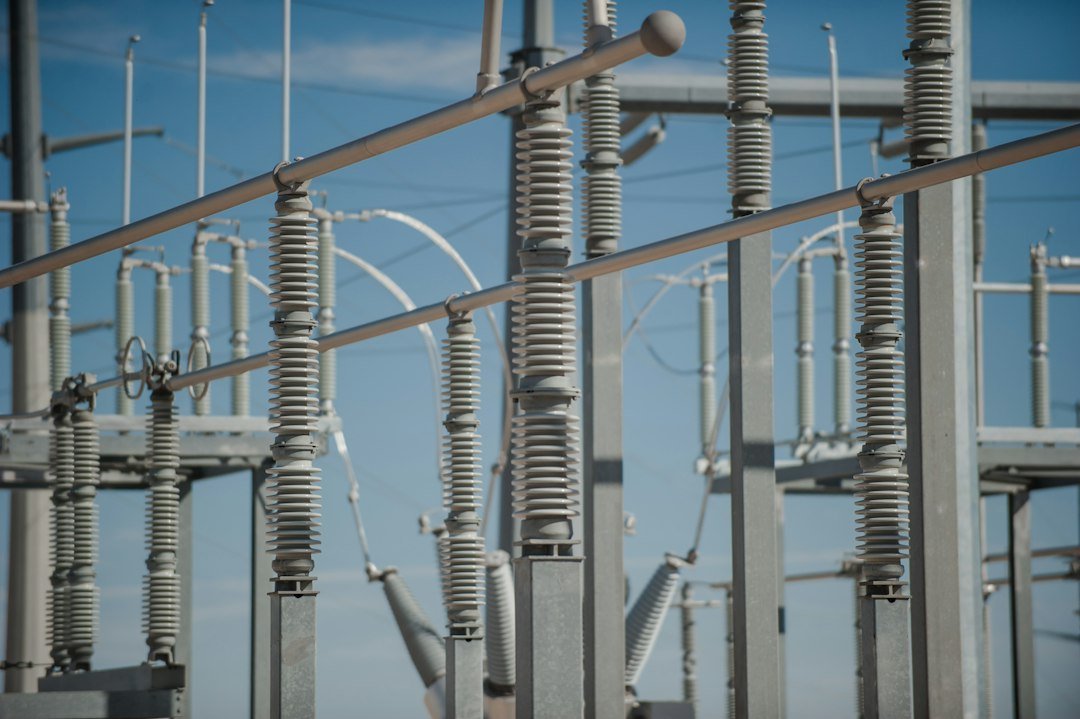
Featured image: American Public Power Association / Unsplash. Representative electricity infrastructure; not Calvert Cliffs.
The big number and the new power are different
The agreement covers 690 megawatts, including the proposed 190-megawatt increase. The larger figure should therefore not be presented as entirely new generation. The announcement describes an expansion of an operating plant, with the extra output still to be delivered. Capacity covered by the agreement
A megawatt measures power: how quickly electricity can be generated or used. It does not tell readers how much electricity a plant will deliver over a full year. That also depends on operating time and output.
The technical term for increasing a nuclear plant’s authorised power level is an uprate. The Nuclear Regulatory Commission explains that producing more heat can create more steam, which drives a turbine to generate electricity. The proposal must be supported by engineering analysis, rather than simply turning up a control. NRC explanation of nuclear uprates
The NRC’s licensing process requires analyses demonstrating that a proposed uprate remains within the plant’s safety requirements. Authorisation involves an amendment to the operating licence. A commercial purchase agreement supplies neither that analysis nor the licence amendment. NRC background on uprate reviews
The electricity stays on the shared grid
Constellation says all Calvert Cliffs electricity will continue flowing into the PJM regional grid. This is a grid-connected supply arrangement, rather than an announcement that the plant will be electrically isolated for Amazon. How the power will be supplied
That distinction matters. Buying output from a named generator and receiving an exclusive physical flow of its electricity are different things. Readers should assess the contract, the proposed additional generation and the grid connection separately.
The wider demand backdrop is substantial. The International Energy Agency’s 2026 analysis estimates that global data-centre electricity consumption will roughly double between 2025 and 2030. It also identifies constraints in electricity supply, equipment and grid connections. These are projections and industry-wide findings, rather than a guarantee about this particular upgrade. IEA analysis of energy and AI
A long contract still needs a delivered project
The agreement is a commercial announcement with a future physical upgrade. Its significance is the combination of a large electricity customer and an existing generating asset. Our reading is that long-term demand can strengthen the case for spending on infrastructure already in service.
This approach also fits a broader policy direction. In March 2026, the US Department of Energy launched its UPRISE initiative, which includes increasing output from existing reactors alongside restarts and other nuclear projects. That programme provides context; it does not establish that this agreement has received government funding. DOE’s UPRISE announcement, 12 March 2026
The delivery evidence to watch is concrete: regulatory decisions, an engineering and construction schedule, and verified operation at the increased output. Until those milestones are documented, the proposed capacity belongs in the future tense.
Calvert Cliffs illustrates a practical part of the AI energy story. Expanding computing capacity can mean upgrading the machines that make its electricity, as well as the machines that use it.
Leave a Reply