
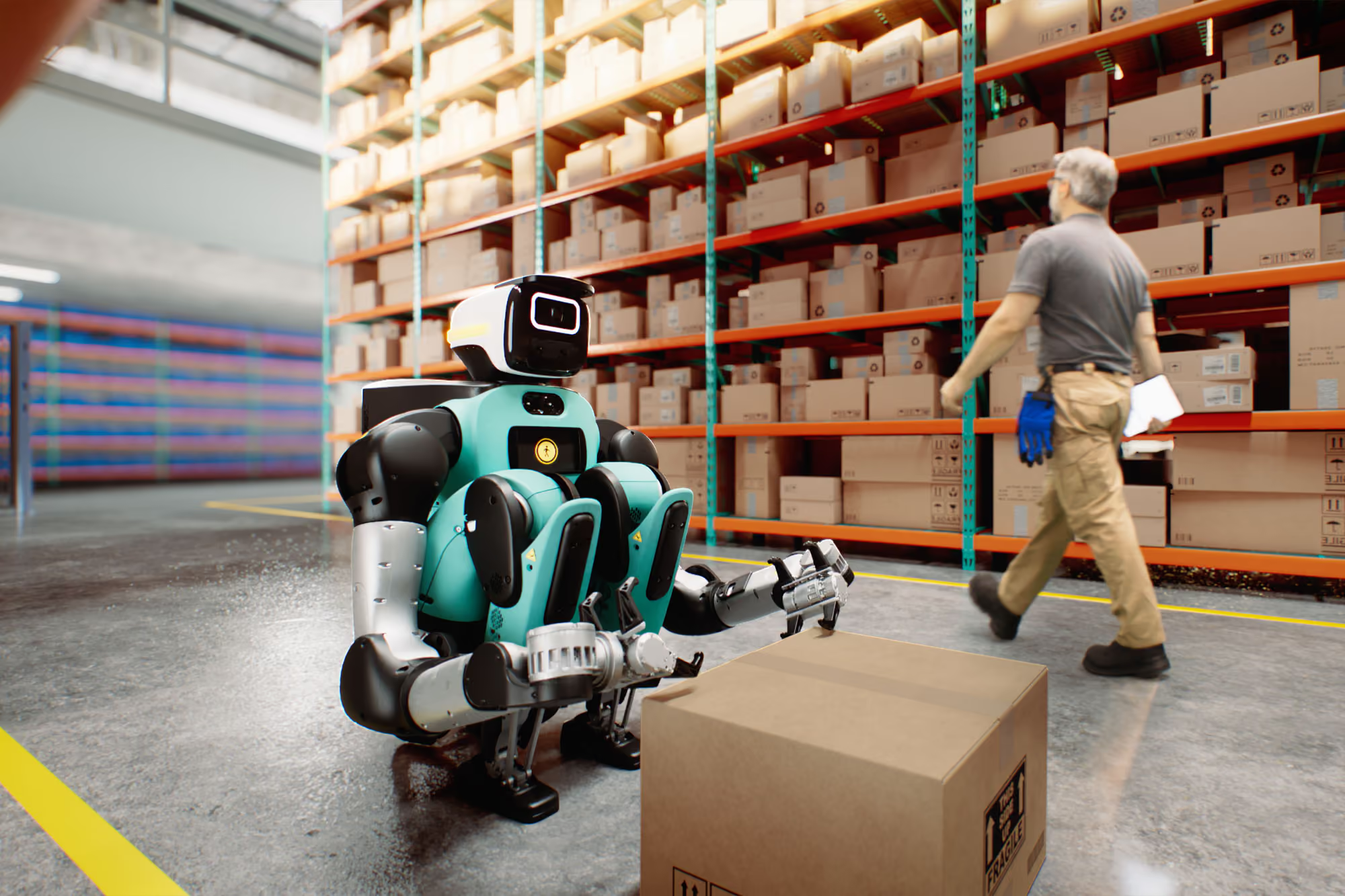
The interesting moment in a robot demonstration is often the one that never makes the highlight reel: a worker steps into its path.
A useful machine needs to respond predictably, recover and continue working. That is a less glamorous challenge than dancing or running, but it sits near the centre of Agility Robotics’ new Digit 5 announcement.
The Digit 5 humanoid robot, unveiled on 15 September 2026, is being developed for manufacturing and logistics work in proximity to people. Agility expects early access in the first half of 2027 and general availability by the end of that year. It is an announced product still in development. Agility’s announcement
The warehouse is the real obstacle course
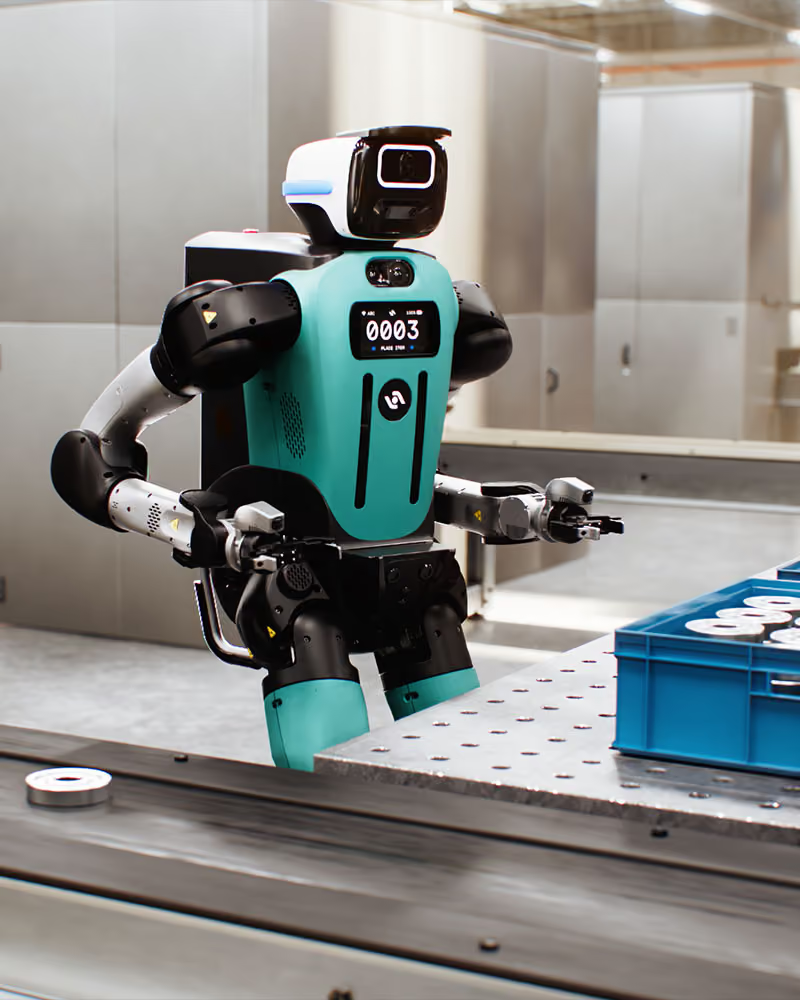
Agility’s product page describes a machine designed to move between work areas, use interchangeable grippers and integrate with warehouse software. The aim is flexible automation that fits spaces and workflows already used by people. Published targets include a roughly 23-kilogram payload, a 2.2-metre reach and a ten-to-one ratio of operating time to charging time. These remain manufacturer specifications, with development qualifications attached. Digit 5 product details
The practical appeal is less about resembling a person than about accessing a person’s working environment. A machine that reaches existing shelves and passes through existing aisles could, in principle, reduce the rebuilding needed to automate a task.
But that argument needs to survive ordinary interruptions. A misplaced box, an unexpected pedestrian or an awkward handoff can matter more to daily output than the best lift in a demonstration.
That is our assessment of the deployment challenge, not a claim that Digit 5 has failed those tests.
Agility describes a safety architecture combining human detection, signals that communicate intended motion and a separate safety controller. It is also working with Nvidia’s robotics safety technology. The company says the earlier Digit 4 accumulated more than 65,000 operational hours; that history must not be mistaken for 65,000 hours of Digit 5 field performance. Safety architecture and operating history
The metric worth watching is a completed shift
Our view is that the strongest future demonstration would follow the robot through a normal working day, including its interruptions.
How much work does it complete? How often does a person intervene? Can it stop safely, resume reliably and coordinate with the machines around it? Does changing tasks require a specialist? Those measurements would tell a warehouse operator more than an isolated speed record.
The economics also extend beyond the purchase price. Integration, supervision, maintenance, charging and the cost of downtime belong in any serious assessment. A robot that handles many tasks in theory may still earn its place by performing a narrower set exceptionally well.
For workers, the potential benefit is relief from repetitive physical handling. The consequences for staffing, training and responsibility will depend on how employers deploy the technology. A product announcement cannot settle those outcomes.
This makes industrial humanoids a different story from the home robot promising help with laundry. Their first audience is a business deciding whether a machine can reliably carry part of its workload.
Digit 5’s ambition is significant. The decisive evidence will be routine, measurable work beside people—and a clear account of the human effort needed to keep that work moving.
Featured image: Digit 5 product visual. Image: Agility Robotics.
Leave a Reply