
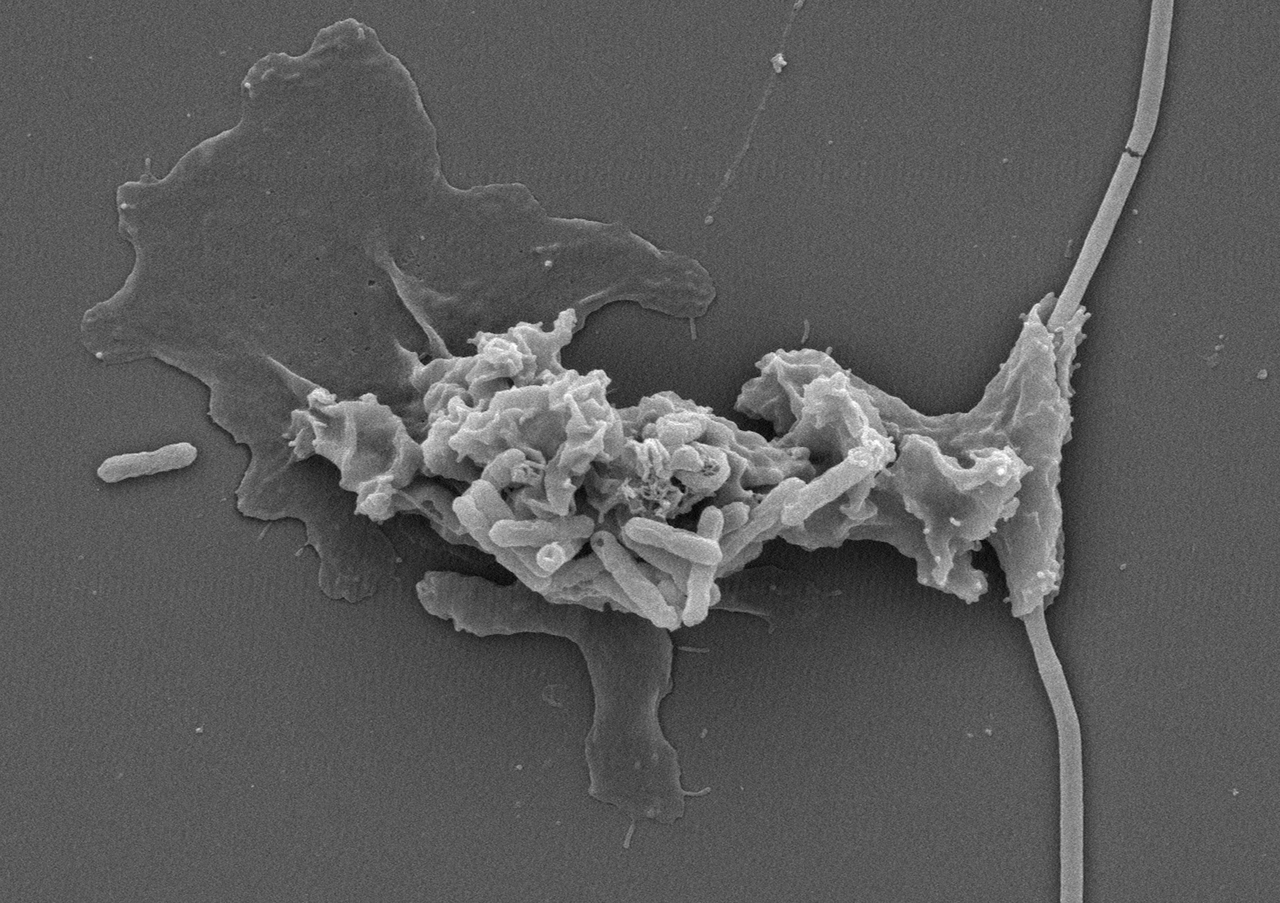
A microscopic organism nicknamed the fire amoeba has given biologists a new example of how far a complex cell can be pushed by heat.
Researchers studying Incendiamoeba cascadensis found that it could divide at 63°C. The result, reported in Cell and highlighted by NASA and Syracuse University on 22 September 2026, raises the documented upper temperature for growth in a eukaryote, a cell with a nucleus and internal membrane-bound structures. NASA’s research account explains the finding.
“Complex” refers to its cellular organisation. This is a single-celled amoeba, not an animal that can walk through fire.
Growing is a stronger test than briefly surviving
The distinction between activity, reproduction and survival is central to the story. The amoeba divided at 63°C and remained mobile at 64°C. NASA also describes recovery after brief exposure to higher temperatures. Those are different observations, not permission to describe all the temperatures as normal living conditions.
A dormant cell that survives a short heat pulse has achieved something different from an organism that repeatedly reproduces in that heat. Keeping these thresholds separate makes the result more informative, not less impressive.
An extraordinary organism from an ordinary-looking stream
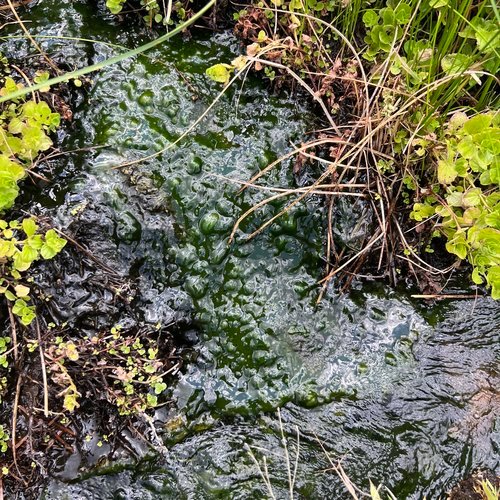
The team sampled geothermal environments in California’s Lassen Volcanic National Park. Syracuse says the record-setting organism came from an unremarkable tributary rather than one of the park’s dramatic acidic pools. Researchers then investigated its temperature tolerance in the laboratory. The university’s fieldwork account describes the discovery.
That is a useful reminder that scientific importance and visual spectacle do not always coincide. A place that attracts little attention can contain an organism with a valuable biological adaptation.
Bacteria and archaea include organisms that tolerate higher temperatures, so this is not a new heat record for all life. The surprise concerns the particular architecture of eukaryotic cells and the systems they must keep working together.
A possible source of ideas for biotechnology
Syracuse identifies heat-stable enzymes, resilient biomaterials and high-temperature biological processes as possible research directions. These remain possibilities. The discovery does not mean a new industrial enzyme has been validated or a manufacturing process is ready for deployment.
To make that transition, researchers would have to determine which adaptations are responsible, whether they can be reproduced in another setting and whether they retain their advantages under industrial conditions. A useful property inside a living cell may depend on several interacting systems rather than one easily transferable component.
The result also informs discussion of life’s environmental limits. Expanding the range documented on Earth helps refine what scientists consider possible elsewhere, but it cannot establish that comparable life exists on another planet.
There is a connection to the wider search for unfamiliar biological tools, including computing systems built from molecules. Biology can reveal useful behaviours that ordinary engineering assumptions overlook.
The fire amoeba’s contribution is a measurable one: a living complex cell can keep dividing at 63°C. Understanding how it manages that may prove more valuable than the record itself.
Featured image: Electron micrograph of the fire amoeba Incendiamoeba cascadensis feeding on a bacterium. Credit: Natalie Petek / Syracuse University.
Leave a Reply