
A single test can capture a hormone level at one moment. A continuous cortisol monitor aims to show how that level changes throughout the day. That difference is the attraction behind Adaptyx Biosciences’ latest medical-wearable announcement.
On 23 September 2026, the Stanford spinout said its cortisol device had received FDA Breakthrough Device designation and joined the agency’s Total Product Life Cycle Advisory Program. The company describes a development programme focused on disorders involving too much or too little cortisol. The company’s announcement does not announce marketing authorisation.
A hormone with a daily rhythm
Cortisol is often called the stress hormone, but that nickname hides much of its biology. It also helps regulate metabolism, inflammation and blood pressure. Levels normally vary through the day, and stress, exercise and medicines can affect measurements. The US National Library of Medicine’s cortisol overview explains why clinicians may use blood, urine or saliva tests and why an abnormal result alone cannot identify its cause.
That is the potential value of a longer record. A sequence of measurements could help researchers and clinicians study patterns that isolated samples may miss. It does not follow that every fluctuation is a problem, or that a chart of cortisol is a direct measure of how stressed someone feels.

Molecular switches inside a patch
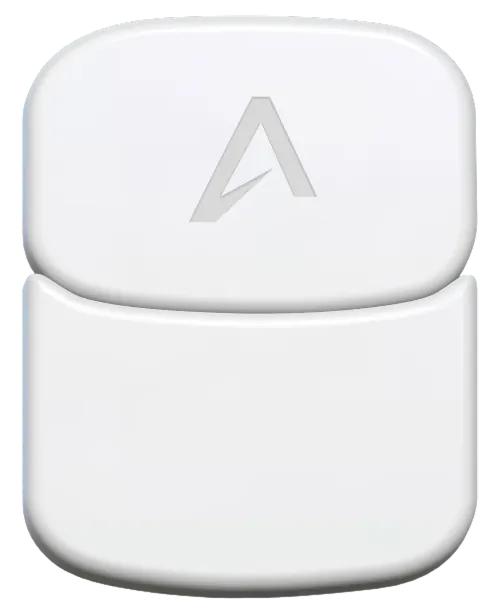
According to Adaptyx’s platform description, its wearable uses a small dermal probe to examine interstitial fluid, the fluid around cells. Programmable molecular switches bind target substances and change shape, creating a measurable signal. The company’s website labels its patch hardware as a product concept.
This is a different proposition from simply deriving a wellness score from heart rate or sleep. It seeks to measure a biochemical signal. Whether that signal remains accurate, stable and clinically useful over extended wear is therefore central to the device’s value.
The FDA milestone has a specific meaning
The FDA’s Breakthrough Devices Program can provide closer engagement and prioritised review during development. The agency explicitly says devices must still meet its safety and effectiveness standards before they can receive marketing authorisation.
Our assessment is that the next meaningful evidence will be the clinical validation: agreement with reference testing, performance across intended patients, reliability during ordinary activity and whether the extra information improves decisions. A designation cannot answer those questions on its own.
There is also a design challenge beyond the sensor. Continuous data needs careful interpretation. A stream of numbers that produces confusion or unnecessary alerts would be a poor substitute for a useful medical measurement.
The story is worth following because it points towards wearables that track body chemistry over time. For now, it remains a device under development, not an approved everyday stress tracker. More emerging platforms appear in our biotechnology coverage.
Featured image: Adaptyx’s wearable patch concept. Company illustration; not evidence of an approved commercial device. Credit: Adaptyx Biosciences.
Leave a Reply