
A blood test that looks for several cancers at once has an obvious appeal. The harder question is whether using it changes outcomes enough to justify screening large numbers of people.
Two papers published on 22 September 2026 give a detailed answer from NHS-Galleri, a randomised trial involving 142,250 adults aged 50–77. The central finding is sobering: adding the test to usual care did not significantly reduce combined stage III and IV diagnoses across 12 prespecified cancer types, the trial’s primary endpoint. Primary results in the New England Journal of Medicine; Companion test-performance paper
The publications expand on results presented in May. They provide peer-reviewed detail, rather than the first announcement of the trial’s outcome. Trial team’s publication update, 23 September
A signal in DNA circulating in blood
Galleri analyses patterns of chemical marking, called methylation, in fragments of DNA circulating in blood. It looks for a cancer-associated signal and predicts where that signal may have originated. A positive result prompts diagnostic investigation; it is not itself a confirmed cancer diagnosis. Test mechanism and diagnostic pathway
This distinction is fundamental. Screening looks for possible disease in people without a known diagnosis. The National Cancer Institute explains that multi-cancer detection tests still require follow-up tests to establish whether cancer is present. NCI’s explanation of multi-cancer testing
The promising secondary result has limits
The primary outcome’s incidence rate ratio was 1.03, with a 95% confidence interval of 0.92–1.14. A ratio of one means the same rate in both groups. This result did not show the intended reduction.
For stage IV cancers alone, a key secondary endpoint, the ratio was 0.86—a 14% relative reduction—with a confidence interval of 0.74–1.00. The uncertainty range reaches one, so the estimate warrants follow-up. Less than 1% of participants had trial-related adverse events, with none serious. Primary, secondary and safety results
Our assessment is that the secondary finding is worth investigating without allowing it to replace the trial’s main question. A useful scientific signal and a missed primary endpoint can coexist.
Accuracy is more than one percentage
Across three screening rounds, specificity was 99.50–99.60%, meaning very few people without cancer received a positive signal. Yet the proportion of positive tests followed by a cancer diagnosis—the positive predictive value—was 45.8–58.0%.
Episode sensitivity, a measure of cancers detected within each screening episode, was 26.7–37.2% across all cancer types. High specificity therefore does not mean a negative result rules out cancer. Detailed performance results
These papers do not establish a reduction in cancer deaths. Longer follow-up, mortality results, diagnostic burdens and overdiagnosis remain important parts of the evaluation. Overdiagnosis means finding disease that would not have caused harm during a person’s life. Planned further outcomes; NCI on screening benefits and harms
The wider lesson is that detecting a biological signal is one milestone. Demonstrating that screening improves lives is another, and the evidence must connect the two.
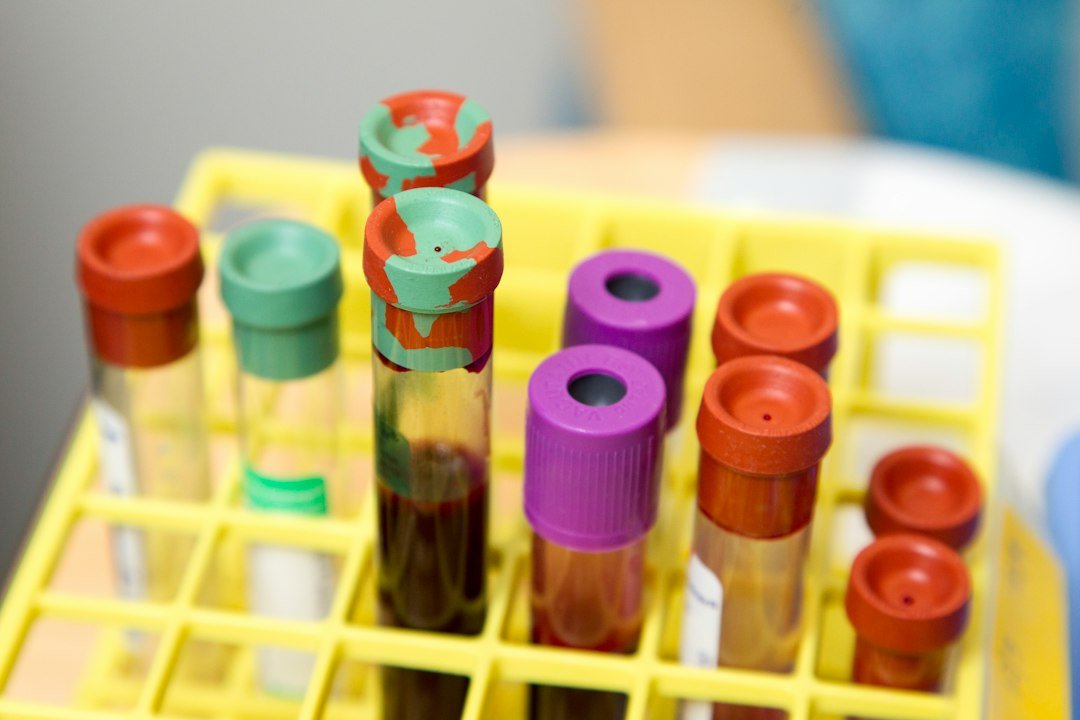
Featured image: Blood vials photographed at the NIH Clinical Center by Daniel Sone, supplied by the National Cancer Institute; not samples from NHS-Galleri. Photo: National Cancer Institute / Unsplash.
Leave a Reply