
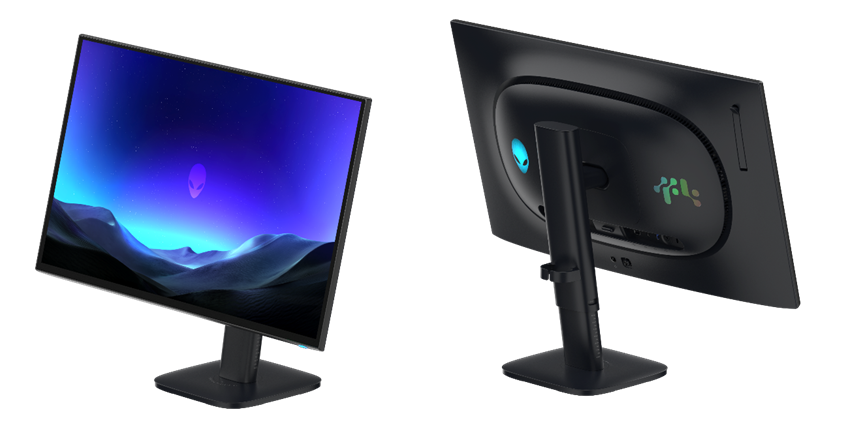
Alienware’s announced AW2527HX, shown in manufacturer imagery. Credit: Dell / Alienware.
The next gaming upgrade argument could happen on your desk, rather than inside your PC.
Alienware has previewed the AW2527HX, a 24.5-inch QD-OLED monitor with a native 560Hz refresh rate at 1920 × 1080 resolution. Dell expects availability in early Q1 2027, with pricing nearer launch. These are announced specifications, rather than results from our own testing. Alienware announcement
Its priorities are clear. Rather than using the headline specification to promise more pixels, Alienware is making speed the attraction.
The appeal fits inside a few milliseconds
Refresh rate measures how often a display can update its image. Frame rate measures how many frames the computer produces. A fast display and a fast computer have complementary jobs; the monitor cannot create missing game frames simply because its specification allows more updates. Intel’s refresh-rate guide
The basic arithmetic makes 560Hz easier to understand. Dividing 1,000 milliseconds by the refresh rate gives an interval of about 4.17ms at 240Hz, 2.78ms at 360Hz and 1.79ms at 560Hz.
Those are calculated refresh intervals, not measured reaction times or complete input-lag results. The difference between 240Hz and 560Hz is about 2.38ms per interval. Whether that matters enough to a particular player depends on the game, the rest of the system and how the finished display performs.
Alienware also advertises a minimum 0.03ms grey-to-grey response time. That concerns pixels changing shade, rather than the entire delay between mouse movement and a visible response. The specification cannot establish total system latency. Alienware specifications
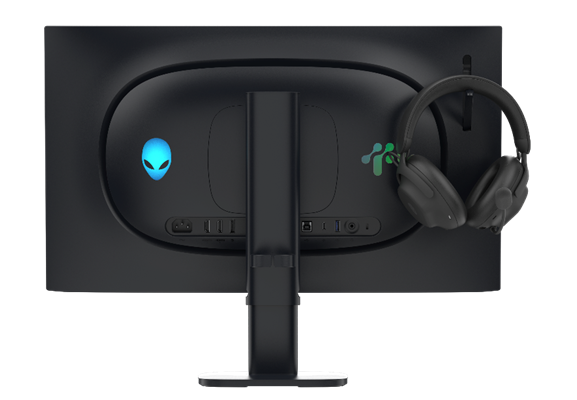
The graphics-card logo does not settle the argument
Nvidia, AMD and Intel users face the same underlying issue: the computer must generate enough frames for an extremely fast monitor to show its full benefit. CPU performance, GPU performance and game settings all influence that result. Lower resolutions and lighter graphics settings can make higher frame rates more achievable, depending on the game and the limiting component. Intel’s explanation
That creates two very different upgrade priorities. A competitive player may willingly give up visual detail for a faster, more consistent response. Someone absorbed in a cinematic game may place greater value on resolution, image quality and screen size.
Neither preference requires treating the other as a mistake. They are different uses of the same hardware budget. Our Dawnwalker performance article explores the game-specific side of that trade-off.
For this Alienware, the unanswered practical issues are price, independent motion and latency testing, and performance over sustained use. Its advertised refresh rate alone cannot establish value.
Still, the announcement is an intriguing signal. Gaming displays are becoming more specialised, with extreme speed forming its own category of ambition. The AW2527HX will make sense only when that ambition matches the person sitting in front of it.
Leave a Reply