

The United States has published a new battery strategy built around an awkward truth: inventing a promising chemistry is not the same as manufacturing millions of reliable cells.
On 28 October 2026, the US Department of Energy released its Strategy for American Leadership in Batteries and launched a consortium called the Battery Manufacturing Accelerator, or BattMan. The plan aims for an integrated domestic supply chain by 2030 and US leadership in battery technology and manufacturing by 2035.
Those are policy targets, not completed outcomes. The announcement does not identify a new factory, a fixed funding package or guaranteed production capacity.
The demand forecast is doing much of the work
DOE projects US battery demand across transport and energy storage will rise from 179 gigawatt-hours in 2025 to 707 GWh in 2035. It also estimates data centres could account for 25% of US battery-storage demand by 2030.
A gigawatt-hour measures stored energy, not instantaneous power. Four hundred gigawatt-hours of annual demand could represent vehicle packs, grid systems and other applications with very different chemistries, safety requirements and lifetimes.
The forecast may change with electric-vehicle sales, data-centre construction, trade policy and technology costs. Its importance is directional: demand is expected to grow faster than existing domestic supply chains can comfortably support.
BattMan focuses on the difficult middle
Laboratory cells are made in small batches under controlled conditions. Commercial production requires continuous coating, drying, calendaring, stacking or winding, electrolyte filling, formation and quality testing. Tiny variations can reduce yield or create defects that appear only later.
The BattMan consortium will connect national laboratories, universities and industry to tackle those scale-up problems. It is led by Pacific Northwest National Laboratory and includes Argonne, Oak Ridge and the National Laboratory of the Rockies.
DOE says the programme will use real-time process monitoring, digital twins, closed-loop control and what it calls “super intelligence” to identify manufacturing problems earlier. A digital twin is a computational model of a physical production process that can be updated with factory data.
Six pillars stretch beyond the factory
The strategy identifies six priorities: upstream and midstream supply-chain investment; faster commercialisation of laboratory discoveries; manufacturing-process innovation; mission-driven grid deployment; coordination with international partners; and workforce development.
The upstream focus covers minerals and precursor materials. Midstream steps include refining and producing active materials—areas where a cell factory can still depend heavily on imports. DOE also says it wants to favour materials based on more abundant domestic elements.
For the grid, the strategy spans fast-response batteries and long-duration systems. It calls for interoperability standards, secure-by-design controls and field data that can feed back into product improvement.
Manufacturing intelligence is not automatic manufacturing success
Digital twins and machine-learning quality control can reduce scrap and reveal process drift, but they need reliable sensors, representative data and engineers who understand both electrochemistry and industrial equipment. A model trained on a pilot line may not transfer cleanly to a larger plant.
Commercial outcomes will also depend on permitting, electricity prices, equipment lead times, customer contracts and sustained policy support. A consortium can coordinate expertise, but it cannot guarantee that a new chemistry will beat established lithium-ion production on cost, safety or bankability.
The useful test is measurable factory output
The DOE announcement is best understood as a roadmap and institutional launch. It should not be counted as new battery capacity.
Progress will be visible in pilot-to-commercial conversion times, manufacturing yield, cost per kilowatt-hour, domestic material share, independently verified safety and operating grid projects. If BattMan can improve those measures, it will address one of energy technology’s most persistent gaps. Until then, the plan is an organised ambition rather than a manufacturing result.
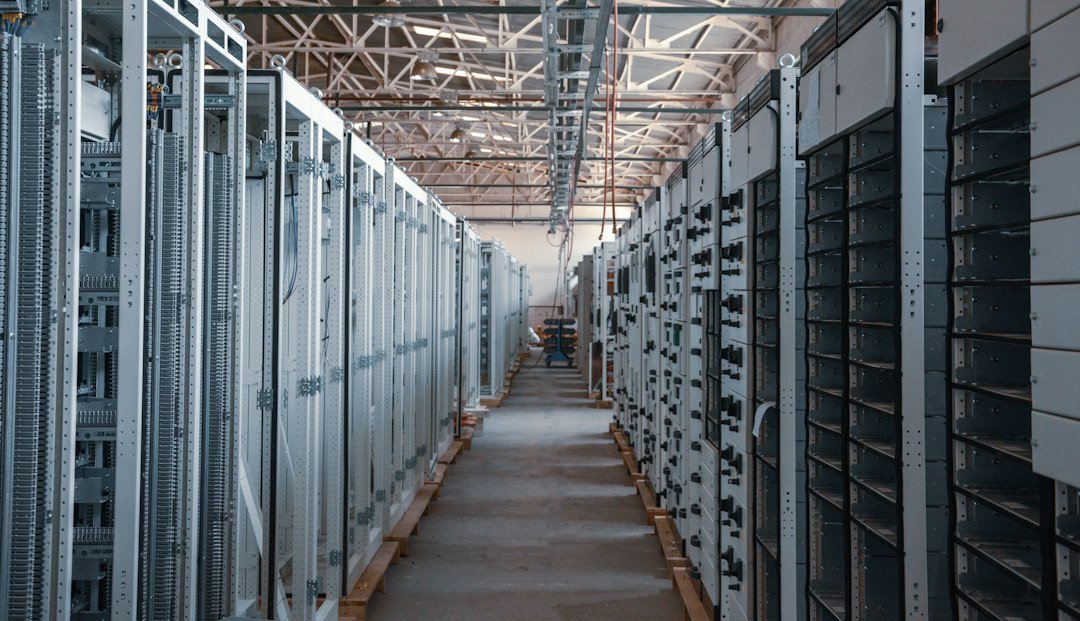
Featured image: Igor Omilaev/Unsplash. Conceptual battery image; not a DOE facility.
Leave a Reply