
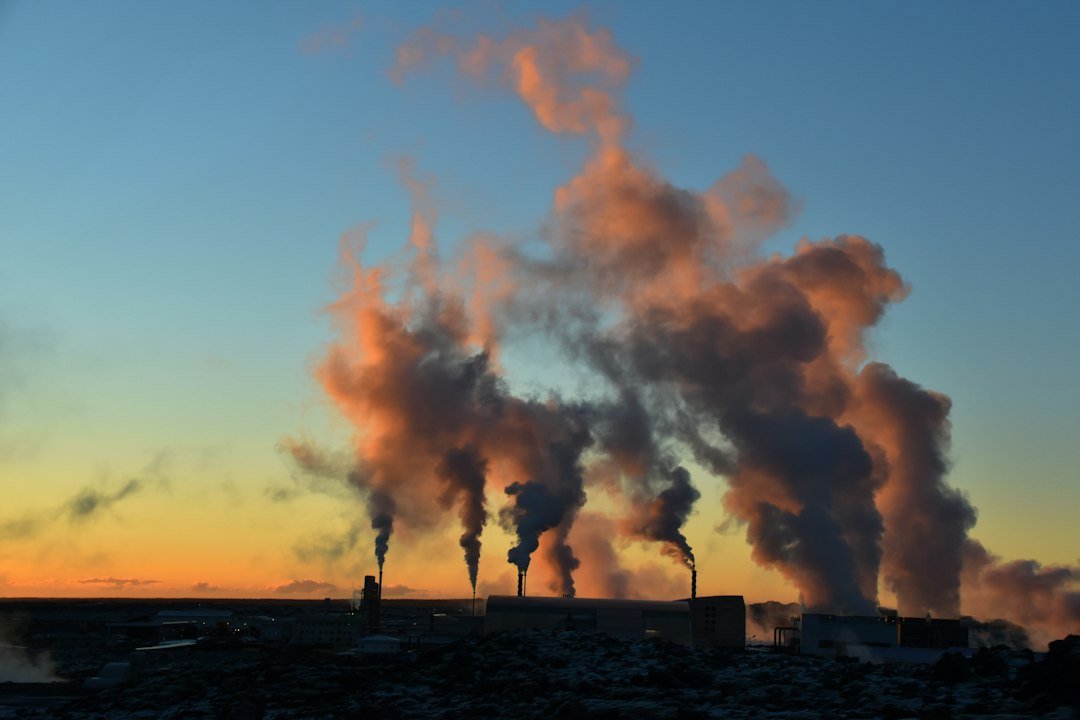
Featured image: Geothermal energy production in Iceland illustrates the energy setting. Contextual photograph; not a Salton Sea lithium-extraction facility or evidence of commercial mineral output. Photo: Sam Bark / Unsplash. Unsplash licence.
A geothermal power plant brings hot fluid from underground to help generate electricity. At California’s Salton Sea, that fluid also contains lithium. The combination suggests a compelling idea: produce power and recover a material used in rechargeable batteries from the same subsurface system.
The difficult step is the industrial process between a geological resource and usable battery material. This explainer draws on Berkeley Lab’s November 2023 resource report and related research. It does not announce new commercial lithium output or treat a resource estimate as a production record.
The brine contains a mixture rather than a finished product
Brine is water containing dissolved salts. Geothermal brine carries heat and a mixture of dissolved substances, so recovering lithium requires selecting it from competing materials. Finding lithium in a fluid does not establish that the fluid can be processed cheaply or reliably.
A Berkeley Lab research account dated 29 November 2021 describes an independent review of extraction technologies, including inorganic sorbents. A sorbent is a material that captures a selected substance. The review examined published research, industrial reports and patents rather than assuming that every proposed process was commercially proven.
The engineering question is how selectively the material captures lithium, how it is regenerated for reuse and how the process behaves with real brine. Success in a simplified liquid is a useful starting point; sustained operation with the actual feed is a different demonstration.
Resource size depends on geological assumptions
The 2023 report estimated about 4.1 million tonnes of lithium carbonate equivalent in the well-characterised portion of the reservoir. A broader estimate reached 18 million tonnes under assumptions about a larger reservoir and its porosity, the proportion of rock occupied by pore space.
Lithium carbonate equivalent is a reporting convention that expresses lithium quantities as an equivalent amount of lithium carbonate. It is not a statement that finished lithium carbonate is sitting underground, ready to load into a truck.
Our assessment is that such figures should be read as conditional resource estimates. They do not by themselves establish how much a particular facility can sell each year, the product quality it will achieve or the costs of keeping the process operating.
The reservoir also changes during production
The resource report modelled production, reinjection and lithium removal. One forecasting scenario assumed 95% removal from produced brine beginning in 2024 and found that recovery could decline substantially over time. That was a modelling assumption, not evidence that the region actually began removing 95% of its lithium on that date.
The authors identified replenishment from deeper lithium-rich brine and described the models as preliminary. Their work makes a useful point: the initial dissolved inventory and the rate at which lithium becomes available during ongoing production are different quantities.
An extraction process therefore needs an operating case that includes the changing feed. A large initial resource can coexist with constraints on the sustained rate of recovery.
Water demand needs local accounting
A water-resource study dated 6 September 2024, published in Environmental Research Letters, examined planned geothermal expansion and lithium extraction. It estimated water demand at roughly 4% of the region’s historical supply for the proposals considered.
The study also identified potential Colorado River allocation reductions as a larger regional pressure and called for more specific information about extraction and refining water needs. The percentage is therefore tied to a set of proposals and a historical baseline. It is not a universal water-use figure for geothermal lithium.
That distinction matters when assessing environmental claims. A process should be evaluated through its actual water requirements, chemical use and waste handling in the location where it would operate.
The meaningful milestone is sustained, specified output
A persuasive demonstration would report the brine treated, lithium recovered, product specification, operating duration and resources consumed. Our view is that those measurements connect a promising geological estimate to an actual supply chain.
Geothermal lithium offers a route to combine mineral recovery with existing energy infrastructure. The resource gives engineers something valuable to work with. Repeatable extraction and refining determine how much of that opportunity reaches a battery.
Leave a Reply