

A methane release can leave no obvious trail in an ordinary photograph. That makes finding it a different problem from spotting a damaged roof or a new road from space.
Researchers at Google and NASA’s Jet Propulsion Laboratory are applying AI to that search. In a 1 September 2026 research announcement, Google described MAPL-EMIT, a system that analyses observations from the EMIT instrument aboard the International Space Station. The project also makes model and dataset resources available for others to examine. Google Research
The opportunity is practical: help people decide where to investigate. A detection becomes environmentally useful when someone can establish what is happening and take effective action.
Finding a chemical signal inside a complicated landscape
EMIT records many bands of light, producing what researchers call hyperspectral data. Gases and surface materials affect those measurements differently. The challenge is separating a methane signal from a landscape that can contain confusing lookalikes.
MAPL-EMIT considers both the spectrum and the surrounding spatial pattern. It is intended to distinguish a plume spreading across a scene from a surface feature that merely resembles methane in part of the data. Google’s technical explanation
The authors trained the system using 3.6 million simulated plumes inserted into real EMIT observations. On one real-world benchmark, it captured 84% of known, manually annotated plume complexes and found roughly 1.5 times as many plausible plumes as human analysts. “Plausible” matters: that comparison does not establish that every additional detection is a confirmed leak. Authors’ research preprint
Simulated training data can expose a model to situations that would be expensive to collect and label manually. The strength of that approach must still be judged on measurements beyond the simulation. The paper describes checks against airborne observations and controlled releases as well as the annotated satellite benchmark. Research methods and validation summary
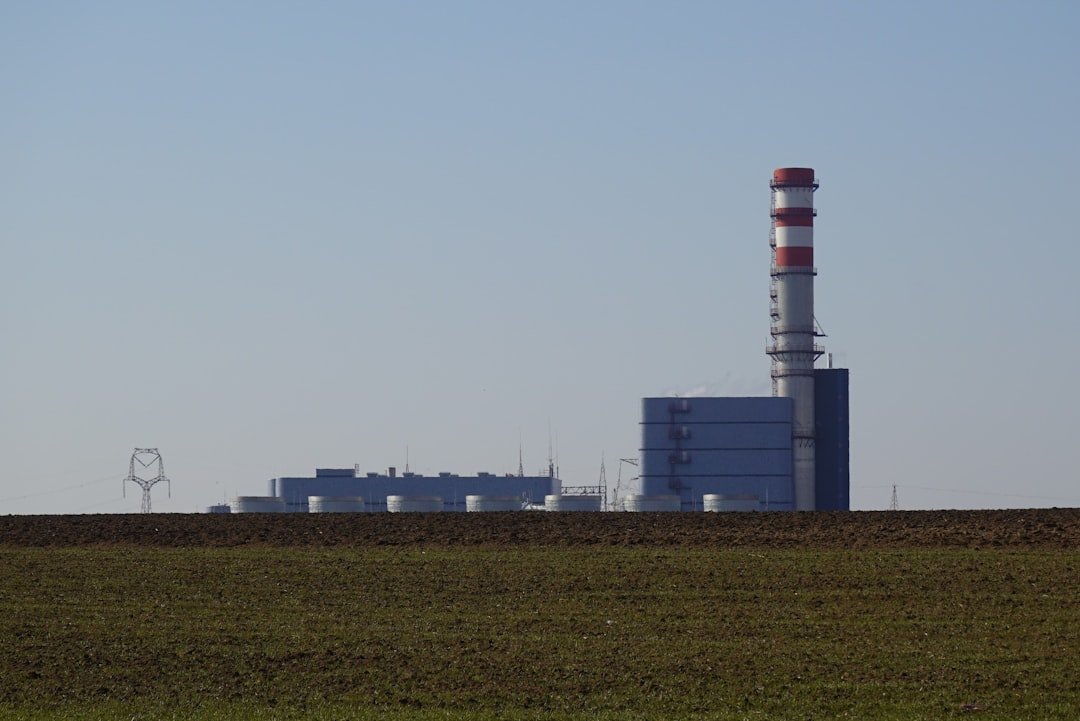
The confidence label changes the meaning of a dot on the map
The public dataset makes an unusually consequential distinction. Its high-confidence group has repeat observations and an estimated false-positive rate of about 3–5% in human review. The medium-confidence group has a much higher estimated rate of 50–55% and requires additional filtering and verification. MAPL-EMIT dataset documentation
Treating those categories as interchangeable would turn a useful screening tool into a misleading accusation against a location or operator.
The published version also covers historical observations from August 2022 to June 2026. It is not a live inventory of every leak happening today. Its methane-enhancement measurements do not directly provide a release rate in kilograms per hour; that requires additional information and analysis. Dataset coverage and measurement notes
From detection to a repair that can be checked
Our assessment is that the most useful workflow connects detection, independent confirmation, action and follow-up measurement. A larger collection of candidates is valuable only if it helps that chain work better.
This is a different use of environmental AI from the air-pollution forecasting work FutureTechDose recently covered: here the emphasis is locating possible sources in observations.
The project has not demonstrated a particular amount of avoided emissions simply by producing a map. Its promise is to make a difficult search more manageable, while leaving the evidence visible enough for people to challenge and check.
Featured image: International Space Station imagery used for context, not an EMIT methane observation. Norbert Kowalczyk / Unsplash.
Leave a Reply