
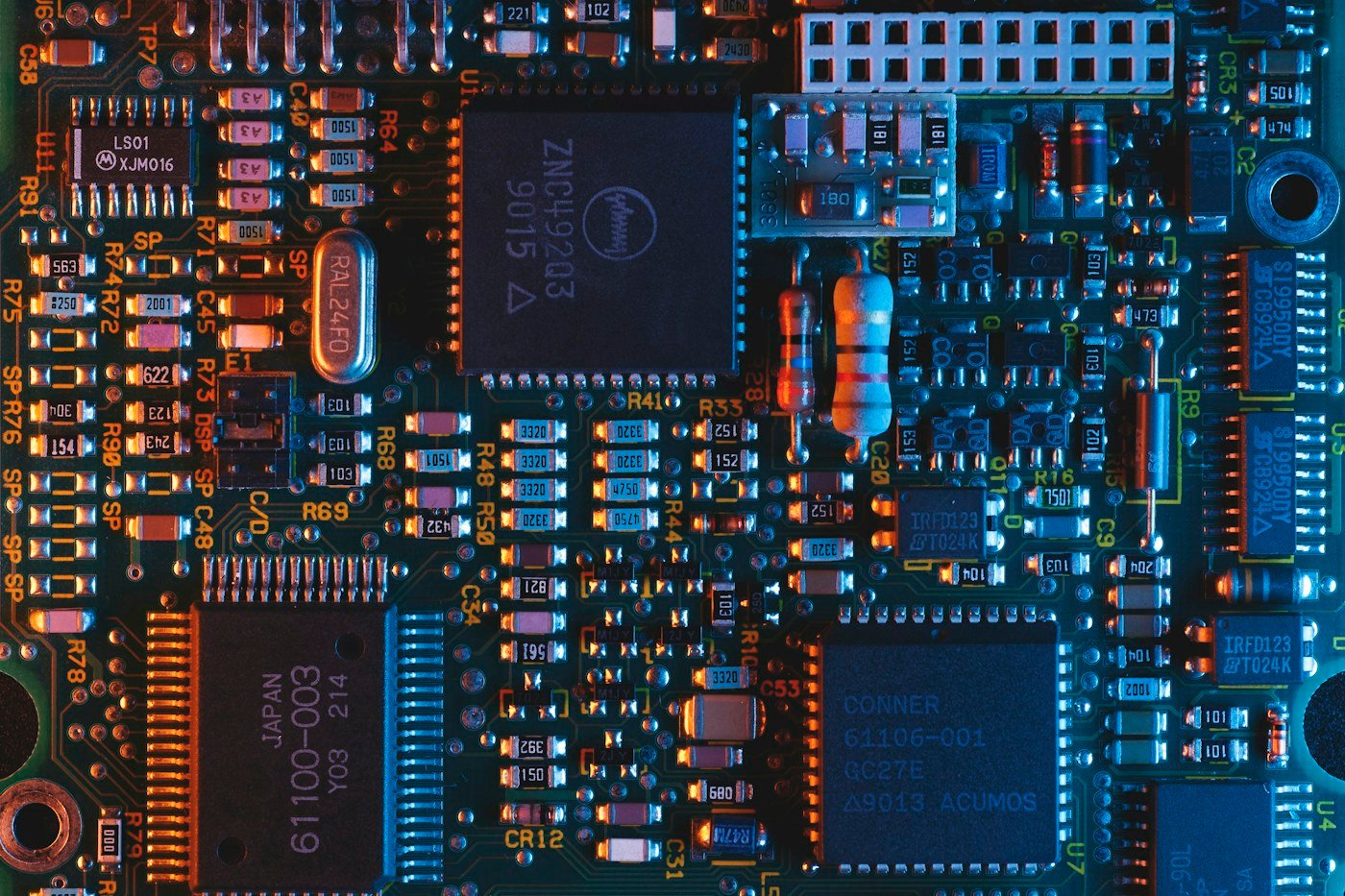
Computer circuitry, shown as a stock image. The reported Intel–SK hynix agreement remains unconfirmed. Credit: Umberto / Unsplash.
The Intel SK hynix memory talks have put a different part of the AI boom in the spotlight. A powerful processor still needs a fast, dependable supply of data—and the companies providing that memory have become part of the bigger manufacturing story.
There is an important boundary around the latest news. On 16 September 2026, SK hynix said no plans had been confirmed following reports about possible memory production with Intel in the United States. A factory partnership is a possibility under discussion, not a completed deal. SK hynix statement
What the Intel SK hynix memory talks do—and do not—establish
SK hynix’s response referenced reported scenarios including leasing part of Intel’s Ohio facilities and a joint venture involving major cloud companies. It said neither scenario had been decided and no specific arrangement had been finalized.
That leaves the most commercially important details unanswered: which products, which partners, how much capacity and who would pay. Treating those missing details as settled would turn a report into a fictional factory plan. Company clarification
The US memory project that is already moving
There is a separate, concrete development. SK hynix broke ground in West Lafayette, Indiana, on 27 August. Its planned investment of more than US$4 billion covers advanced HBM packaging and related research. HBM means high-bandwidth memory: stacked memory chips designed to move large amounts of data quickly.
The distinction is where the manufacturing happens. The company says wafers made in South Korea will go to Indiana for advanced packaging and testing. Producing the underlying chips and assembling them into finished memory products are different steps.
Its announced schedule targets cleanroom completion in October 2028 and mass production in the second half of 2029. Those are future milestones, not memory already coming off an American production line. Indiana project announcement

The bottleneck behind the benchmark
Think of an AI processor as a very fast kitchen. Adding more chefs achieves little if ingredients arrive through a slow service hatch. Memory bandwidth is the speed of that delivery; memory capacity is how much can be kept close at hand.
Real AI systems also depend on storage, networking and software scheduling. SK hynix’s technical explanation stresses that improving one component alone can leave the next bottleneck untouched. Faster chips do not automatically produce an equally large improvement in the whole system. AI infrastructure and data movement
Our look at Intel’s chipmaking technology covers another part of this competition. The memory story adds a different test: whether manufacturing partners can deliver the complete system customers need.
For readers following Intel, the useful next signal is a signed agreement with named products, funding and dates. Until then, the interesting development is the possible direction of travel. The reported talks suggest a wider role in AI manufacturing, while SK hynix’s own statement keeps the outcome firmly open.
Leave a Reply