
The Moon can look like a finished landscape: old craters, old mountains and very little changing between one photograph and the next.
Then a new hole appears, more than 200 metres across.
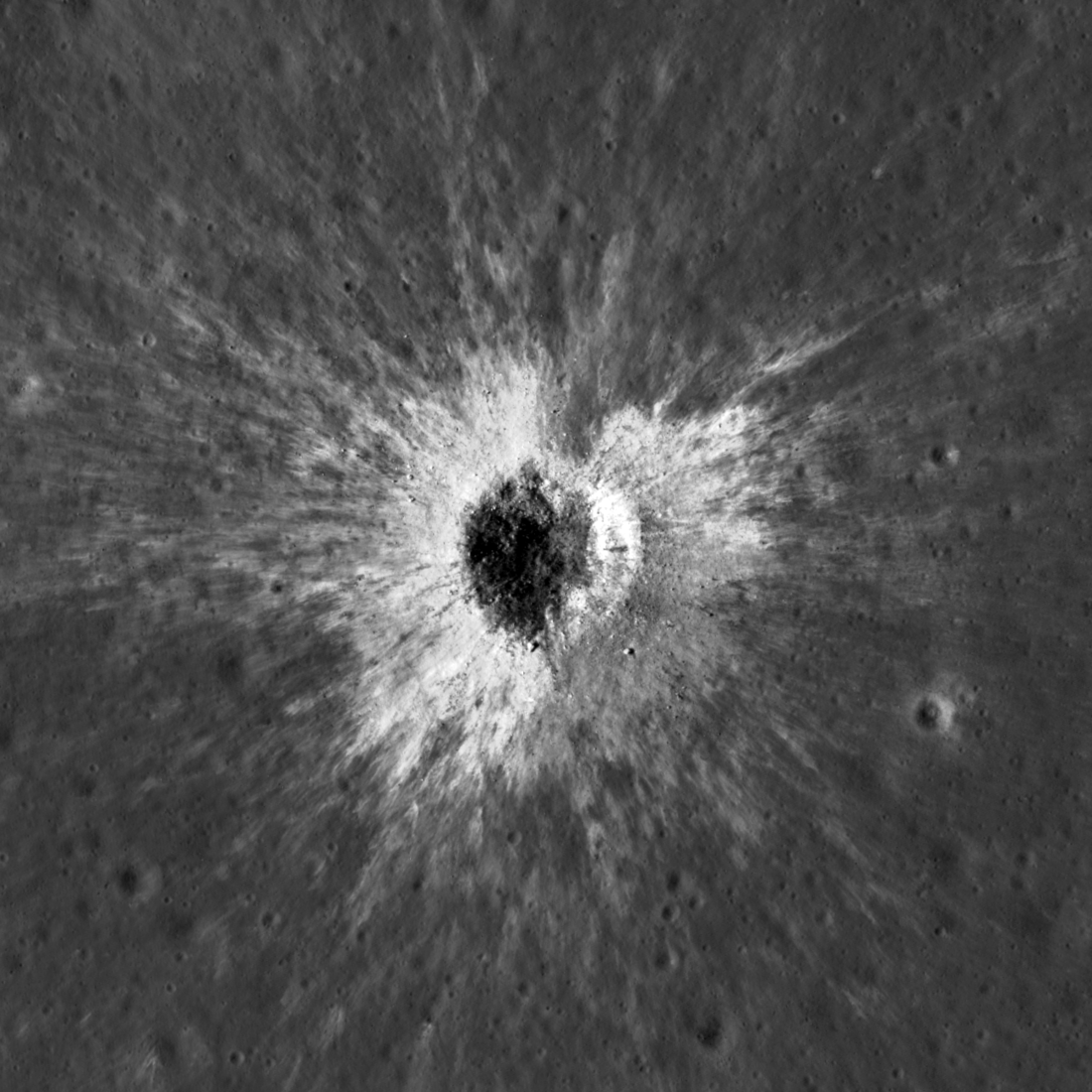
Researchers have identified McGetchin crater, an impact scar roughly 222 metres wide and 43 metres deep. The impact happened between April and May 2024; the findings were announced in September 2026. It is newly studied damage, rather than a collision that happened this week. NASA’s discovery report
The crater provides a rare opportunity to examine a sizeable lunar impact with photographs from both before and after the event.
The blast left clues beyond the rim
NASA’s 16 September account describes a fresh bright pattern of ejected material and a surrounding region with a different thermal signature. Measurements found nighttime temperatures around 9°C lower in the affected area. The explanation involves disturbed, loosened surface material that retains heat differently. NASA’s discovery report
That makes temperature another way to read the aftermath. The visible crater marks where material was excavated; changes in surrounding soil can tell a wider story about what the impact did.
The camera team reports disturbances more than 100 kilometres from McGetchin. It also describes evidence that ejected material travelled in more complicated patterns than a simple, neat blanket around the hole. These observations can improve models of how impacts redistribute lunar material. LROC’s analysis
Distance from an impact therefore deserves attention alongside crater size. The physical footprint of an event can extend well beyond its most obvious feature.
“Once in a century” describes a rate
The LROC team cites a model suggesting a crater of this size forms somewhere on the Moon about once every 132 years. That is a statistical expectation, not a timetable or a guarantee of a long quiet interval after this impact. LROC
It is also not a prediction that a particular future Moon base will be struck. Turning a global impact rate into a risk for one small location requires a different calculation.
What makes this event useful is that an operating spacecraft was there to document the changed landscape.
An old orbiter keeps producing new information
NASA’s Lunar Reconnaissance Orbiter launched in June 2009. Its measurements of terrain, temperature and other conditions help identify landing locations and resources for future exploration. Repeated observations give scientists a record of change, as well as a map. NASA’s LRO mission overview
Our view is that McGetchin adds a practical reason to keep that record growing. Engineers designing equipment intended to remain on the Moon for years need to understand the environment over years, not just the conditions photographed on arrival.
The discovery does not make lunar exploration impossible. It makes the engineering problem more concrete. The Moon is a place where surfaces can change abruptly, and a useful plan for operating there has to account for that.
Related reading: NASA and IBM’s AI model for lunar science.
McGetchin crater in an image from the Lunar Reconnaissance Orbiter Camera. Credit: NASA/GSFC/Intuitive Machines.
Leave a Reply