
NTT DATA has announced a 900-megawatt agreement with Bloom Energy for on-site generation across multiple data-centre projects worldwide. The 5 November 2026 announcement says initial shipments are expected in 2027 and describes the fuel cells as primary power, not merely emergency backup.
The development adds a named international deployment programme to the fuel-cell buildout. It does not mean 900 MW is operating today, or that every site has the same schedule, fuel supply and environmental performance.
The agreement is larger than one installation
NTT says modular systems can be added in phases alongside data-centre construction. The announcement does not provide a site-by-site allocation, a complete commissioning timetable or a disclosed contract price. It also describes potential expansion of the relationship, which should not be counted as additional installed capacity.
Our assessment is that the project ledger needs several separate columns: announced scope, equipment shipped, equipment installed and capacity commissioned. Moving from one column to the next requires evidence. A large framework can help organise procurement without making those later stages automatic.
Primary power changes the service being purchased
Backup generation is designed around interruptions to another supply. Primary generation must support ordinary operations. That changes the relevant questions about maintenance, fuel availability and how a facility handles an unavailable module.
Bloom’s Energy Server description identifies a modular solid-oxide fuel-cell system that can operate in grid-parallel or microgrid arrangements. Fuel flexibility includes natural gas, biogas and hydrogen. These are platform capabilities, not confirmation that every NTT project will use every fuel or operate independently of a grid.
Non-combustion is not the same as zero carbon
A fuel cell converts fuel chemically into electricity rather than relying on combustion in the generating stack. The US Environmental Protection Agency’s technical catalogue describes the carbon dioxide emissions associated with fuel-cell generation. Lower local pollutant emissions and lower carbon emissions are related but different claims.
The announced NTT agreement does not specify a universal carbon-capture arrangement or a fully hydrogen-powered portfolio. It would therefore be misleading to assign zero-carbon status to the whole 900 MW simply because the generating technology is a fuel cell.
Water claims need a defined boundary too
Bloom’s product description states no water consumption during normal operation of the Energy Server. NTT also emphasises minimal water use and quiet operation. Those statements concern the power technology; they do not establish the total water demand of an entire data centre and its surrounding supply chain.
A useful site disclosure would separate the generating equipment from cooling, other facility operations and upstream fuel production. The same principle applies to noise: equipment-level characteristics need to be assessed in the context of the complete installation and nearby receivers.
The operating record will matter more than the headline total
Our interpretation is that the next meaningful milestones are named site allocations, shipment confirmations and commissioning results. Subsequent reporting should describe delivered power, availability, actual fuel use and the relevant emissions boundary. That would allow the programme to be assessed as infrastructure rather than only as an order announcement.
On-site generation can change where developers face constraints, but it does not remove the need for a complete service design. NTT’s agreement is a substantial procurement commitment with a phased future delivery path. Its practical achievement will be the capacity that becomes reliable supply at real facilities, not the megawatts repeated before those facilities are ready.
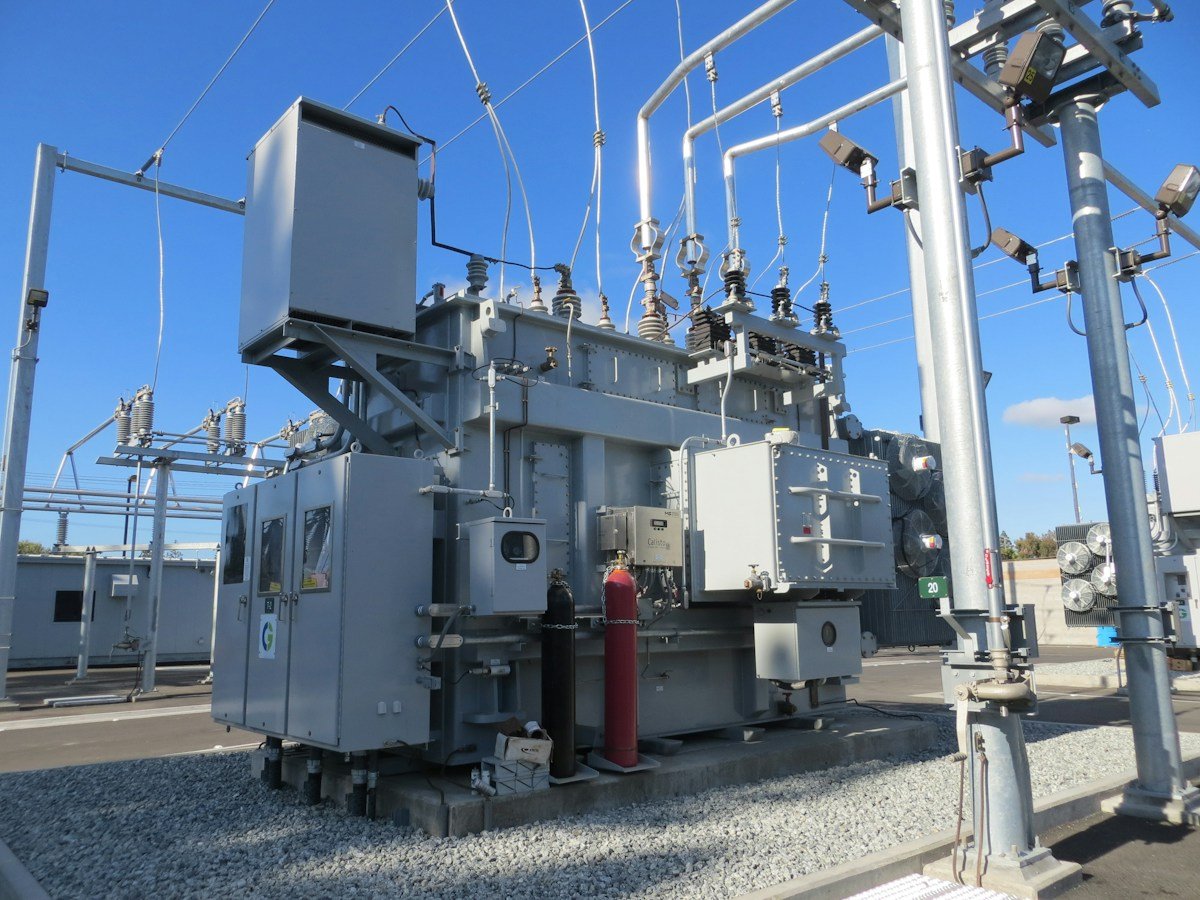
Featured image: Electrical substation equipment outdoors. Contextual photograph, not the experiment, trial, product or facility described. Photo: American Public Power Association/Unsplash. Unsplash licence.
Leave a Reply