
A wind farm cannot order the weather to repeat itself. That makes a seemingly simple question surprisingly difficult to answer: did a new turbine setting produce more electricity, or did the wind just change?
Researchers have tackled that problem by squeezing more realistic wind physics into a laboratory. Their study appeared in PNAS Nexus on 7 September 2026, and MIT highlighted the results on 28 September. It combines pressurised wind-tunnel experiments with a model for predicting turbine behaviour. Research paper; MIT’s research report
Making a small rotor face a bigger world
Simply shrinking a turbine changes the balance of forces acting on it. A tabletop rotor in ordinary air therefore does not automatically reproduce the behaviour of a giant machine outdoors.
The team used a rotor around 15 centimetres across inside a pressurised facility. Increasing air density helps bring the small experiment closer to the flow conditions that matter for larger turbines. MIT describes the approach as a bridge between simplified laboratory models and difficult field experiments. How the experiment works
The benefit is control. Researchers can change one setting, repeat an experiment and compare outcomes without waiting for the atmosphere to cooperate.
Rotation speed and wind direction belong together
The paper focuses on two connected quantities. Yaw misalignment is the angle between the turbine’s orientation and the wind. Tip-speed ratio compares how fast the blade tips move with the speed of the incoming air.
The experiments found that the rotation setting that produces the most power depends on that misalignment angle. Treating a turbine as though it always faces the wind perfectly can therefore miss better operating settings. The researchers’ Unified Wind Turbine model reproduced the behaviour observed in their controlled tests. Findings and model validation
MIT reports that adjusting blade-tip speed as alignment changes is rarely used in wind farms today. The proposed opportunity is to improve how existing equipment is controlled, alongside using the method to test future designs. Potential applications
A promising result, with field work ahead
This is laboratory research and model validation. It does not establish a universal percentage increase in wind-farm output, and it does not show that every commercial turbine can adopt the same settings.
Our assessment is that the most valuable next evidence would come from operating turbines: energy gains measured across changing weather, alongside effects on equipment loads and maintenance. A control improvement becomes useful when the whole machine benefits.
The immediate advance is a better place to test those ideas. By making small experiments behave more like large machines, the researchers have created a more practical route from an aerodynamic hunch to a field-ready proposal.
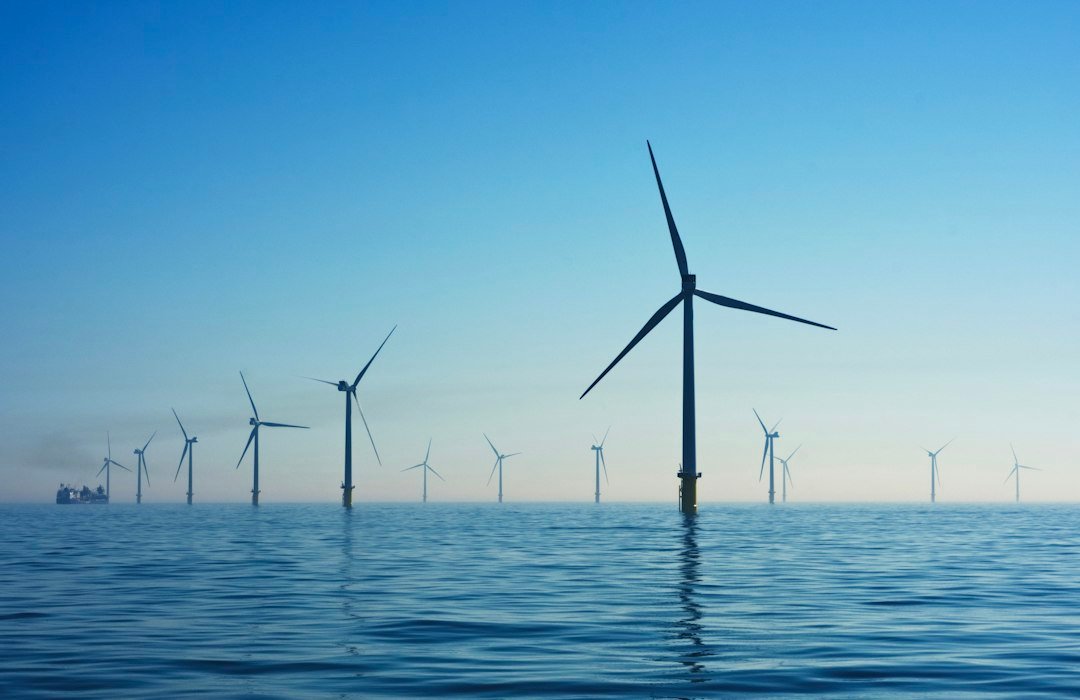
Featured image: representative photograph by Nicholas Doherty / Unsplash. Images illustrate the subject and do not show the specific project or experimental equipment described.
Leave a Reply