
A space company can earn attention by showing what it hopes to build. It earns a different kind of credibility when a customer books the next three missions.
NASA has awarded SpaceX an additional US$946 million for Crew-15, Crew-16 and Crew-17, plus associated services. Announced on 18 September 2026, the contract modification adds another chapter to the Falcon 9 and Dragon partnership. NASA’s announcement
For SpaceX, the attractive part of this story is continuity: an established system has secured more work in one of spaceflight’s most demanding markets.
NASA is buying the whole journey
The award covers more than launch day. It includes operations on the ground and in orbit, transport of cargo, return and recovery, and the spacecraft’s role as a lifeboat while it is docked to the International Space Station.
NASA lists mission readiness dates in 2027 and 2028, with the contract’s performance period extending through 2030. Those are planning milestones, rather than three fixed launch dates. NASA’s contract details
That distinction also helps explain the price. Dividing the headline amount by three produces an average contract value, but calling that a simple “rocket launch price” would leave out much of what NASA is purchasing.
The customer needs a complete transport service: preparation, flight, a safe place to remain docked and a route home. Our view is that this continuing responsibility is what makes repeat crew contracts more telling than a spectacular demonstration alone.
The next crew is already preparing
A separate NASA update on 17 September described Crew-13 entering routine preflight quarantine ahead of a targeted early-October launch. Its four members represent NASA, the Canadian Space Agency and Roscosmos. NASA’s Crew-13 update
Their preparation includes the less glamorous details that make human spaceflight possible: checking spacesuit seals, confirming seat fit, testing communications and becoming familiar with the noises inside Dragon. Quarantine reduces the chance that an illness travels to orbit with the crew. NASA
These procedures are a reminder that reliability is built from thousands of ordinary decisions. A spacecraft must work as a place where people can live and respond to problems, as well as a vehicle that reaches its destination.
A strong business underneath the spectacle
The new award strengthens the case for judging SpaceX across its separate programmes. Falcon 9 and Dragon have a defined operational role. Success there is valuable on its own; it does not need to be stretched into a guarantee about every future SpaceX project.
Nor does another contract remove the need to prove safety on each flight. It commits the company to doing the work again.
That is why this announcement deserves attention. SpaceX has secured a further purchase of a service NASA needs to keep delivering. In a sector full of dramatic future promises, returning customers remain powerful evidence of practical value.
Related reading: SpaceX’s 700th Falcon mission.
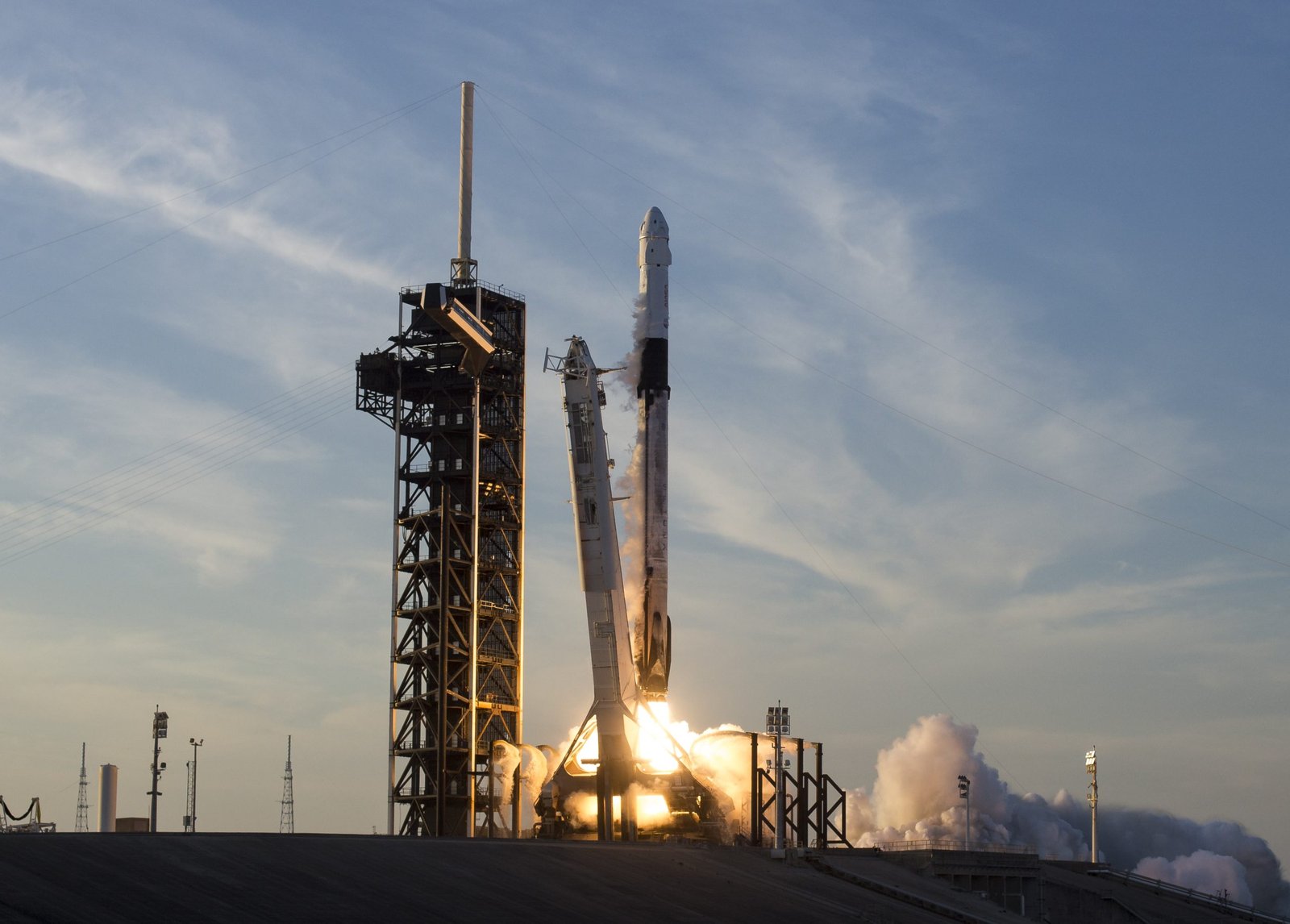
Crew-10 launches on 14 March 2025. This archive photograph shows the Falcon 9 and Dragon system, rather than one of the newly awarded flights. Credit: NASA/Aubrey Gemignani.
Leave a Reply