
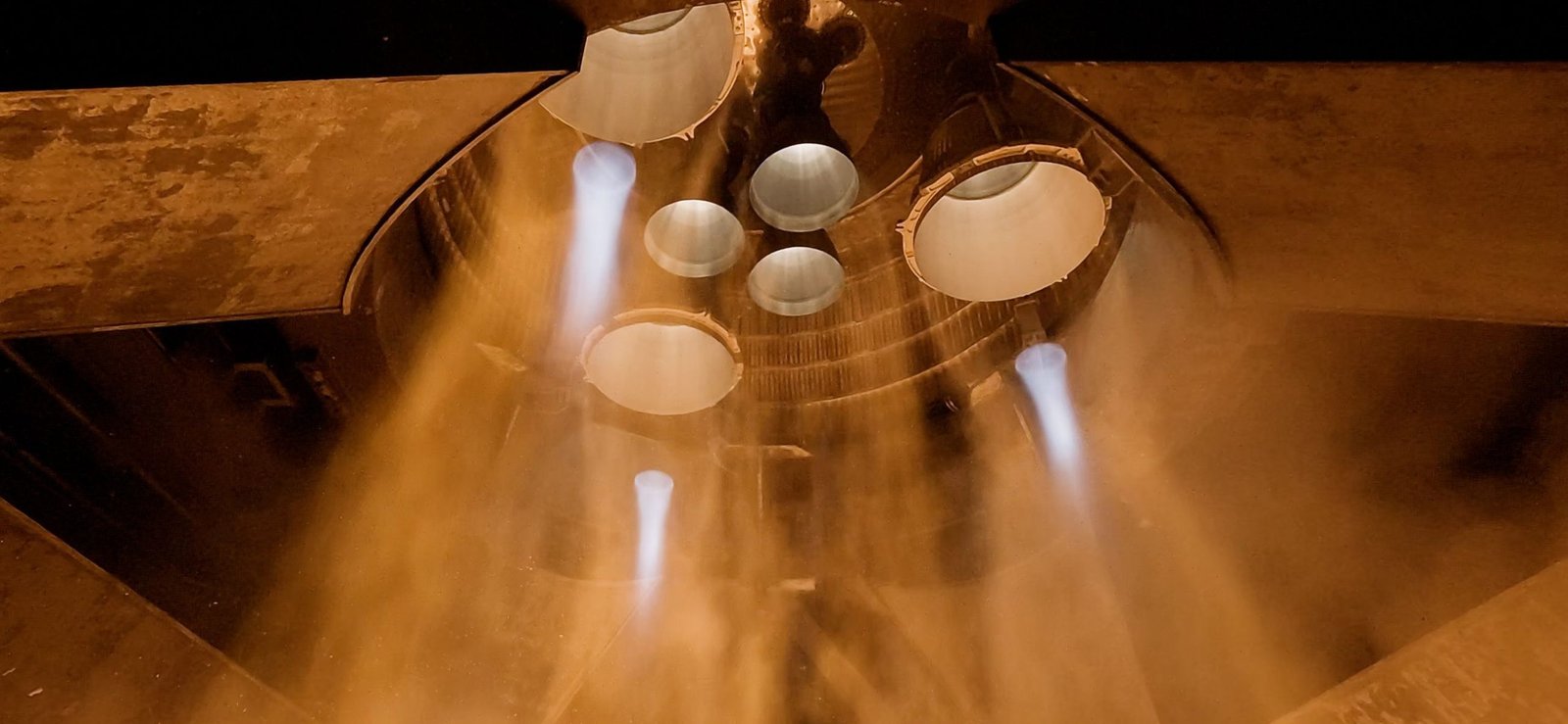
Starship engine imagery from SpaceX’s Flight 14 mission page. Flight 14 has not yet taken place. Credit: SpaceX.
The defining moment of Starship Flight 14 may not be liftoff. It could be the decision, later in the flight, to restart an engine and place the spacecraft into orbit.
SpaceX is targeting 22 September 2026 for the mission, pending regulatory approval. Its published plan calls for Starship’s first orbital flight and the deployment of 26 Starlink V3 satellites. As of 17 September, these are planned objectives, not completed achievements. SpaceX mission page.
Getting to space is not the same as staying there
A spacecraft does not enter orbit simply by climbing high enough. It needs enough sideways speed that it keeps falling around Earth rather than falling back onto it.
In its 15 September update, SpaceX explains that Starship’s first 13 flight tests deliberately followed suborbital paths. Those trajectories were designed to return the vehicle towards an ocean landing area even if control was lost. The next step changes the job from a brief flight through space to sustained orbital operations. SpaceX’s orbital-flight explanation.
That is why this test matters beyond another spectacular launch video. A vehicle intended to deliver satellites, carry cargo and eventually support more ambitious missions must be able to do useful work after the initial climb.
The Starship Flight 14 plan
The nominal mission would operate at roughly 275 kilometres altitude, completing about six orbits during a flight lasting almost ten hours. After satellite deployment, a single Raptor engine would perform a deorbit burn, sending Starship towards re-entry and a planned Pacific splashdown west of Chile. The booster is targeting an offshore landing burn and splashdown, not a tower catch on this flight. Published flight objectives.

The satellite payload provides a practical commercial test. We have previously covered why the Starlink V3 upgrade depends on Starship. This mission would move that story towards an actual delivery, provided the launch and deployment succeed.
SpaceX says the satellites would still need to raise their orbits and complete checks before serving customers. A successful release from the rocket would therefore be a milestone, not an instant guarantee of faster service for every subscriber. SpaceX’s deployment plan.
An engine restart is also a safety decision
SpaceX says the initial ascent will still leave Starship on a suborbital path. Flight controllers would assess its condition before allowing the additional burn into orbit. If the vehicle is not healthy enough, the mission can remain on the earlier return path instead.
The company describes continuing checks of engines, power, communications, navigation and other systems once in orbit, with conservative criteria for ending a flight early. The ability to come back deliberately is central to the orbital plan, not an optional final flourish. Mission design and safety checks.
The milestone to celebrate—and the work still ahead
A successful flight would be a meaningful step towards a large, useful transport system. It would not by itself demonstrate routine reuse, rapid turnaround or the economics of operating a fleet.
Our assessment is that the strongest evidence would be an uneventful sequence: reach the intended orbit, deliver the payload, stay controllable and return as planned. Each completed step would answer a different engineering question.
Starship’s promise becomes more interesting when it moves beyond a vehicle that can launch impressively towards one that can reliably finish a job. Flight 14 is designed to begin that chapter. The results still have to be earned in flight.
Leave a Reply