
Your internet connection can look excellent on a speed test and still freeze at exactly the wrong moment. A video call stalls as you move into another room. A cloud game hesitates just as you press a button. Wi-Fi 8 is being designed around problems like these.
The next wireless generation places unusual emphasis on consistency when signals weaken, networks overlap and devices move. Qualcomm, which contributes to the standard, describes reliability and responsiveness as central goals. That makes this a potentially more personal upgrade than another enormous speed number on a router box. Qualcomm’s technical overview.
Wi-Fi 8 is already moving into chips
There is hardware behind the discussion. On 27 May 2026, Broadcom announced three integrated Wi-Fi 8 chips for routers and mesh systems. Its BCM677x family brings processing, networking and 2.4 GHz and 5 GHz radios together on one piece of silicon. At that announcement, Broadcom was sampling the chips to early customers. Broadcom announcement.
Integration matters because every separate component takes space, consumes power and adds manufacturing complexity. Broadcom argues that combining them can help manufacturers build smaller mesh units and reduce cost. Those are supplier claims about a platform, however; they do not establish the price or performance of a finished router.
For a household, the useful outcome would be equipment that fits where a connection is needed and runs reliably there. A chip announcement is one step toward that outcome. It is not the same as a router independently tested in a busy home.
The worst moments deserve more attention
Average download speed describes only part of a connection. Latency is the time data takes to travel; an occasional long delay can be obvious in a conversation or game even when the average looks healthy.
The Wi-Fi 8 development goals include improving throughput in difficult signal conditions, reducing delays at the slow end of the distribution and losing fewer packets during movement between access points. Qualcomm’s overview describes 25% improvement targets for these particular measures. These are engineering goals in specified scenarios, rather than a promise that every activity becomes 25% faster. Reliability targets and their scope.
Think of a delivery service. The average delivery time can be respectable while one parcel repeatedly arrives too late to be useful. For live audio, the late parcel may contain words you needed several moments ago.

That also explains the connection with cloud gaming services such as GeForce NOW. The attraction of powerful hardware elsewhere depends partly on how promptly the picture and your inputs travel between you and it.
The standard is still being written
Wi-Fi 8’s underlying technical project is IEEE 802.11bn. The IEEE’s timeline, updated on 7 September 2026, lists Draft 2.0 and places predicted final approval in May 2028. The word “predicted” matters: this remains a standards project with further ballots and review ahead. Official IEEE project timeline.
Early silicon and the completion of a standard therefore describe different milestones. A manufacturer can develop a product around draft work before that process finishes. The IEEE schedule does not tell a buyer which particular feature an early product implements or what a later software update will add.
Those details belong in the product documentation. They will matter more than simply having the newest generation printed on the packaging.
A better test for the next router
The most revealing reviews will recreate the irritating situations people recognise: a call while walking upstairs, several active devices sharing a connection, or a game running near the edge of coverage. A result from one quiet room should sit alongside those tests.
Wi-Fi 8 also cannot make a remote service answer instantly or increase the speed purchased from an internet provider. The local wireless connection is one part of a longer route.
For now, the interesting development is the change in engineering priorities. The next generation is being judged increasingly by whether it keeps working smoothly when conditions become awkward. The upgrade people remember may be the evening when the connection finally stops drawing attention to itself.
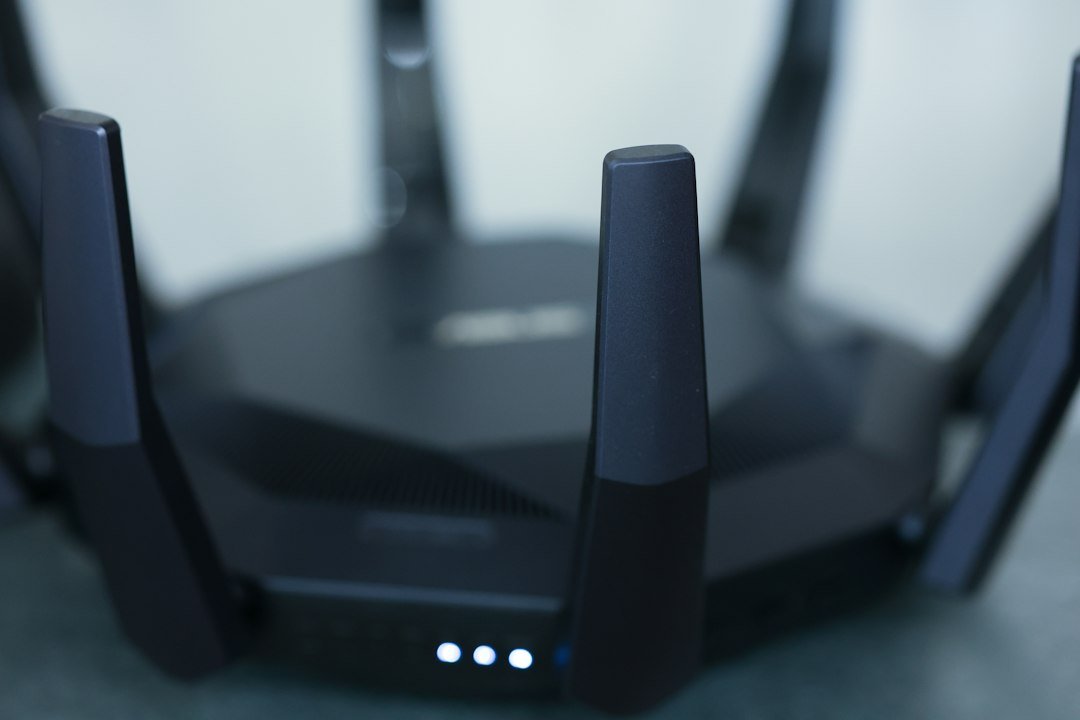
Featured image: Existing networking equipment, shown for illustration. Photo by dlxmedia.hu on Unsplash.
Leave a Reply