

A graphics card can be extremely powerful and still be the wrong tool for a job. Sometimes the problem is simply that the work will not fit inside it.
Nvidia’s RTX PRO 5500 Blackwell Workstation Edition makes that problem its selling point. As checked on 17 September 2026, Nvidia lists the professional card with 84GB of GDDR7 memory and a “coming soon” status. Specifications remain preliminary. It is aimed at work such as AI, simulation and graphics, with deployment in shared workstation racks. Nvidia’s product specifications
For comparison, the GeForce RTX 5090 has 32GB of GDDR7. The new professional card therefore has 2.625 times as much memory capacity. That is a calculation from the published capacities, not a measured performance advantage. GeForce RTX 5090 specifications
Fitting the workload is its own kind of performance
Imagine a workshop with a fast machine and a workbench too small for the object being built. Making the machine faster does not solve the space problem.
AI has a version of this constraint. A language model needs space for its learned numerical values, while processing a conversation requires additional working memory. The attention cache—the stored information that helps a model avoid repeating earlier calculations—can grow with longer inputs and more simultaneous requests. Nvidia’s technical guidance identifies both capacity and memory traffic as important limits on inference, the process of running a trained model. Nvidia’s inference explanation
Compressing those numbers through quantisation can reduce their footprint, but changes the implementation and can introduce accuracy trade-offs. More memory provides another option. It may let a team keep a larger workload together instead of dividing it across devices. Whether that improves the experience depends on the model and software.
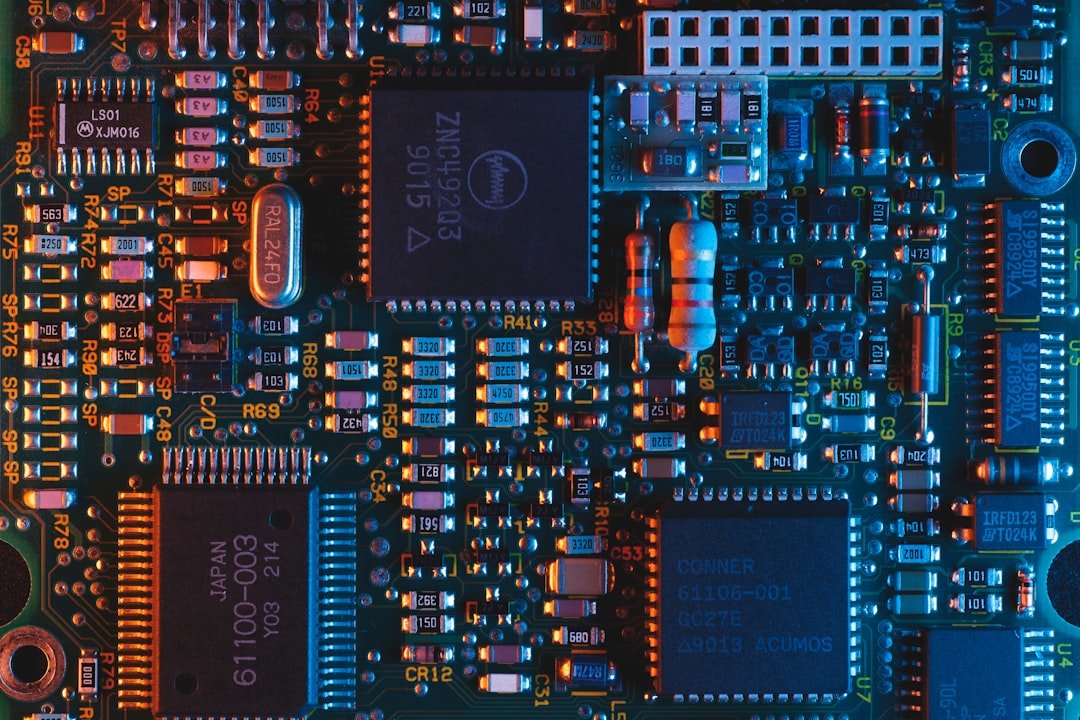
A professional product with professional constraints
Nvidia also lists error-correcting memory and the ability to divide the RTX PRO 5500 into two isolated GPU instances. Its maximum power specification is up to 600 watts. These details describe a managed computing resource, with power and cooling requirements to match. The announcement does not establish a retail price or an independently measured advantage over gaming cards. RTX PRO 5500 features
The wider professional range already includes the 96GB RTX PRO 6000 and lower-capacity alternatives. This makes the 5500 part of a broader set of choices about memory, cooling and deployment, rather than a simple successor to the GeForce 5090. Nvidia’s professional GPU comparison
The useful test will be a real workload: how much memory it uses, how quickly it finishes and what the complete system costs to operate. A larger capacity figure alone cannot answer those questions.
Still, the direction is revealing. For an AI developer, being able to run a useful model at all can matter more than winning a benchmark by a few percentage points. This card puts that less glamorous form of progress in the spotlight.
Related reading: why local AI also puts pressure on GPU memory.
Featured image: Nvidia RTX PRO 5500 Blackwell Workstation Edition. Image: Nvidia.
Leave a Reply