
A weather forecast tells you whether to carry an umbrella. An air-quality forecast can reveal something less visible: how pollution may move through the place where you live.
Researchers at the University of Manchester are adapting Nvidia Earth-2 technology to that second problem. In a 15 September announcement, Nvidia described a UK pollution-modelling workflow developed by David Topping and colleagues, with inference and smaller training runs demonstrated on a DGX Spark desktop system. Nvidia’s research update
The interesting development is a change in who could experiment with these models, and how often.
Air pollution is a moving chemistry problem
Forecasting pollution requires more than finding where emissions originate. Winds move pollutants around. Chemicals react with one another. Sunlight and temperature influence those reactions, while rain and contact with surfaces remove material from the air.
The UK Met Office describes how its forecasting system combines these processes with emissions information and observations from monitoring stations. It also explains that a regional forecast does not capture every local increase beside a road or within an urban centre. A useful national prediction and an accurate estimate for one street are different achievements. Met Office air-quality guidance
That creates an opportunity for faster modelling, but also a demanding test of accuracy.
Teaching AI to fill in the detail
One Earth-2 tool used by the researchers is CorrDiff. Nvidia’s documentation describes it as a downscaling model: it takes relatively coarse atmospheric information and produces more detailed output. Its two-stage design combines a mean prediction with a diffusion model that supplies additional structure and variability. CorrDiff technical overview
Think of downscaling as learning how a broad atmospheric pattern can correspond to more detailed conditions. It is not equivalent to installing a new sensor at every location. The extra detail comes from patterns learned during training, which makes independent measurements especially important when judging whether that detail is correct.
A sharper-looking map is therefore only the beginning of the evaluation. Researchers must establish whether its estimates hold up when compared with observations, including during unusual conditions.
A supercomputer still did the initial heavy lifting
For the Manchester work, training used simulated pollution data and took two days on a single eight-GPU node of the Isambard-AI supercomputer. The desktop demonstration should not be confused with performing that entire initial training run on a small office machine.
The team has also added StormCast for time-dependent forecasting. Street-scale detail and wider release of the pollution workflows remain ambitions described in the announcement. Training details and next steps
This division of labour could be valuable: a concentrated burst of large-scale computing followed by more accessible local experimentation. The practical benefit would depend on the quality of available data, the computing required for each location and successful validation.
The opportunity is better decisions
The Met Office already checks its air-quality predictions against observations. That provides a useful standard for evaluating new AI approaches: measured performance against the atmosphere, beyond impressive demonstration images. How existing forecasts are checked
Our earlier article on Nvidia’s push toward local AI explored computing close to the user. Pollution modelling gives that idea a different purpose.
If these workflows become accurate and accessible enough, more research groups could examine local scenarios without treating every experiment as a major supercomputing project. That is a promising direction for environmental science, even before anyone can reliably forecast the air outside a particular front door.
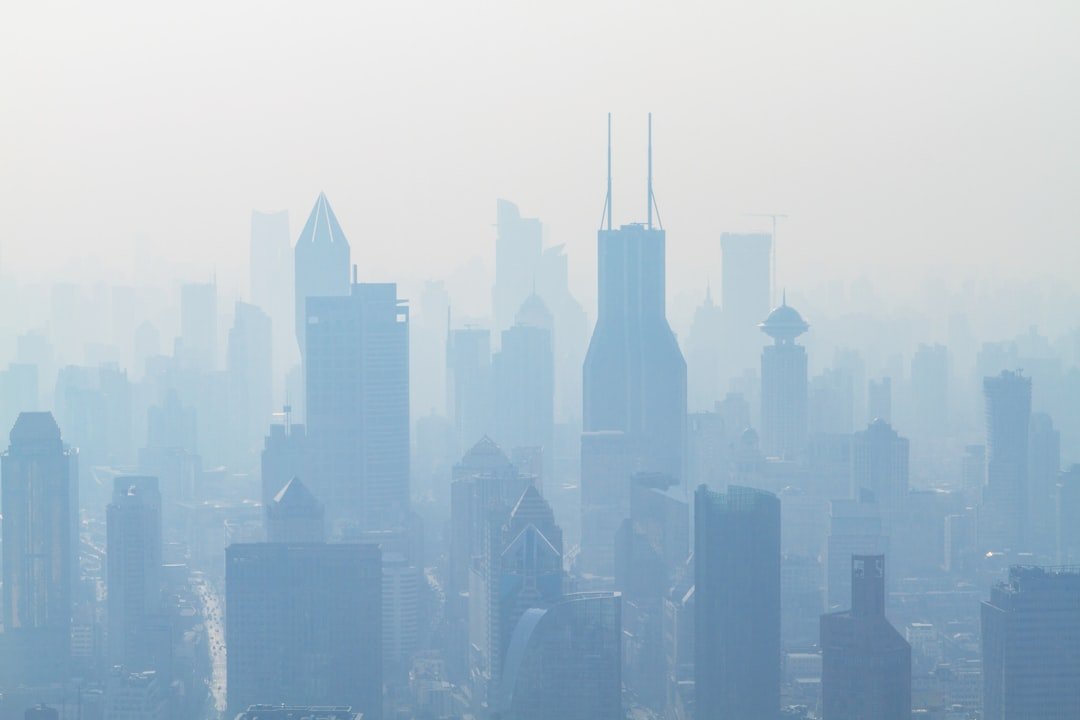
Featured image: Stock cityscape in Shanghai, illustrating the air-quality challenge; not output from the UK forecasting model. Image: Photoholgic / Unsplash.
Leave a Reply