
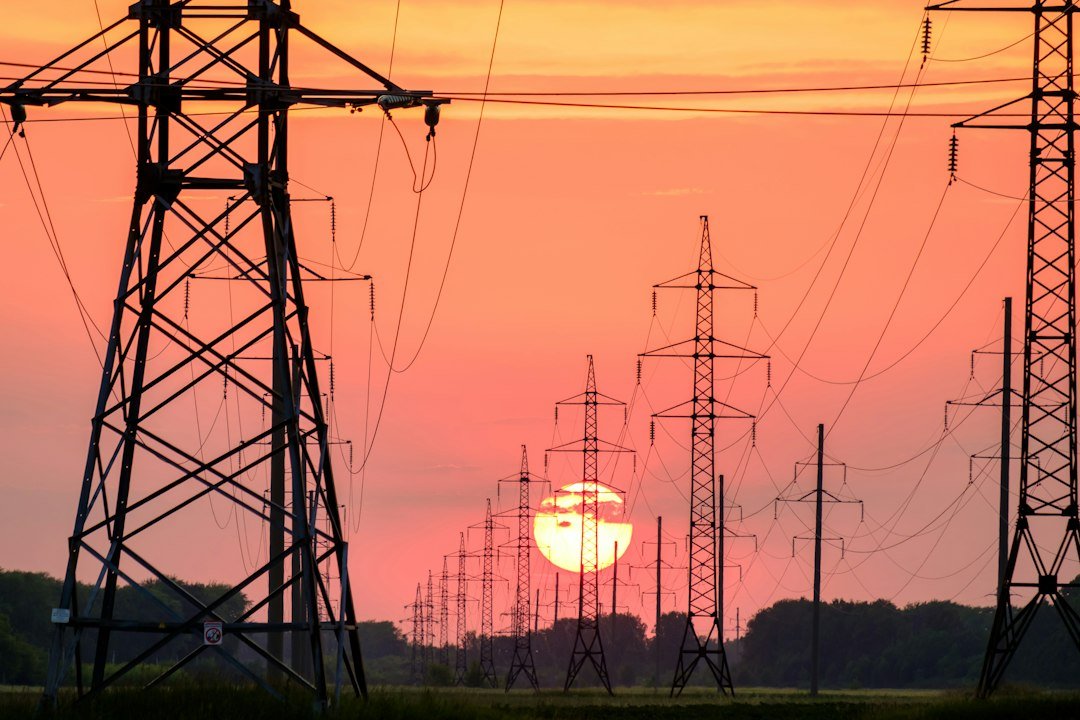
Featured image: Transmission lines illustrate the grid setting for utility-scale storage. Contextual photograph; not visual evidence of the specific development. Photo: Andrey Metelev via Unsplash. Unsplash licence.
A battery project in northern France has moved from development into construction with an unusually long duration for its market. Energy-Storage.news reported on 21 October 2026 that Enertrag had reached financial close on the 39 MW/117 MWh Les Sablons battery in Hauts-de-France and that construction was under way.
Financial close means the project’s financing arrangements have been completed so capital can be drawn for delivery. It is more concrete than an early proposal but not the same as commissioning. Les Sablons is targeting commercial operation in spring 2027, so no operating record exists yet.
Three hours describes an energy-to-power ratio
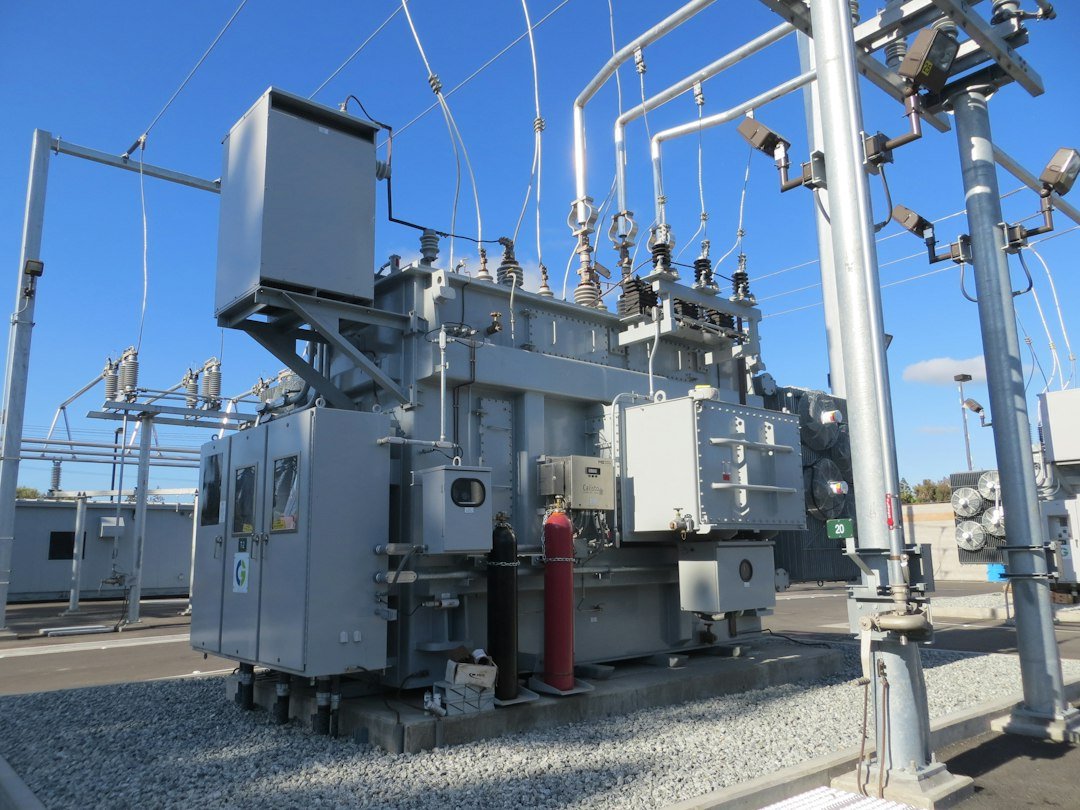
The project is rated at 39 megawatts of power and 117 megawatt-hours of energy. Dividing energy by power gives three hours at the full nameplate rate. This is why it is described as a three-hour battery.
That ratio is useful shorthand. Actual dispatch may be lower or shorter depending on state of charge, grid instructions, reserve commitments, efficiency and operating limits. The plant stores electricity and returns it later with some losses; it is not a generator of net energy.
Industry reporting says most French projects have been designed around two hours. Adding a third hour can help shift more energy through longer price spreads or provide sustained grid support, but it also adds cells and capital. Whether the extra duration pays depends on how the asset is dispatched and compensated.
Three hours also does not place the project in the very-long-duration category associated with technologies designed to cover overnight, multi-day or seasonal gaps. Les Sablons is a longer lithium-ion configuration within the daily balancing market.
The battery shares a grid point with wind generation
The project account published by Energy Global says Les Sablons will connect at the same substation as two Enertrag wind farms. Together, the wind facilities and battery will represent 120 MW of connected capacity. Co-location can use existing grid infrastructure and give the operator more flexibility over when electricity flows.
It does not make wind dispatchable in the same way as a fuelled plant. A 117 MWh store can move a limited amount of energy from one period to another. Several days of low wind would outlast it; frequent cycling, reserve obligations and grid constraints could also limit how much wind it absorbs.
The battery uses lithium iron phosphate, or LFP, cells. LFP is a lithium-ion chemistry widely used for stationary storage because of its thermal characteristics and cycle life. Chemistry choice alone does not determine system safety: enclosure design, detection, suppression, controls, spacing and emergency planning all matter.
Contracts divide financing, operation and market risk
Crédit Agricole acted as arranger and lender. GazelEnergie will handle dispatch and route the battery’s output to market, while Enertrag will operate and maintain the site. These roles show that a grid battery is not simply a container of cells. It is also a financed power asset that needs software, trading, grid compliance and long-term maintenance.
Revenue may come from energy-price arbitrage, balancing services or capacity and grid products, depending on market rules and contracts. A route-to-market agreement helps the project participate, but it does not guarantee a particular profit or utilization rate.
Construction evidence comes before performance evidence
The next milestones are equipment delivery, installation, grid connection, safety testing and commissioning. Only after operation begins can the project supply evidence on availability, efficiency, degradation, response accuracy and actual use of its third hour.
Les Sablons matters because it tests a duration that remains less common in France and because it has secured the financing and commercial partners needed to build. It should not yet be counted as operating storage. The 2027 commissioning target is a plan; the measurable contribution begins when the system passes testing and responds to the grid.
Reporting and source checks completed on 22 October 2026. By FutureTechDose Editor.
Leave a Reply