

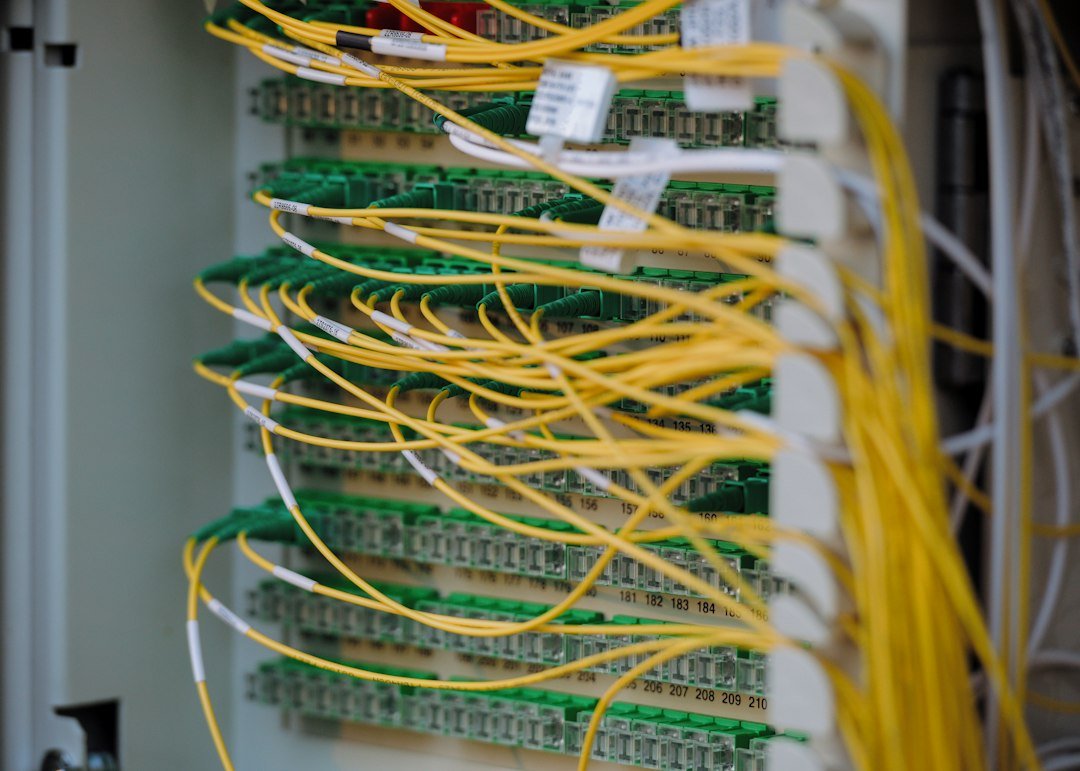
Featured image: Contextual server hardware; not a oneDNN benchmark or a system named in the announcement. Photo: Tyler / Unsplash. Unsplash licence.
In brief: AMD and Intel plan to combine their PyTorch CPU-optimisation work inside oneDNN. AMD will contribute ZenDNN technology, while both companies treat oneDNN as the default open-source acceleration library for x86 processors.
The fastest AI chip is only as useful as the software able to reach it. For x86 CPUs, developers have often faced different optimisation layers depending on whether a system contains AMD or Intel processors. The two rivals are now trying to reduce that split.
On 20 October 2026, AMD announced that it will integrate ZenDNN optimisations into oneDNN, an open-source library governed by the Unified Acceleration Foundation. The x86 Ecosystem Advisory Group recommended the alignment, and AMD has joined the foundation as a steering member.
oneDNN sits below familiar AI frameworks
PyTorch developers write models with high-level operations such as matrix multiplication, convolution and normalization. Libraries underneath the framework translate those operations into kernels tailored to a processor’s instruction sets, memory hierarchy and data types.
oneDNN supplies these building blocks for CPUs and other processors. ZenDNN has provided AMD-specific paths and plugins, particularly for EPYC CPUs. Converging the work should let PyTorch expose one primary x86 route while selecting hardware-appropriate implementations at runtime.
This is relevant because CPUs still handle many production inference jobs, recommendation systems, preprocessing stages and smaller models. They also sit beside accelerators in nearly every AI server, so eliminating avoidable software forks can simplify fleet management even when GPUs perform the largest matrix calculations.
Portability is the immediate prize
A common path can reduce separate builds, vendor-specific integration work and the testing matrix for software teams operating mixed server fleets. Improvements contributed in one place can reach frameworks without requiring developers to understand every processor family.
Open governance also gives cloud providers and software vendors a venue to review changes. It does not make AMD and Intel hardware identical. The library can expose a consistent interface while dispatching different kernels for each architecture.
AMD says it will continue processor-specific optimisation after contributing ZenDNN work. That balance is crucial: standardisation is useful only if it preserves the ability to exploit distinctive vector instructions, cache layouts and memory behaviour.
A collaboration announcement is not a benchmark
The companies say the move will make applications easier to build, maintain and deploy. They have not published a neutral performance comparison showing that every PyTorch workload becomes faster.
Actual results will vary with model shape, batch size, numerical precision, thread settings, memory bandwidth and processor generation. Integration can also introduce regressions, and mature ZenDNN features may arrive in oneDNN on different schedules.
The current ZenDNN documentation describes quantisation, mixed-precision operations and large-language-model inference features. Developers should watch which of those functions migrate, how long vendor-specific plugins remain necessary and whether upstream PyTorch defaults change without manual configuration.
Future x86 AI instructions raise the stakes
AMD and Intel are also collaborating on AI Compute Extensions, a proposed set of future x86 instructions aimed at matrix multiplication. The announcement says later oneDNN updates will provide a route for PyTorch to use them.
An instruction-set plan is not shipping hardware. Processor designs, compiler support, kernels and framework integration all have to arrive before developers see a production benefit. Backward compatibility will matter because data-centre fleets contain several hardware generations at once.
The important shift is organizational. Two competitors have decided that the developer-facing foundation should be shared, while performance competition continues underneath. If contributions are genuinely upstreamed and tested across vendors, x86 CPU inference could become less fragmented. The evidence will be in releases, reproducible benchmarks and the amount of vendor glue developers can actually delete.
Leave a Reply