
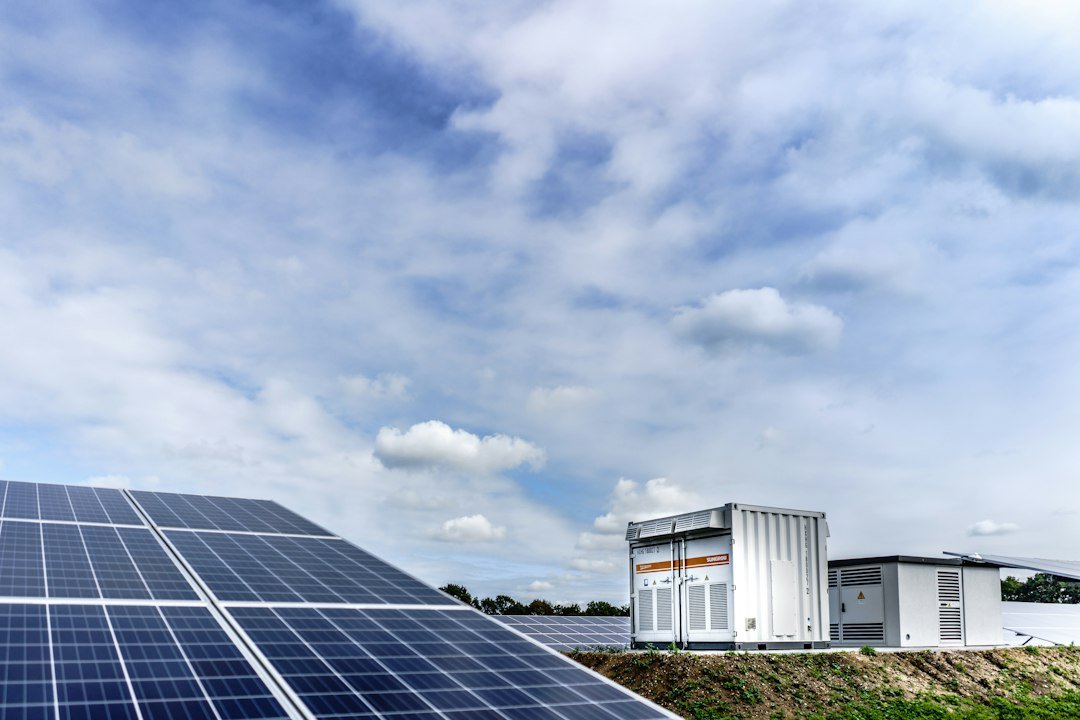
Featured image: Utility renewable-energy equipment illustrates the grid context for long-duration storage. Contextual image; not visual evidence of the specific study, treatment, project or facility. Photo: Sungrow EMEA. Unsplash licence.
A lithium-ion battery adds more stored energy largely by adding more cells. A vanadium flow battery offers a different architecture: power comes from electrochemical stacks, while energy is held in liquid electrolyte stored in tanks. In principle, a developer can extend discharge duration by increasing the amount of electrolyte and tank capacity without increasing stack power in the same proportion.
That separation is the technology’s most attractive scaling argument. A Nature Energy analysis titled “Scaling vanadium flow battery for long-duration energy storage” also stresses why the argument is not enough. Moving from promising modules to multi-hundred-megawatt projects requires a competitive whole system, reliable supply chains and repeatable project execution.
Tanks decouple energy from power
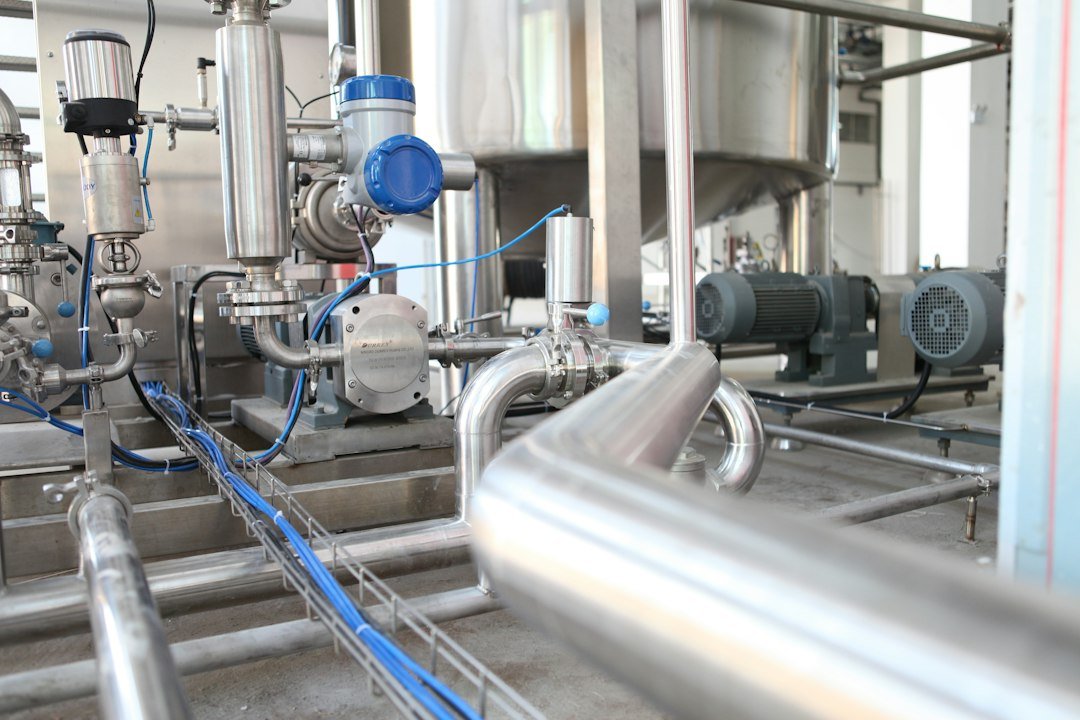
In a flow battery, pumps circulate liquid electrolyte through cell stacks separated by a membrane. During charging and discharging, vanadium ions change oxidation state and exchange electrons through the external circuit. The same element is used on both sides, reducing the permanent contamination problem that can occur when different active materials cross the membrane.
Stack area, power electronics and fluid flow help determine megawatts: how quickly the plant can charge or discharge. Tank volume and electrolyte inventory largely determine megawatt-hours: how much energy the plant can store. That decoupling can suit daily long-duration applications where adding hours to a fixed grid connection matters.
It does not make extra duration free. Larger tanks need more electrolyte, land, foundations, pipework and working capital. The balance-of-plant—the pumps, valves, controls, heat management, sensors and power conversion around the electrochemical core—can dominate reliability and cost.
Low energy density changes the engineering problem
Vanadium electrolyte stores less energy per unit of volume than lithium-ion cells. The result is a physically larger installation for the same nameplate energy. That may be acceptable at an industrial grid site but restrictive where land or civil works are expensive.
Pumps also consume energy, and pressure losses rise when fluid paths are poorly designed. Membranes must conduct ions while limiting crossover. Stacks need consistent compression and sealing across many cells. A technology known for long cycle life can still suffer downtime if pumps, seals, sensors or power electronics fail.
These are not arguments that flow batteries cannot scale. They explain why laboratory efficiency or a durable electrolyte does not predict the cost and availability of a complete plant.
Vanadium can be reused, but it ties up capital
The electrolyte does not degrade in the same way as a solid electrode and may retain residual value at the end of a project. Leasing or take-back models could turn that durable material into an asset rather than a one-time consumable.
Yet a large project needs a large vanadium inventory at the beginning. Commodity price volatility, purification capacity and financing terms can therefore shape project economics. Recycling and leasing may reduce exposure, but only if contracts, ownership and recovery processes work over decades.
The paper is a technology-and-industry perspective, not a controlled trial of one new system. Its authors also disclose relevant commercial interests, which readers should weigh alongside the technical analysis. The useful question is not whether one chemistry “wins”, but which duration, duty cycle and site make its system attributes valuable.
Bankable evidence must come from operating fleets
Developers need long records for round-trip efficiency, capacity retention, auxiliary power, availability, maintenance and stack replacement. Standardised designs and qualified suppliers can reduce engineering risk, while larger factories may lower stack cost. None of that eliminates project-specific civil, grid and financing work.
Vanadium flow batteries have a credible route to adding hours without copying lithium-ion’s cell-for-cell scaling. Their challenge is to make every surrounding component and contract scale with equal discipline. The tank is the elegant part of the story; the bankable product is the entire plant.
Reporting and source checks completed on 23 October 2026. By FutureTechDose Editor.
Leave a Reply