
Featured image: Nuclear cooling towers illustrate commercial nuclear generation. Contextual image; not visual evidence of the specific study, treatment, project or facility. Photo: Lukas Lehotsky. Unsplash licence.
A United States nuclear rule has changed what evidence a commercial reactor applicant may bring to the regulator. On 22 October, the Nuclear Regulatory Commission approved a final rule allowing applicants to use analyses, test data and other information developed through qualifying Department of Energy or Department of Defense demonstration projects.
The NRC announcement presents the change as a way to avoid repeating work that the federal government has already performed. It does not approve any reactor, waive safety standards or transfer another agency’s authorization into a commercial licence.
Demonstration data can enter a commercial application
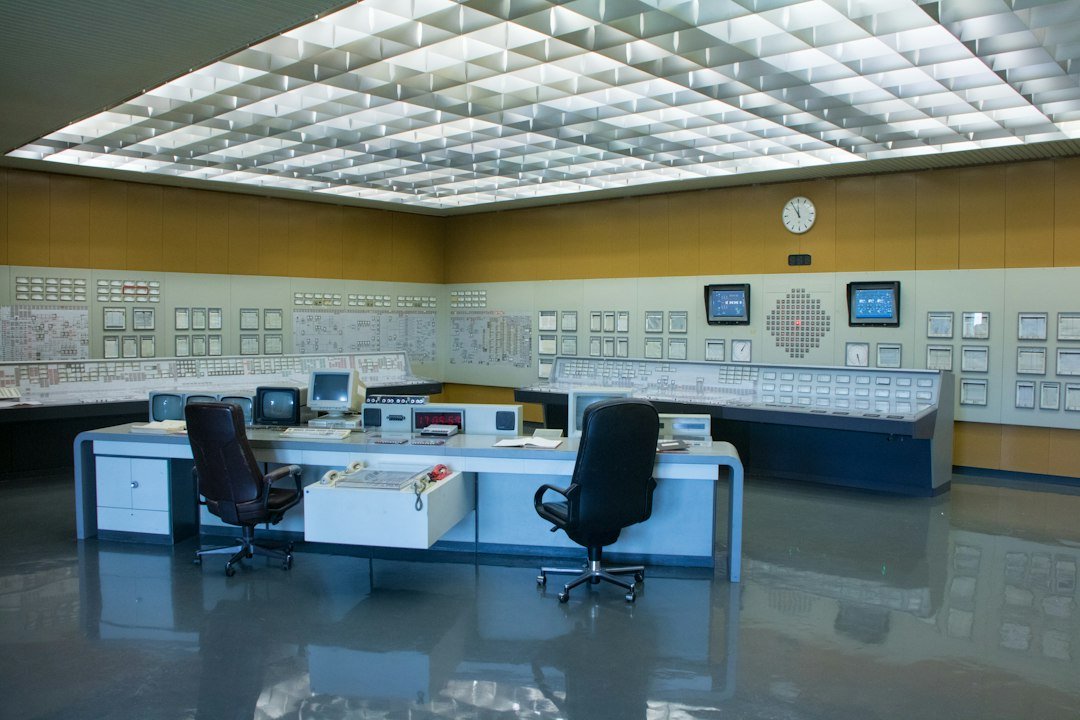
Advanced-reactor companies often test fuels, materials, components or integrated systems under DOE or defence programmes before seeking a civilian commercial licence. Under the new rule, an applicant may reference relevant work from those projects in an NRC submission rather than regenerating every analysis from the beginning.
The distinction is procedural but consequential. High-quality test programmes are expensive and slow. If the same evidence can support both a government demonstration and a later commercial review, developers may save time and capital while the NRC gains access to operating or test information that would otherwise be unavailable.
The rule amends parts 50 and 53 of Title 10 of the Code of Federal Regulations. Part 50 is a longstanding licensing route for production and utilisation facilities. Part 53 is the newer, technology-inclusive framework intended for advanced reactors.
Reuse is not automatic acceptance
NRC reviewers still decide whether information is applicable, complete and generated under controls appropriate to the safety claim. Data from one configuration may not represent a commercial design with different power, materials, geometry, site hazards or operating conditions.
Reuters reported that the regulator may still scrutinise matters such as accident consequences, natural hazards and material qualification. NRC chair David Wright described the rule as a way to build on prior work, not a shortcut around the agency’s independent responsibility.
This matters because “government-tested” can sound stronger than it is. A DOE or DOD project may be authorised for research, national-security or demonstration purposes under a different legal framework. A commercial plant must satisfy NRC requirements for protecting the public and the environment over its licensed life.
The timeline targets are goals, not guarantees
The NRC says the broader framework aims for reviews of about 18 months for first-of-a-kind designs and 12 months for subsequent designs. Review time depends on application quality, design maturity, unresolved technical questions and whether the applicant answers requests promptly. A rule can remove duplication without making complex evidence simple.
The American Nuclear Society’s account says the final rule is expected to be published in the Federal Register on 28 October and take effect 30 days later. Until publication and the effective date, it is a completed commission action moving toward implementation, not yet a process with an operating record.
The first applications will reveal the practical value
The important test will be how applicants map demonstration evidence to commercial safety claims. Useful submissions will need traceable data, clear quality controls, configuration comparisons and an explanation of uncertainty. Weakly documented information could create more review questions rather than fewer.
The rule may also encourage companies to design DOE and DOD test programmes with later NRC use in mind. That could improve continuity across development stages, although it risks optimizing demonstrations around licensing paperwork rather than the most informative experiments if handled poorly.
This is a meaningful change to the pathway, not the destination. It can let a commercial applicant start with a richer evidence package. It cannot decide whether a particular reactor is safe, economic or ready to build. Those conclusions still require a design-specific application, an independent NRC review and the appropriate licence.
Reporting and source checks completed on 23 October 2026. By FutureTechDose Editor.
Leave a Reply