
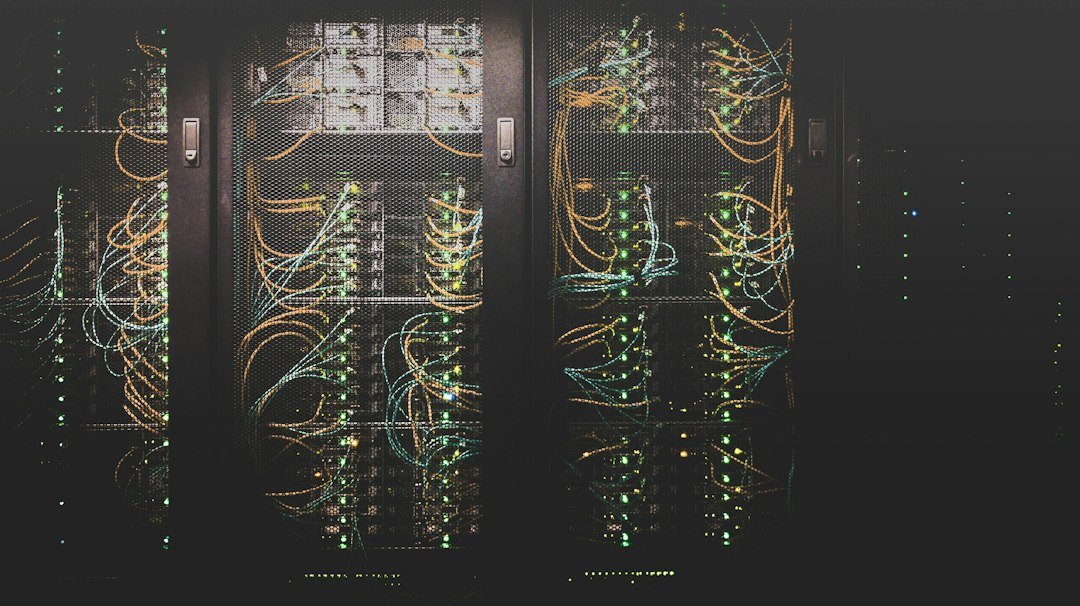
Featured image: Network cabling illustrates high-density data-centre infrastructure. Contextual image; not visual evidence of the specific study, treatment, project or facility. Photo: Taylor Vick. Unsplash licence.
Cloud provider Vultr has announced a new Chennai region built around an initial 20 megawatts of AMD accelerator capacity. The company says the first deployment will use Instinct MI355X GPUs and that a later expansion is planned around AMD’s MI455X and Helios rack-scale platform in 2027.
The 21 October company announcement is strategically significant for Indian AI infrastructure. It should be read in the future tense. Twenty megawatts describes planned initial power capacity, not a cluster already running customer models, and the later hardware depends on products, construction and qualification still ahead.
A cloud region combines more than accelerators
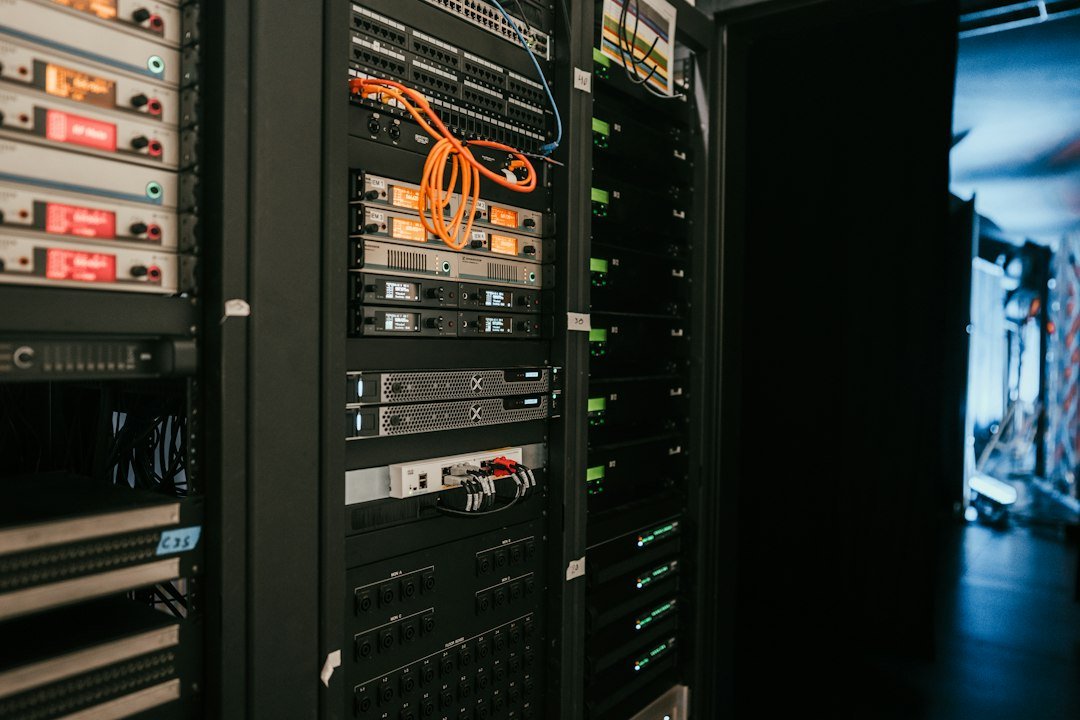
A useful AI cluster needs GPUs, host processors, high-speed networking, storage, orchestration software, power conversion and cooling. The limiting component can shift as model size and workload change. A headline accelerator count would therefore reveal less than the complete rack, network and service design.
Vultr says the Chennai deployment will support training and inference. Training adjusts model parameters using large datasets and sustained parallel computation. Inference runs a trained model to answer requests. The two jobs can favour different memory, latency, utilisation and cost profiles, so a region capable of both still needs workload-specific engineering.
Twenty megawatts is also an electrical envelope, not a direct measure of useful AI output. Some power runs accelerators; some supports CPUs, networking, cooling and facility losses. The number of effective training runs depends on availability, software efficiency and how densely customers use the fleet.
Location is part of the product
Placing compute in India can reduce network distance for local users and help organisations keep data and processing within a chosen jurisdiction. That is the basis of the “sovereign cloud” pitch: customers may want control over where data is stored, which legal regime applies and who operates the infrastructure.
Sovereignty is not delivered by geography alone. Customers need contractual guarantees, identity controls, encryption, auditability, operational separation and clarity about support access and backups. A region can help meet residency requirements without automatically satisfying every sector’s compliance rules.
Data Center Dynamics reported that the cluster is planned for Chennai and positioned as one of the largest AMD deployments of its kind. Such comparisons are difficult because operators disclose capacity in different units and at different stages. The more durable facts are the location, planned 20 MW starting point and named accelerator roadmap.
AMD gains a production-scale showcase
Nvidia dominates the current AI accelerator market, while AMD is trying to expand both hardware deployment and software adoption. A sizeable cloud region can give developers access without requiring them to buy and operate their own machines. It can also expose AMD’s ROCm software stack to a broader range of production workloads.
Hardware availability does not guarantee application portability. Models and libraries may need tuning for kernels, memory behaviour and cluster communications. Vultr will have to translate theoretical accelerator capability into stable services, documentation and support if the region is to attract sustained use.
Construction milestones matter more than the announcement
The next evidence should include facility readiness, energisation, installed racks, network validation, service availability and customer access. The proposed 2027 migration or expansion to MI455X and Helios adds product-release and supply-chain dependencies to the schedule.
Grid impact also deserves attention. Large, concentrated loads can require new substations, firm connection agreements and cooling resources. A provider can procure renewable electricity or certificates, but those choices do not erase local constraints at the hour the cluster draws power.
Vultr’s announcement signals that advanced AI capacity is spreading beyond the traditional US and European hubs and that AMD has another route into cloud infrastructure. The project becomes operating capacity only when the site is energised, the systems are commissioned and customers can use them. Until then, 20 MW is a serious plan—not a delivered fact.
Reporting and source checks completed on 23 October 2026. By FutureTechDose Editor.
Leave a Reply