
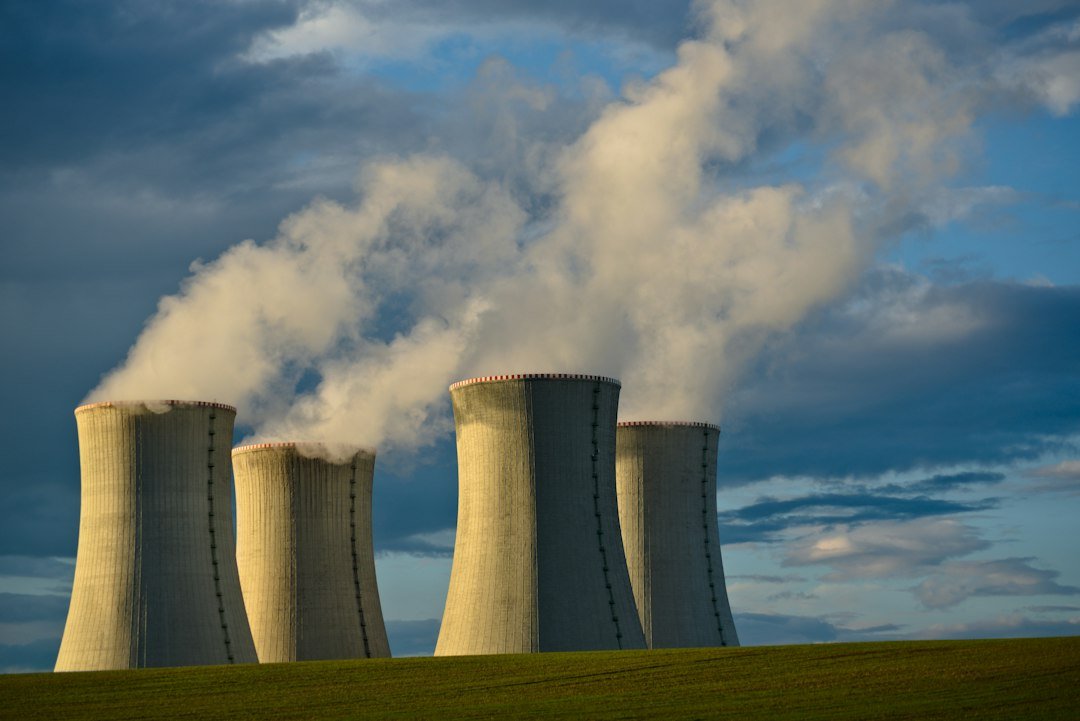
In brief: X-energy and American Electric Power will examine a 12-unit advanced-nuclear plant at a retired generating-station site in Indiana, with Amazon providing milestone-based development funding. The proposed 960 MW project is at the feasibility stage.
One of the largest new US nuclear proposals now has a site, a utility, a reactor developer and a large technology-company backer. What it does not yet have is a construction licence, final financing or a decision to build.
On 19 October 2026, X-energy and AEP announced a joint development agreement for feasibility work on a proposed Xe-100 project near the former Breed Generating Station in Sullivan County, Indiana. Amazon will provide certain development funding tied to milestones. The companies describe a plant of twelve 80 MW reactor units, totalling 960 MW.
Twelve small reactors make a large station
The Xe-100 is a high-temperature gas-cooled reactor. Helium carries heat from the reactor, while TRISO fuel encloses tiny uranium kernels in multiple ceramic and carbon layers. The design aims to retain radioactive material at temperatures above normal operation and supply either electricity or high-temperature industrial heat.
Calling the units “small modular reactors” can obscure the total project scale. Twelve modules would give the site nearly a gigawatt of electrical capacity, comparable with a large conventional power station. Modularity refers to the individual reactor design and repeatable construction approach, not to a small overall footprint or a simple approval process.
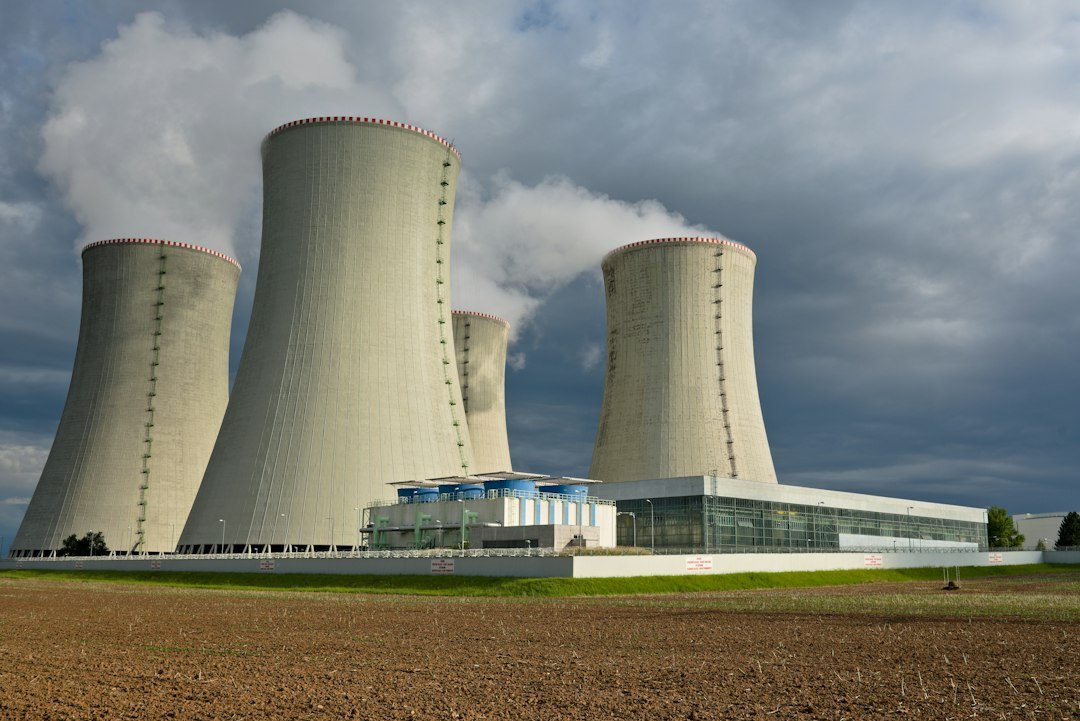
A brownfield site may help, but it does not settle suitability
Reusing the retired Breed site could provide transmission access, industrial land and a community familiar with power generation. AEP already owns the site and has nuclear-operating experience elsewhere. Those are meaningful starting advantages.
Feasibility work must still address geology, water, emergency planning, environmental impacts, transmission upgrades, workforce, supply chain and economics. The project would require federal nuclear licensing and state and local approvals. X-energy’s release explicitly warns that feasibility work may not support proceeding and that permits, financing or acceptable economics may fail to materialize.
Amazon is funding development, not buying an operating reactor
Amazon says the Indiana project is the second grid-scale development under its collaboration with X-energy, which targets more than 5 GW of US capacity by 2039. Its company announcement links nuclear development to rising electricity demand and a corporate net-zero goal.
That long-term ambition should not be confused with delivered power. Amazon’s capital supports the process of testing and advancing the proposal. AEP says financial safeguards are required before any project moves ahead and that the parties intend to avoid shifting costs to existing customers. The eventual contracts and regulatory proceedings will determine whether that promise is enforceable.
The first Xe-100 deployment remains the reference test
X-energy’s first planned US deployment is a four-unit project intended to supply power and industrial steam to a Dow site in Texas. Its construction-permit application is still being reviewed by the Nuclear Regulatory Commission. Indiana would therefore depend on a reactor design that has not yet entered commercial operation at this scale.
Advanced reactors may offer firm low-carbon power that complements variable wind and solar, but first-of-a-kind projects face design, manufacturing, construction and cost risk. Replicating modules can lower costs only after supply chains and field execution become repeatable.
A further test is timing. Electricity demand from data centres is rising now, while a new nuclear project faces years of licensing and construction. The proposal may shape the region’s long-term supply mix, but it cannot solve near-term grid constraints before those steps are completed.
The Indiana agreement is significant because serious counterparties are paying to answer those questions at a specific site. It is not evidence that 960 MW will reach the grid. The milestones worth watching are site studies, licence applications, cost estimates, customer-protection terms and an actual final investment decision.
Leave a Reply