
Australia’s National Electricity Market now has more proposed generation and storage in its connection process than the capacity already operating in the market. The Australian Energy Market Operator’s September scorecard puts the pipeline at 80.9 gigawatts, up 43% in a year, compared with 77 GW of current capacity.
Batteries dominate: grid-scale battery projects represent 55% of pipeline capacity, and hybrid solar-plus-battery projects another 19%. The headline looks like an enormous wave of storage.
It needs an equally large caveat. AEMO says 88% of the pipeline is still in the early application or developer-implementation stages. A queue measures interest and work in progress, not guaranteed future supply.
A connection pipeline contains several different realities
A project first submits technical models and proposed performance standards. After application approval, the developer must finalise its connection agreement, equipment and commercial arrangements. Registration assesses the built design, while commissioning tests the plant at increasing output.
Those stages should not be combined as if every megawatt were equally certain. A project under construction with contracts and finance is different from an early application that may change owner, technology or schedule.
The Connections Scorecard exists partly to make those transitions visible.
The September quarter shows both movement and attrition risk
During the quarter, 23 projects totalling 4.5 GW received application approval. Four projects totalling 1 GW became registered and connected, while seven projects totalling 1.3 GW completed commissioning and reached full output.
At the front of the queue, AEMO received 25 new applications worth 7.5 GW. Nineteen were battery projects totalling 5.8 GW. New proposals are therefore arriving much faster than projects reach operation in any single quarter, although construction naturally spans several quarters.
Longer-duration batteries are entering the mix
AEMO reports that nearly 40% of battery projects in the pipeline can provide between three and ten hours of storage. Longer duration can shift more renewable energy and improve resilience during extended low-output periods.
Duration alone does not establish value. Location, power rating, availability, network constraints and operating strategy determine whether a project eases congestion or meets reliability needs. Two batteries with identical energy capacity can have very different system impacts.
The retirement clock raises the stakes
About 15 GW of generation is scheduled to retire in the coming decade while electricity consumption is forecast to rise by more than 40%, according to AEMO. That makes conversion from queue to operating plant more important than the queue’s total size.
The operator’s 21 October release points to ownership changes, design changes and unfinished commercial arrangements as sources of delay. Its earlier FY26 review found the median developer-implementation phase had lengthened from 14 to 18 months.
The number to watch is commissioned capacity
A large pipeline signals competition and investor appetite. It can also contain overlapping projects that chase the same grid location, customer contract or market revenue.
The technology mix is also a warning against reading the queue as a generation forecast. Batteries store electricity produced elsewhere, while wind, solar, hydro and gas create it. Comparing the pipeline’s nameplate gigawatts with today’s 77 GW is useful for scale, but it is not an energy-for-energy replacement calculation.
The useful test is how much capacity passes registration, completes commissioning and performs reliably at full output. Australia’s battery transition is visibly accelerating, but 80.9 GW should not be described as built, financed or inevitable. It is a map of possibilities at sharply different stages.
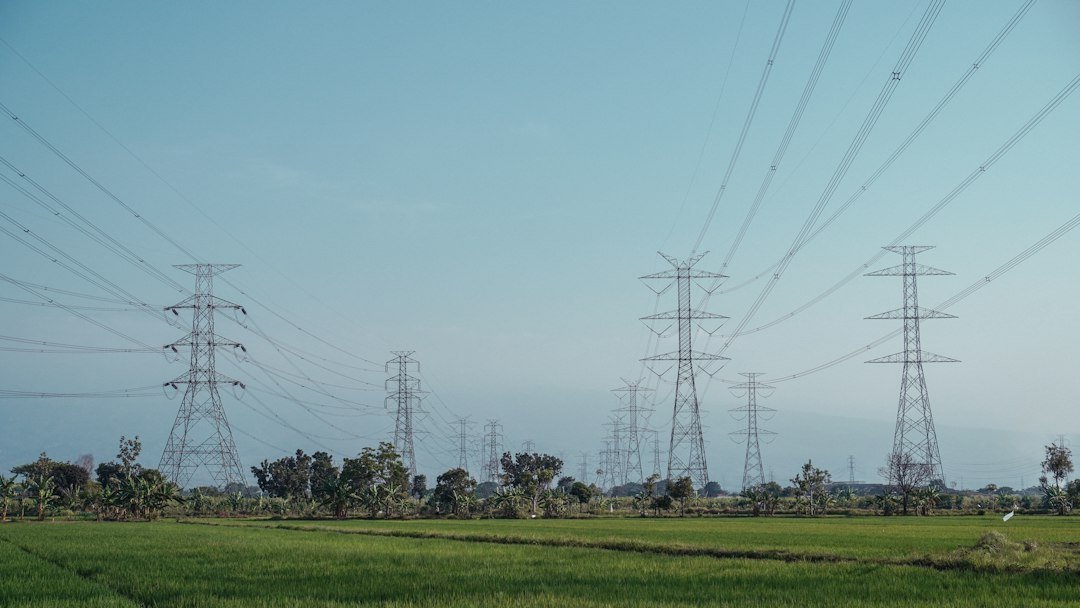
Featured photo: Inzulators Photowork Projects/Unsplash. Contextual grid image; not an AEMO project.
Leave a Reply