
One of Germany’s largest planned battery projects has crossed the point where financing is no longer just a proposal. GIGA Storage announced on 26 October 2026 that its Albatross project in Lower Saxony reached financial close with a €260 million debt package from seven banks.
Albatross is designed for 350 megawatts of power and 1,400 megawatt-hours of stored energy. Dividing energy by power gives a four-hour rated duration. Construction is scheduled to begin in early 2027, with operation expected in early 2029.
Financial close is a meaningful commercial milestone. It is not commissioning: the battery is not yet supplying the grid.
Power and energy describe different capabilities
The 350 MW figure describes the maximum rate at which the system can charge or discharge. The 1,400 MWh figure describes the energy it can store. At full output, the rated energy would last about four hours before accounting for operating limits and losses.
That duration can shift solar or wind energy into evening demand, respond to price spikes and provide grid-balancing services. It is not seasonal storage and cannot cover a multi-day renewable shortfall by itself.
Financing followed permits and a grid agreement
GIGA Storage said the project had already reached “ready to build” status, with land rights, permits and supplier agreements in place. CATL is named as engineering, procurement and construction contractor and long-term maintenance provider.
On 14 October, GIGA and transmission operator Amprion signed an agreement to connect Albatross directly to the 380 kV Merzen substation. The companies described it as Amprion’s first grid-connection agreement for a large battery.
The later financial-close announcement lists ABN AMRO, Hamburg Commercial Bank, ING, Rabobank, Siemens Bank, SMBC and Société Générale as lenders.
A four-hour battery earns money in several markets
Large batteries rarely rely on one service. They can buy electricity when it is cheaper, sell when it is more valuable, provide reserve and frequency services, and reduce congestion at selected times.
Revenue depends on market rules and future price volatility. More batteries can reduce the very price spreads that initially make them attractive. A long construction schedule also exposes the project to equipment, interest-rate and policy changes.
The site beside a substation matters
Locating the project next to an upgraded high-voltage substation can reduce the length and complexity of its connection. Yet even a signed connection agreement does not eliminate commissioning work. Protection systems, control models and real-world behaviour must be tested before unrestricted operation.
The ready-to-build release says the installation will use 264 battery units. Final delivered capacity, availability and round-trip efficiency should be judged from operating data rather than design figures.
What financial close proves—and what it does not
Seven banks committing debt suggests that contracts, permits and projected revenues survived substantial due diligence. It does not guarantee on-time construction or profitable operation, and company comparisons with household electricity use are illustrative rather than a promise to power specific homes.
Construction must also translate 264 battery units into a safe, dispatchable plant. Fire detection, thermal management, emergency planning and software controls will be as important as cell capacity. The financing release names CATL, but it does not publish final operating warranties, degradation assumptions or the revenue model used by lenders.
The next evidence milestones are notice to proceed, equipment delivery, energisation, commissioning and measured performance. Albatross has moved from development risk toward construction risk. Germany has gained a financed four-hour storage project, not yet a working 1.4 GWh battery.
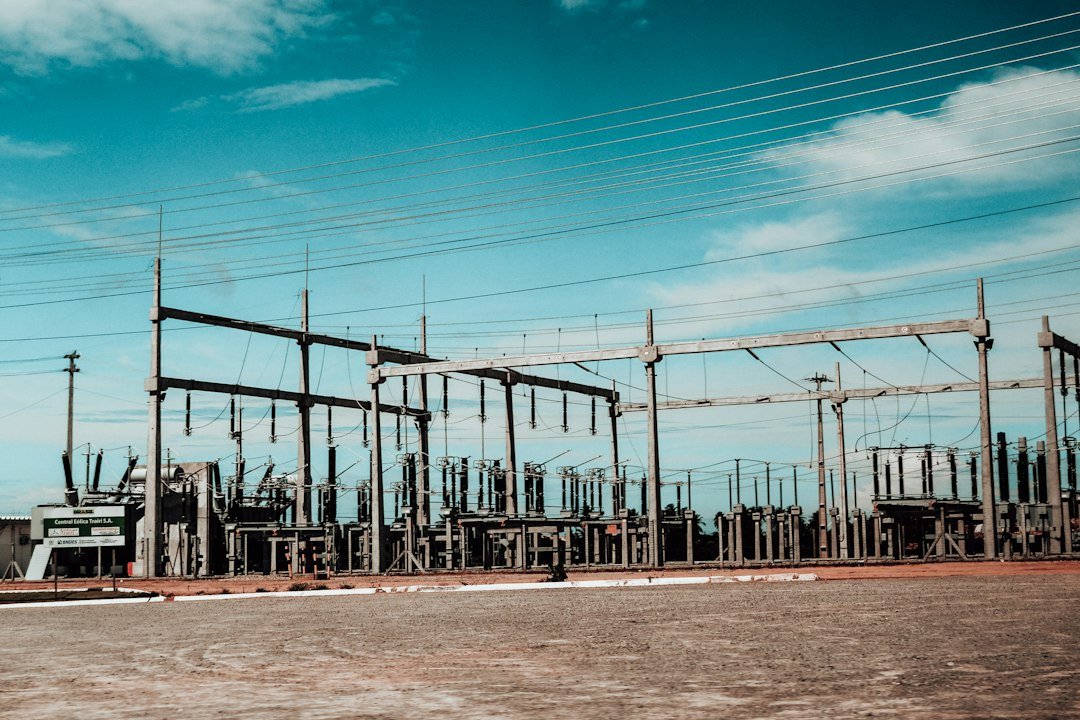
Featured photo: Janilson Furtado/Unsplash. Contextual substation image; not the Albatross site.
Leave a Reply