
The next tool for expanding metal supplies might be too small to see.
On 15 September 2026, the US National Security Commission on Emerging Biotechnology called for greater investment in biomining: using biological processes to help recover minerals. Its argument puts microbes into a conversation usually dominated by mines, refineries and industrial supply chains. Commission announcement
This is a policy push, not the opening of a giant new mine. Its relevance comes from the combination of an established industrial technique and opportunities that still need to prove themselves at scale.
The metal is already there
Biomining does not mean growing copper out of nothing. Microorganisms assist the chemistry that releases metal already present in rock or other material.
In bioleaching, that activity can move metals into a solution from which they are subsequently recovered. The commission’s issue paper discusses applications to lower-grade ores and material left behind by previous operations. It also distinguishes the opportunity for new biotechnology from the practical work of commercial deployment. Biomining issue paper
The distinction matters because biology is not a single universal mining machine. A process suited to one feedstock does not automatically become an economical answer for every metal in every waste pile.
There is nevertheless an appealing idea here: the value of a resource can change when the method used to recover it changes. Material that was once too difficult or costly to process may deserve another look. Whether it deserves a commercial plant is a separate calculation.
Australia has already explored the urban mine
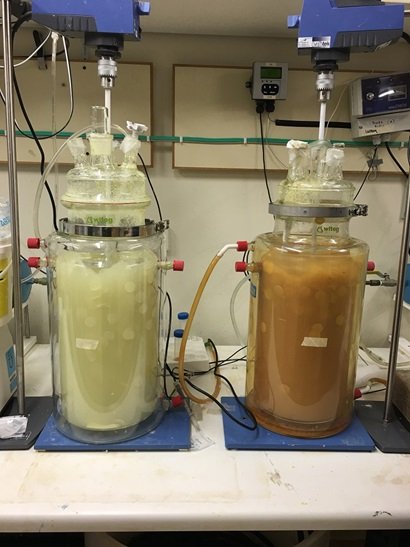
This is not purely an American story. In a 2021 account of its work with Murdoch University, CSIRO described research on recovering metals from milled printed circuit boards and battery waste. That older work provides background to today’s policy discussion; it is not a newly announced 2026 breakthrough. CSIRO research overview
Circuit boards contain useful metals in complicated mixtures. Getting them back involves more than finding a microbe that interacts with one ingredient. The equipment must first be collected and prepared, and the resulting materials must be separated into something a customer can actually use.
CSIRO’s account explicitly connected the research to economic feasibility: the value recovered has to justify preparation and processing. It also described large-scale biomining of ores as an existing practice, while several waste-processing applications were being investigated in the laboratory. Those are different levels of maturity. CSIRO
Biology still has to pass an industrial test
Our assessment is that successful projects will be decided by an unglamorous set of measurements: recovery rate, processing time, water and chemical requirements, residual waste and cost per unit of usable metal.
A biological process should earn an environmental advantage through those measurements. Calling it natural is not enough. Nor does a promising laboratory result establish that it can process a variable stream of waste reliably for years.
The commission’s recommendations include support for both earlier development and commercial scale-up, reflecting the gap between demonstrating a method and building a dependable supply chain. Commission recommendations
That is what makes the field worth following. Biomining brings an additional set of tools to a material problem that new software alone cannot solve. The most compelling success story would be a working operation that recovers useful metal from an overlooked source, with its costs and impacts clearly measured.
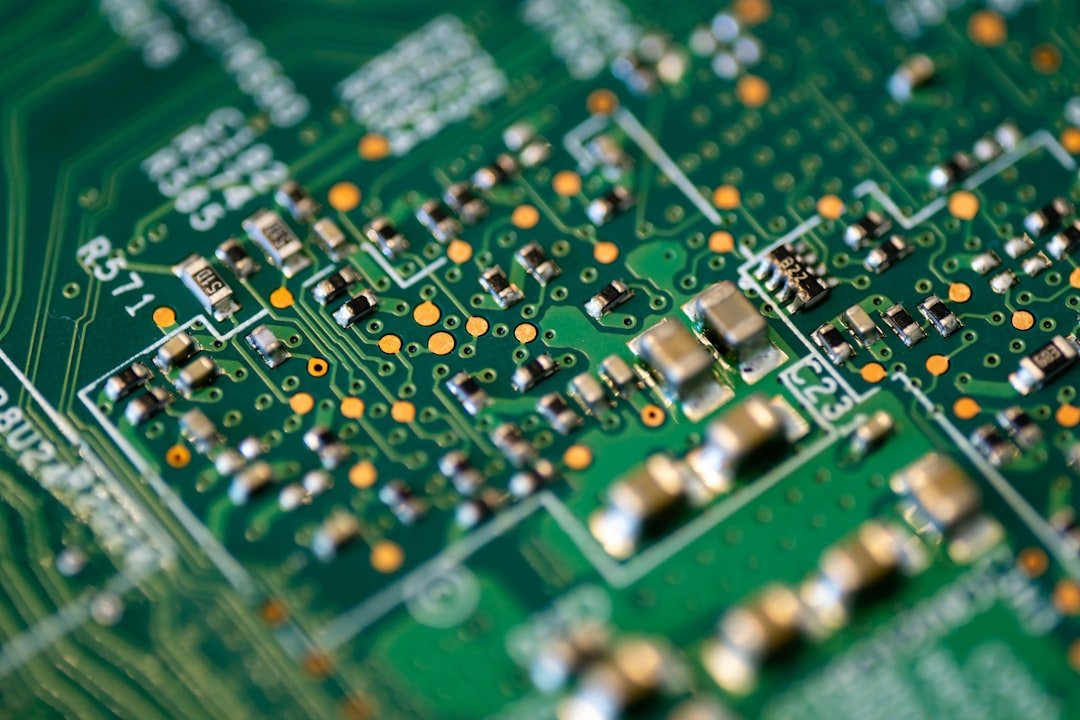
Featured image: Circuit-board components. Photo: Magnus Engø / Unsplash.
Leave a Reply