
The game offered treasure, but reaching for it could also mean encountering a bomb. While players decided whether the reward was worth the danger, researchers watched electrical activity inside their brains.
The experiment, published in Nature Neuroscience on 15 September 2026, involved six people with implanted electrodes. It examined how the orbitofrontal cortex, a region near the front of the brain, participates in choosing whether to approach or avoid a risky opportunity. The research paper
According to UCSF’s account, the neural activity could reveal the coming choice roughly half a second before the person moved. That is an intriguing result. It is also easy to turn into a claim the study did not establish. UCSF’s research announcement
Watching a choice develop
The electrodes were available because participants were undergoing clinical care, rather than being implanted solely for this game. The researchers could examine electrical activity at a much finer timescale than a conventional picture of the brain. UCSF
The paper describes different patterns within the orbitofrontal cortex. Activity in its medial portion, nearer the centre, was associated with approaching. Activity in the lateral portion was associated with avoiding. The important finding is a changing pattern across these regions as a decision unfolds. Nature Neuroscience
UCSF describes more back-and-forth activity when choices were difficult. That gives the study an accessible point of connection: hesitation may have a measurable neural structure, rather than being merely a delay before an answer. UCSF
A useful way to picture the experiment is as a close view of competing tendencies. It would be misleading to turn that analogy into two tiny characters arguing inside the head, or to describe the findings as a complete map of how all decisions happen.

A half-second lead is not evidence that free will has disappeared
Movement is an observable event. The moment a person becomes consciously committed to a choice is harder to establish. Showing that a brain signal predicts movement does not, on its own, show that it predicts a decision before the person is aware of making it.
Nor does recognising patterns within a structured task mean an observer could decode an unfamiliar person’s private intentions in everyday life. The experiment used direct brain recordings, a small clinical sample and a deliberately constrained game. Generalising beyond those conditions requires more evidence. Study design and results
That distinction also matters when reading about AI systems that decode brain activity. Success at a defined task is not unrestricted access to someone’s thoughts.
The compelling achievement here is scientific resolution: researchers could follow parts of the process while a choice was being made. Our assessment is that larger studies, broader tasks and tests of cause and effect would make the strongest next steps.
The work may eventually inform research into disorders involving decision-making. This experiment itself does not establish a new treatment. For now, it gives neuroscience a more detailed view of the hesitation between a tempting reward and a possible cost.
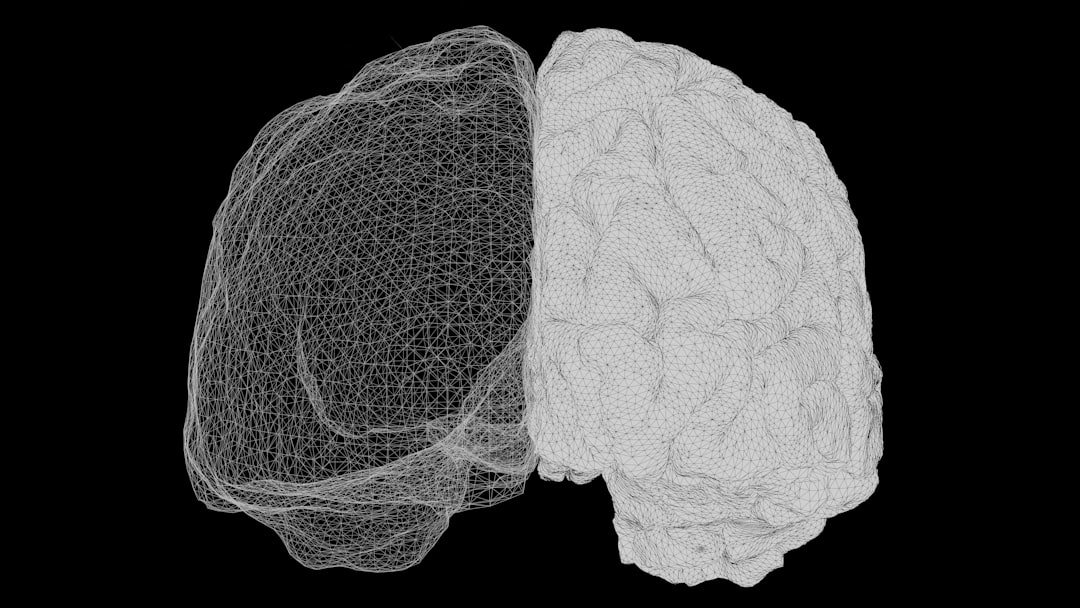
Featured image: Digital brain illustration, not a scan or measurement from the study. Shawn Day / Unsplash.
Leave a Reply