
The most intriguing part of Anthropic’s new Claude enzyme discovery is the question it has left behind: what does this biological system actually do?
On 23 September 2026, Anthropic reported that its AI agents had identified an unusual arrangement in the DNA of bacteriophages, viruses that infect bacteria. Its scientists call the system array-associated reverse transcriptases, or ART. It brings together an enzyme, a neighbouring partner gene and a repeating stretch of DNA. Anthropic’s research announcement describes laboratory follow-up but says the system’s primary function remains unresolved.
The clue was in the neighbourhood
A reverse transcriptase copies RNA into DNA. The underlying enzyme was already known. Claude’s contribution was spotting the surrounding arrangement as something worth investigating, rather than discovering every component from scratch.
The technical preprint reports human laboratory follow-up.
A promising lead still needs an explanation
That distinction changes how this story should be read. A useful clue can open a research programme without yet delivering a useful tool. In this case, the comparison with CRISPR concerns a repeated genetic arrangement. It does not establish that ART can edit genes, treat disease or replace an existing biotechnology platform.
Our reading is that the interesting advance is in deciding where to look. A database can contain a discovery long before anyone recognises the relationship that makes it important. An AI system that reliably surfaces overlooked candidates could widen the pool of ideas a laboratory can investigate.
But the word reliably carries most of the weight. One striking result cannot tell us how often this approach produces useful leads, how many false starts it generates, or whether another team would reach the same conclusion. Those are practical questions for the next rounds of work.
It also leaves a resource question. An impressive search is not automatically an efficient search. The relevant comparison is the total effort needed to reach a reproducible scientific finding, including the experiments that reject an appealing hypothesis.
The next discovery may be what ART is for
For now, this is an AI-assisted biological finding with an unfinished explanation. That is still an engaging place for science to be. A pattern has become a testable lead; its value will depend on what independent scrutiny and further experiments reveal.
Readers following this shift can also explore our coverage of AI agents in drug-discovery research. The common issue is how to connect computational ideas to evidence from the real world.
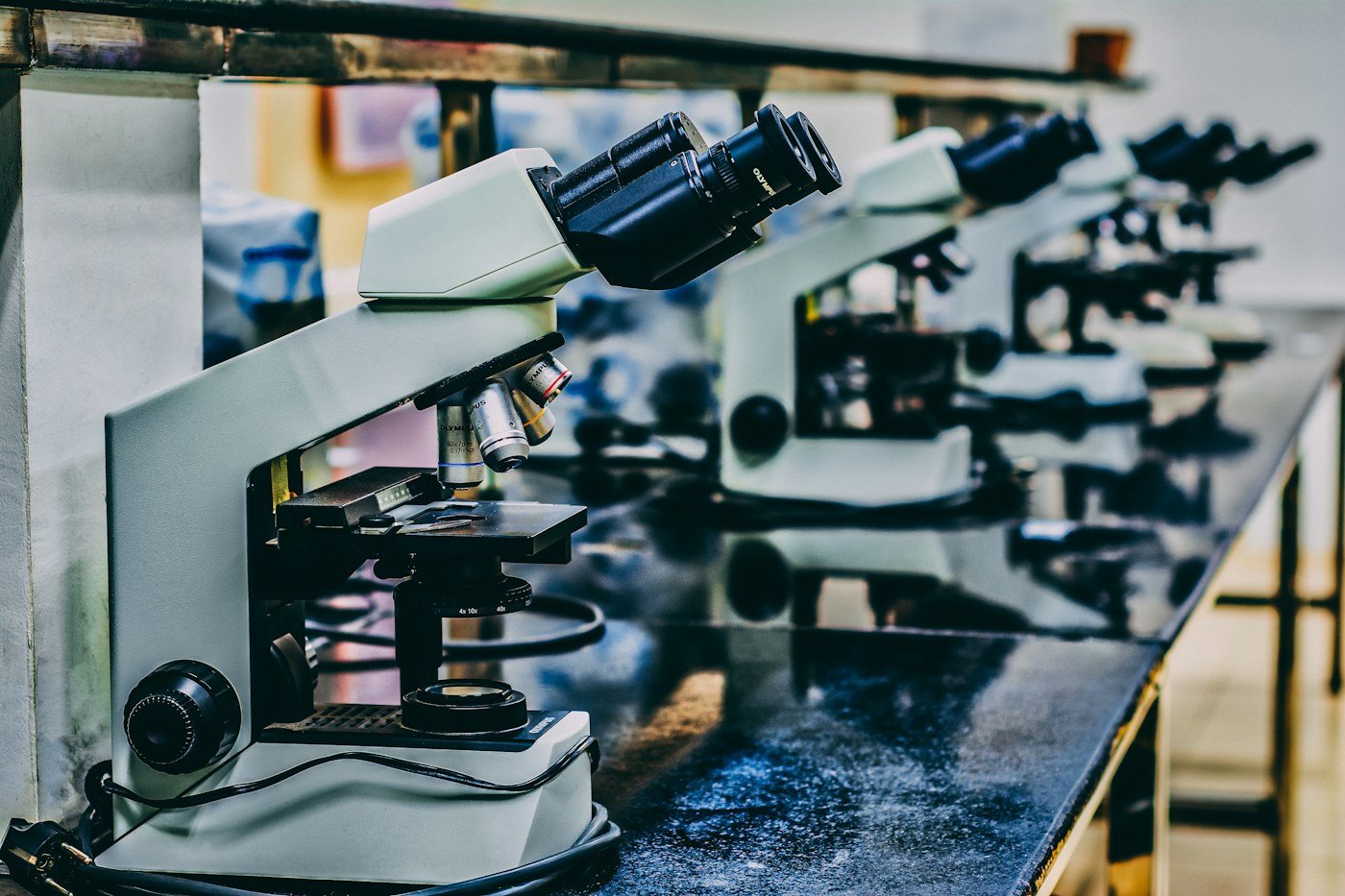
Featured image: Context photograph. Laboratory microscope used for biological research. Credit: Ousa Chea / Unsplash.
Leave a Reply