

Google plans to invest $15 billion in Malaysia during 2027 and 2028, expanding digital infrastructure with new data-centre campuses while funding water, clean-energy and skills initiatives. The announcement made on 4 November 2026 is far larger than the company’s original $2 billion Malaysian commitment and signals how quickly AI and cloud demand are reshaping Southeast Asian infrastructure.
The figure is a forward-looking investment plan, not money already spent or construction already completed. Google did not publish a full allocation among buildings, computing hardware, power, water and workforce programs, so the headline should not be treated as a direct measure of data-centre capacity.
The first Malaysian campus is now operating
Google broke ground at Elmina Business Park in Selangor in October 2024 as part of its first local data centre and cloud-region investment. At the time, the company estimated the project could support $3.2 billion in economic impact and 26,500 jobs by 2030. Those were modelled impacts, not guaranteed payroll positions.
Malaysia’s Bernama news agency quoted Alphabet and Google president Ruth Porat as saying the Elmina campus is fully operational and the new investment will add campuses in Selangor and Negeri Sembilan. Google projects that construction could contribute an average of $1.1 billion a year to gross domestic product and support more than 37,000 local jobs annually during the build-out. Those forecasts depend on project timing, local procurement and the modelling assumptions behind them.
Shared water infrastructure is part of the build
Days before the investment announcement, Google committed $160 million for an off-river storage reservoir and water-treatment plant in Negeri Sembilan. The planned plant is designed to deliver 65 million litres of potable water a day for both public supply and a future Google campus at Springhill Industrial Park in Port Dickson.
Building shared infrastructure can add community capacity, but scrutiny should follow the operating numbers. Data centres use water directly for some cooling systems and indirectly through electricity generation. The relevant questions are peak withdrawal, consumption rather than intake, drought operating rules, water quality and whether promised public capacity arrives before the campus demand.
Power procurement will determine much of the footprint
Google says the expansion includes clean-energy initiatives and links digital growth to new renewable-energy assets. Malaysia’s electricity mix and transmission constraints will determine whether new campuses add low-carbon generation or increase fossil-fuel output during tight periods. Annual renewable-energy matching can also obscure hourly gaps between a data centre’s load and clean supply.
A useful disclosure would identify contracted generation, additionality, grid-connection schedules and the campuses’ expected electricity demand. Efficiency metrics such as power-usage effectiveness matter, but even a highly efficient facility can be a very large absolute load.
The build-out has milestones, not a single completion date
Between the $15 billion plan, the operating Elmina site and the announced Port Dickson water project, Google’s Malaysia presence is moving from one campus to a network. Yet each facility still requires land, construction, grid connections, cooling infrastructure and operational commissioning. The 2027–28 spending window does not mean every campus will be fully operational by the end of 2028.
The expansion could deepen Malaysia’s cloud capacity, technical workforce and role in the regional digital economy. It will also test whether hyperscale growth can be coordinated with public utilities rather than simply competing for scarce power and water. The most meaningful evidence will be project-level capacity, resource use and community infrastructure delivered—not the aggregate investment number alone.
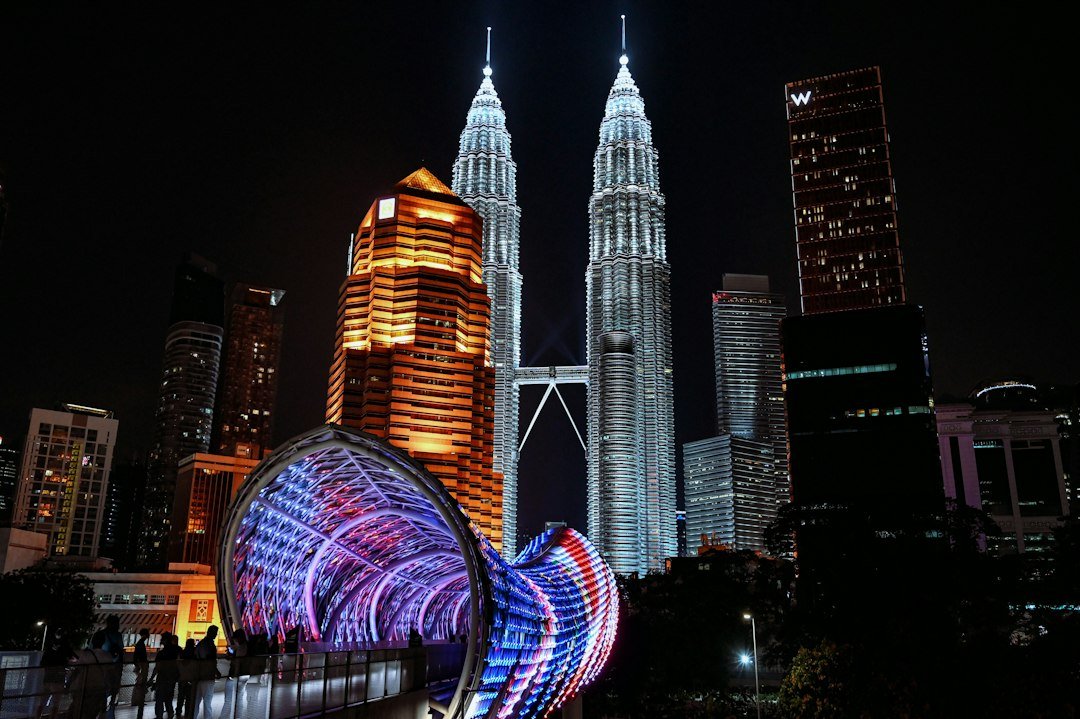
Featured image: The Kuala Lumpur skyline. Contextual image, not a Google data-centre campus. Photo: Ishan @seefromthesky/Unsplash.
Leave a Reply