
A quantum computer will need more than extraordinary quantum hardware. It will also need an ordinary computer fast enough to keep its mistakes under control. IonQ’s latest quantum error decoder result puts that supporting computer in the spotlight.
In a 22 September 2026 announcement, IonQ described an end-to-end decoding system running on a single conventional CPU. It tested the software against simulated workloads for a future fault-tolerant trapped-ion architecture. This is a benchmark of the correction machinery, not a demonstration that a physical quantum computer with hundreds of protected logical qubits is already operating.
Quantum hardware needs a fast interpreter
Physical qubits are the individual quantum information carriers. Logical qubits encode information across a protected arrangement of physical qubits. Error-correction checks produce signals that a classical decoder must interpret while the computation continues.
If that interpreter falls behind, a quantum machine can lose time waiting for decisions. Improving the quantum processor alone would therefore leave an important part of the system unfinished.
The research preprint by Min Ye, Andrii Maksymov and Nicolas Delfosse examines workloads reaching 408 logical qubits and up to one million T gates, a type of operation used in universal quantum computation. The paper was first submitted on 25 August and revised on 3 September. The later company announcement should not be confused with a new hardware launch.
The timing assumptions matter
The authors modelled a trapped-ion architecture with correction cycles lasting one to five milliseconds. Under their lower assumed gate-error rate, decoding extended the studied computations by less than 0.3%. Under a higher assumed error rate, that overhead stayed below 12%. Both are conditional benchmark results; neither is a promise that every future machine will achieve the same performance.
What makes the work interesting is the scope of the software pipeline. The researchers considered the flow of a computation, rather than treating stored quantum information as the only task that needs protection. The paper remains a preprint, and the decisive next test is how this approach behaves when integrated with real hardware and its particular imperfections.
A useful result without a quantum victory lap
Our assessment is that this is a systems-engineering story. A future quantum computer must move information between quantum operations, measurements and conventional control software without creating a queue that erases its advantage.
A compact classical decoder could simplify that design problem. It does not by itself establish a useful quantum advantage, a commercial timetable or the cost of building the underlying machine.
That is why this result belongs alongside developments such as software for logical quantum computing. Progress is increasingly about whether all the parts can work together. The CPU may be familiar; the job it is being asked to do is becoming much more demanding.
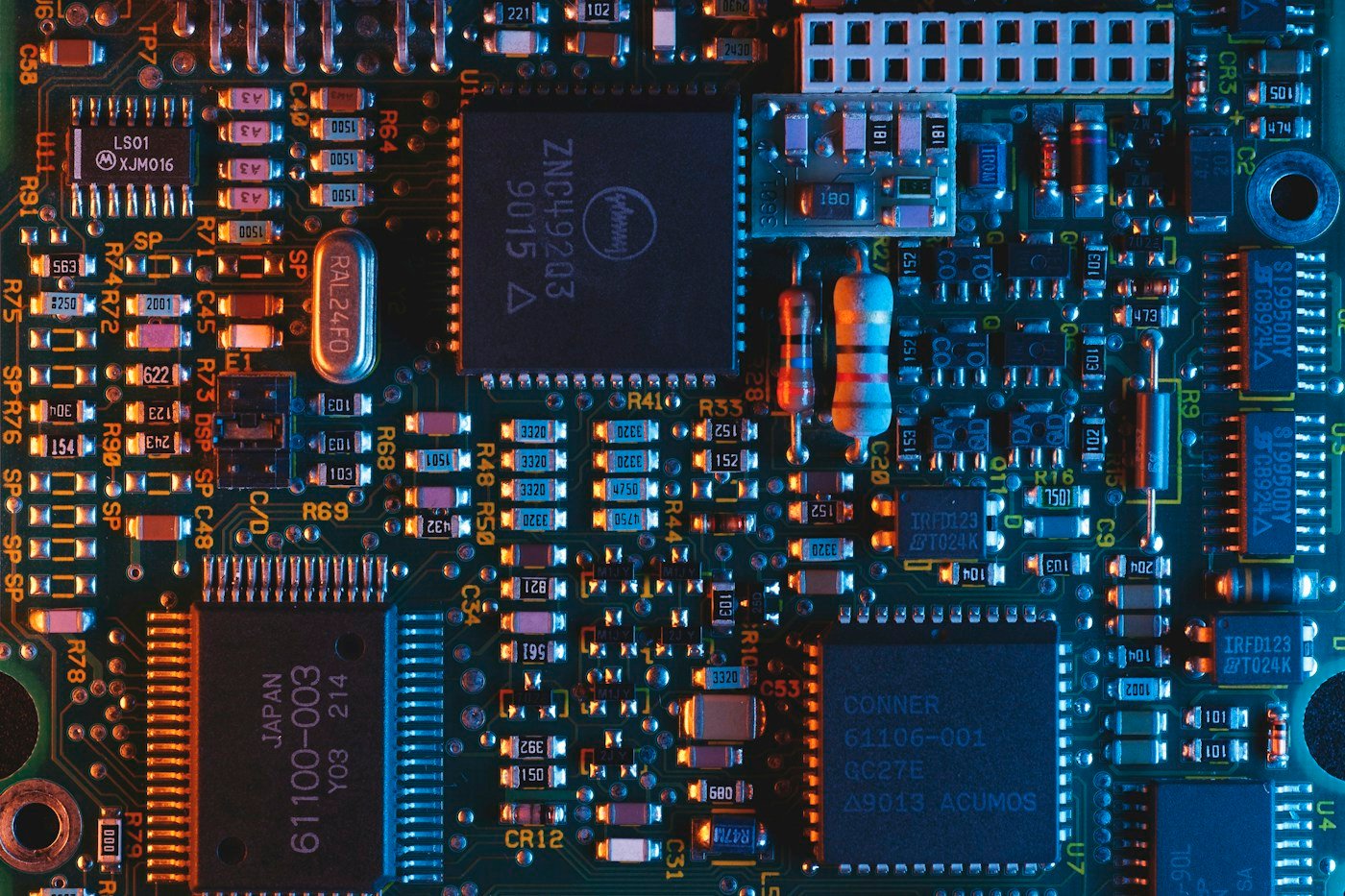
Featured image: Context photograph. Components on a conventional electronic circuit board. Credit: Umberto / Unsplash.
Leave a Reply