
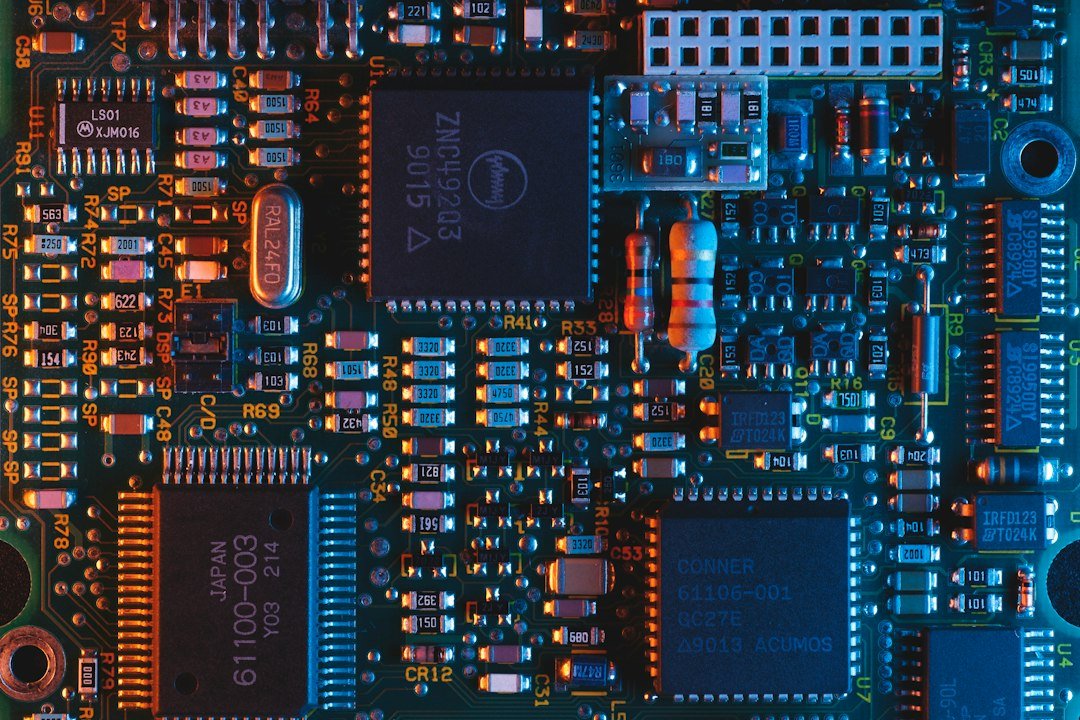
A powerful AI processor still needs somewhere to keep the data it is working on—and a fast way to retrieve it. That makes memory a central part of the computing system, rather than an accessory added after the headline chip.
Micron’s results released on 30 September 2026 show how large that business has become. For its fiscal fourth quarter, which ended on 3 September, the company reported US$54.23 billion in revenue, compared with US$11.32 billion a year earlier. It attributed its performance to AI-driven demand and execution. These are company-reported financial results, not a benchmark of AI intelligence. Micron’s results
Featured image: Umberto / Unsplash. Representative photograph; it does not depict the specific product, facility or project described.
Memory capacity and speed solve different problems
Capacity is how much data a memory system can hold. Bandwidth is how much it can move in a given time. A processor can have substantial calculating power and still wait for data if the surrounding memory cannot keep pace.
AI systems use several layers. High-bandwidth memory sits close to the computing chips; main system memory handles other work; storage retains much larger datasets. Each layer trades speed, capacity and cost differently. Micron describes this hierarchy in its technical overview of AI acceleration. Memory’s role in AI systems
The product milestones have different meanings
The latest release says Micron has begun sampling 512-gigabyte server memory modules, while its 7600 and 9650 solid-state drives are shipping to leading customers for AI key-value-cache applications. A sample lets customers evaluate a product; a shipment is a different commercial milestone. Product updates
A key-value cache stores intermediate information from an AI model’s processing, helping it reuse earlier work during an interaction. Memory and storage choices affect how much information can be retained and how quickly it can be accessed. Hugging Face’s technical explanation of caching
Forecasts still need to become results
Micron forecasts revenue of US$61.5 billion, plus or minus US$1.5 billion, for the following fiscal quarter. That guidance describes management’s expectation; it is not revenue already earned. Fiscal first-quarter outlook
The wider lesson is practical: AI capacity depends on a complete chain of components. Reported sales and product milestones provide evidence of that buildout, while delivery, qualification and real workload performance determine what the hardware ultimately enables.
Leave a Reply