
Making hydrogen is only part of the challenge. Moving it to where it is needed—and recovering it in a useful form—can be just as important.
Ammonia offers one route. Each molecule packages nitrogen with hydrogen, and it is easier to liquefy and transport than hydrogen itself. But getting that hydrogen back out requires another process, with its own equipment and energy demands. MIT’s research explanation
A new MIT study, published in Nature on 9 September 2026, addresses that recovery step. The researchers combined chemical catalysis with electrically assisted hydrogen extraction. This is a laboratory proof of concept, rather than an operating commercial plant. Peer-reviewed paper
Pulling hydrogen out helps the reaction continue
The device uses a palladium-based membrane, which selectively transports hydrogen, as part of an electrochemical cell. Put simply, it combines a selective barrier with an electrical push. Removing hydrogen as the reaction proceeds helps the feedstock release more of it.
The paper reports ammonia conversion of up to 91% at 250°C. In a separate hydrogen-separation experiment at 300°C, the approach increased the separation rate fourfold relative to a pressure-driven process under the reported conditions. Those numbers measure different parts of the experiment; they must not be combined into a claim of fourfold plant efficiency. Experimental results
The temperature matters because conventional ammonia cracking commonly operates above 500°C, according to MIT’s account. Its researchers describe a route that can perform the reaction and hydrogen separation together at milder temperatures. It still needs heat and electricity. Palladium cost and scaling the equipment remain practical challenges. MIT
The appealing part is the combination. A transport carrier is only useful if the energy can be released again without losing too much value along the way. Improving that final step could make some hydrogen supply chains more workable.
One better step does not settle the whole system
That possibility should not be mistaken for proof that ammonia is now the best choice for every energy application.
Our interpretation is that the eventual test must cover the complete journey: producing the hydrogen, making the carrier, transporting it, recovering the hydrogen and delivering it at the required purity and pressure. An improvement in one operation is valuable, but its significance depends on the costs and losses elsewhere.
The International Energy Agency’s 2025 review provides useful context. It described progress in low-emissions hydrogen investment while identifying cost uncertainty, infrastructure readiness and changing regulatory frameworks as obstacles to deployment. That report is background to the new experiment, not an endorsement of this particular device. IEA review
The environmental case likewise depends on how the original hydrogen and ammonia are produced and how the recovery system is powered. A carbon-free molecule does not, by itself, establish a low-emissions supply chain.
For this technology, the evidence to watch is durability, useful throughput, membrane economics and total energy consumption in a larger system. Those are the measurements that would connect an elegant laboratory result to practical energy infrastructure.
The study makes the hydrogen story more interesting by improving a specific, stubborn step. Its promise is a potentially better way to unpack a fuel after transport. A commercially persuasive result will show that the package remains worth sending.
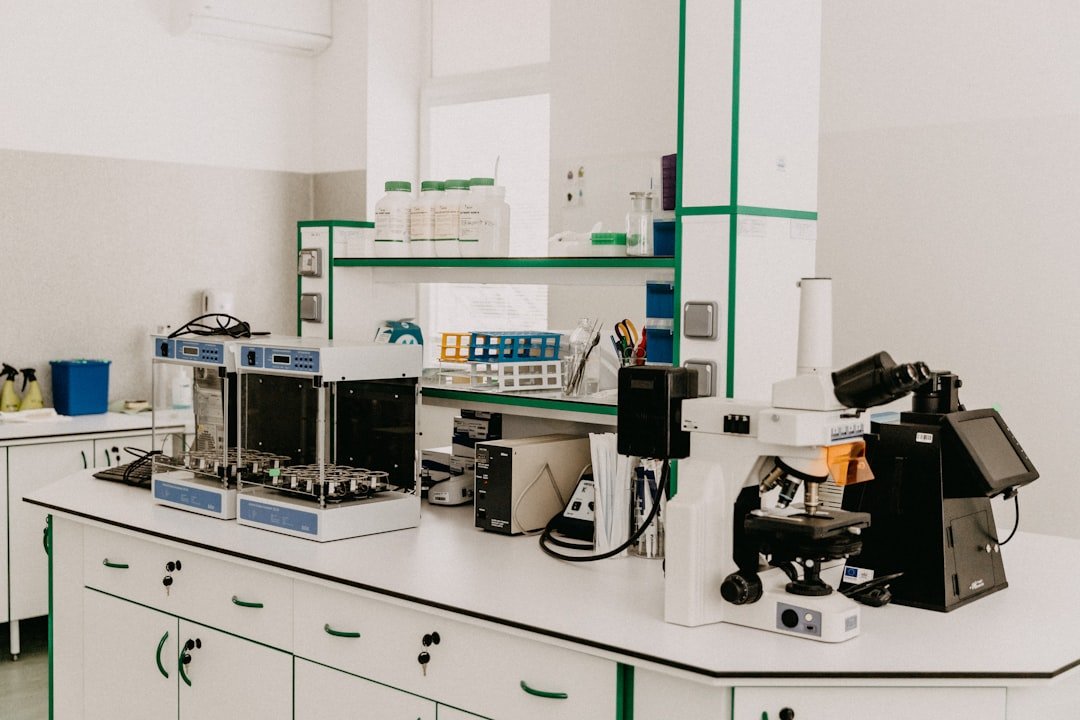
Featured image: Representative university laboratory equipment. Photo: Trnava University / Unsplash.
Leave a Reply