
Western Australia’s next energy story could involve the rocks beneath its feet. Researchers are investigating natural hydrogen produced when water reacts with iron-rich minerals—a route that could change where we look for useful fuel.
The attraction is obvious. A geological formation would become part of the production system. The challenge is equally important: demonstrating a reaction in a pressure vessel is a long way from running a dependable hydrogen business underground.
A small experiment with a large geological question
Edith Cowan University highlighted the research on 12 August 2026. The underlying paper, published in the International Journal of Hydrogen Energy on 24 March, compared two forms of magnetite: an intact piece and a fine powder. These were laboratory samples, not a newly producing hydrogen field. ECU’s research announcement; paper and publication record.
Both samples experienced the same conditions: alkaline water at pH 9, a temperature of 200°C, pressure of about 103 bar, and a 60-day reaction period. The powder produced roughly five times as much hydrogen per gram as the intact slab. That result makes surface access a central part of the story. Study abstract
A powder exposes many small surfaces to water. A solid piece leaves much of its interior harder to reach. The researchers also observed magnetite changing into hematite, another iron oxide. Layers formed during that process can restrict further reaction. More mineral in the ground therefore does not automatically mean proportionally more recoverable gas. Research findings
The cracks may be as important as the ore
ECU points to Western Australia’s extensive banded iron formations as a reason to investigate the idea. Its researchers emphasise fractures, pores and permeable pathways: places where water can reach fresh mineral surfaces. The useful question becomes a combination of chemistry and plumbing. ECU
Imagine two deposits with similar mineral content. If one lets water circulate through accessible surfaces while the other seals itself off, they could behave very differently. That is an implication of the experiment, not a claim that either deposit has already been identified and commercially tested.
What would turn a possibility into a resource
A convincing field programme would need to establish a sustained production rate, the energy required to operate it, the composition of the recovered gas and the cost of collecting it. Water use, drilling, leakage and transport would also belong in the assessment. The experiment does not provide a finished answer to those business and environmental questions.
It is also worth being precise about the word “natural”. It describes the geological source being investigated; it does not certify the climate impact of every possible extraction method. Those impacts would depend on the actual project.
The useful takeaway is a sharper exploration question. Instead of simply asking how much magnetite is present, researchers can ask how readily water reaches it and how long the reaction continues. Western Australia’s familiar iron-rich landscape has become a place to investigate a different kind of energy opportunity.
Related reading: MIT’s work on extracting hydrogen from ammonia explores another part of the hydrogen supply problem.
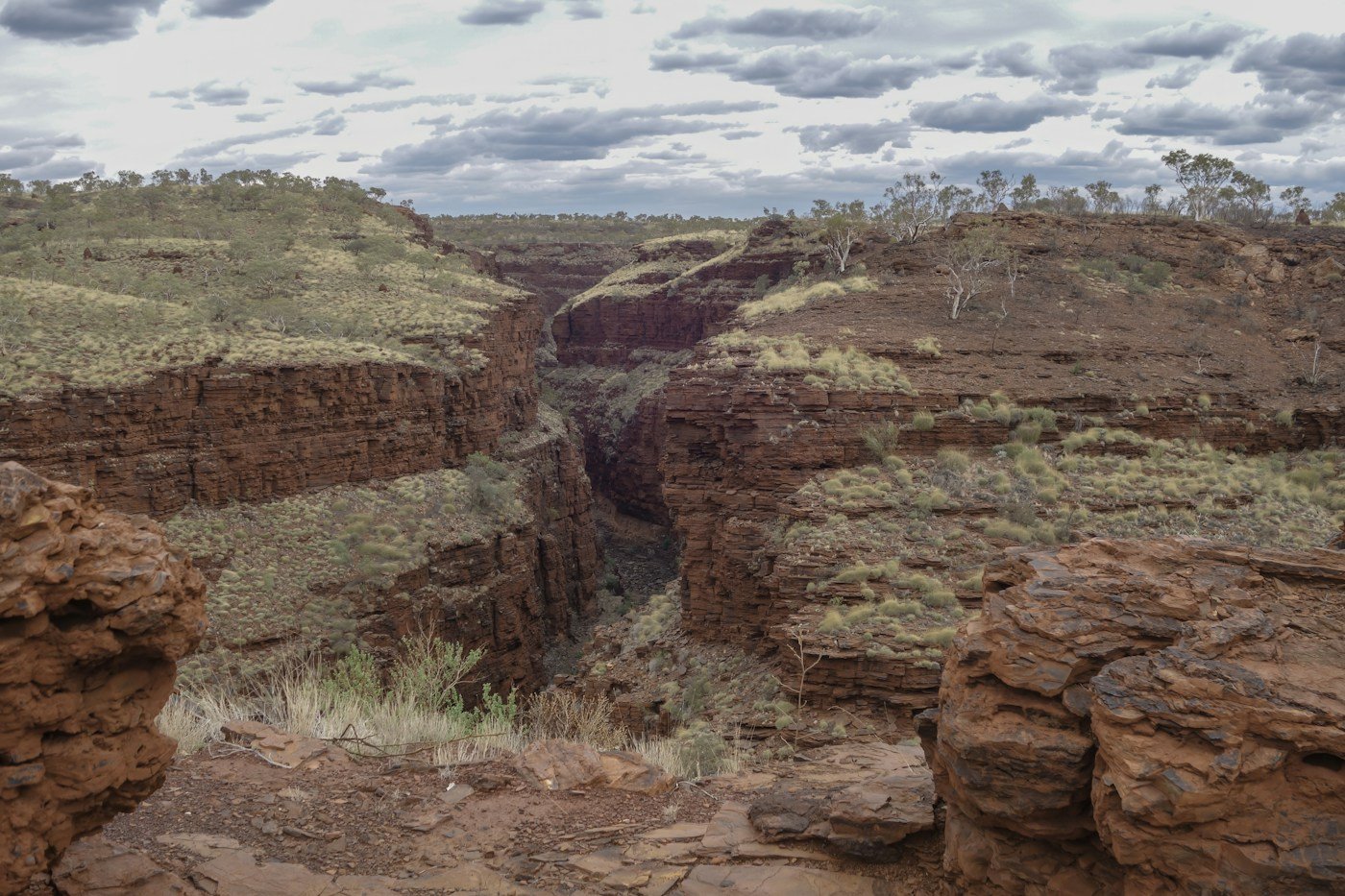
Featured photograph: representative red-rock landscape, not a photograph of the experimental site. snap wander / Unsplash.
Leave a Reply