
A mechanical neuron sounds like an idea from an earlier age of computing. MIT’s version is a nanoscale device whose movement helps it process signals and retain a short-lived memory of what happened before.
Described on 16 September 2026, the research uses a thin layer of soft polymer between metal electrodes. Voltage pulls the electrodes towards each other and compresses the material. Because it takes time to relax, the response depends on the history of the inputs. MIT News
A material that does some of the work
The key ingredient is viscoelasticity: the polymer has both spring-like and time-dependent behaviour. That lets the device accumulate stimulation and then produce a threshold response, resembling one aspect of a neuron’s firing. The soft spacer also helps prevent the closely spaced electrodes from sticking together permanently. The work appears in Science Advances. MIT’s explanation; research paper.
The word “neuron” should be read narrowly here. The demonstration imitates a useful signal-processing behaviour. It does not mean the chip has thoughts, awareness or the capabilities of a biological brain.

The opportunity is close to the sensor
MIT identifies possible uses in low-power sensing, wearables and smart prosthetics. These are prospective applications, not products launched with this paper. The attraction is to combine functions such as sensing, memory and processing within a compact physical device. Potential applications
Consider a touch sensor. A brief tap, sustained pressure and repeated contact are different events. A device whose current response depends on its recent inputs could offer a useful starting point for distinguishing them. That example illustrates the direction of the research; it is not a claim that the prototype has already passed a prosthetic-hand trial.
For a practical system, the surrounding electronics still matter. A component could be exceptionally economical on its own and lose much of that advantage if reading its state requires elaborate support hardware. Reliability over repeated use, consistent manufacturing and performance across operating conditions would all be meaningful tests.
A different question from building a faster GPU
This research invites a change in how we judge a computing device. Instead of asking only how fast it executes a general-purpose instruction, we can ask whether its physical behaviour performs a specific task efficiently. That is an engineering opportunity, not a reason to assume conventional processors will disappear.
The persuasive next step would be an end-to-end demonstration: connect an input, carry out a useful task, measure the full energy cost and compare it with an appropriate alternative. A working component and a better complete product are different milestones.
For now, the memorable idea is that memory need not always look like a separate storage block. In this mechanical neuron, the material’s recovery from a squeeze becomes part of the computation.
Related reading: the electrical challenge facing atomically thin transistors explores another approach to changing the building blocks of future chips.
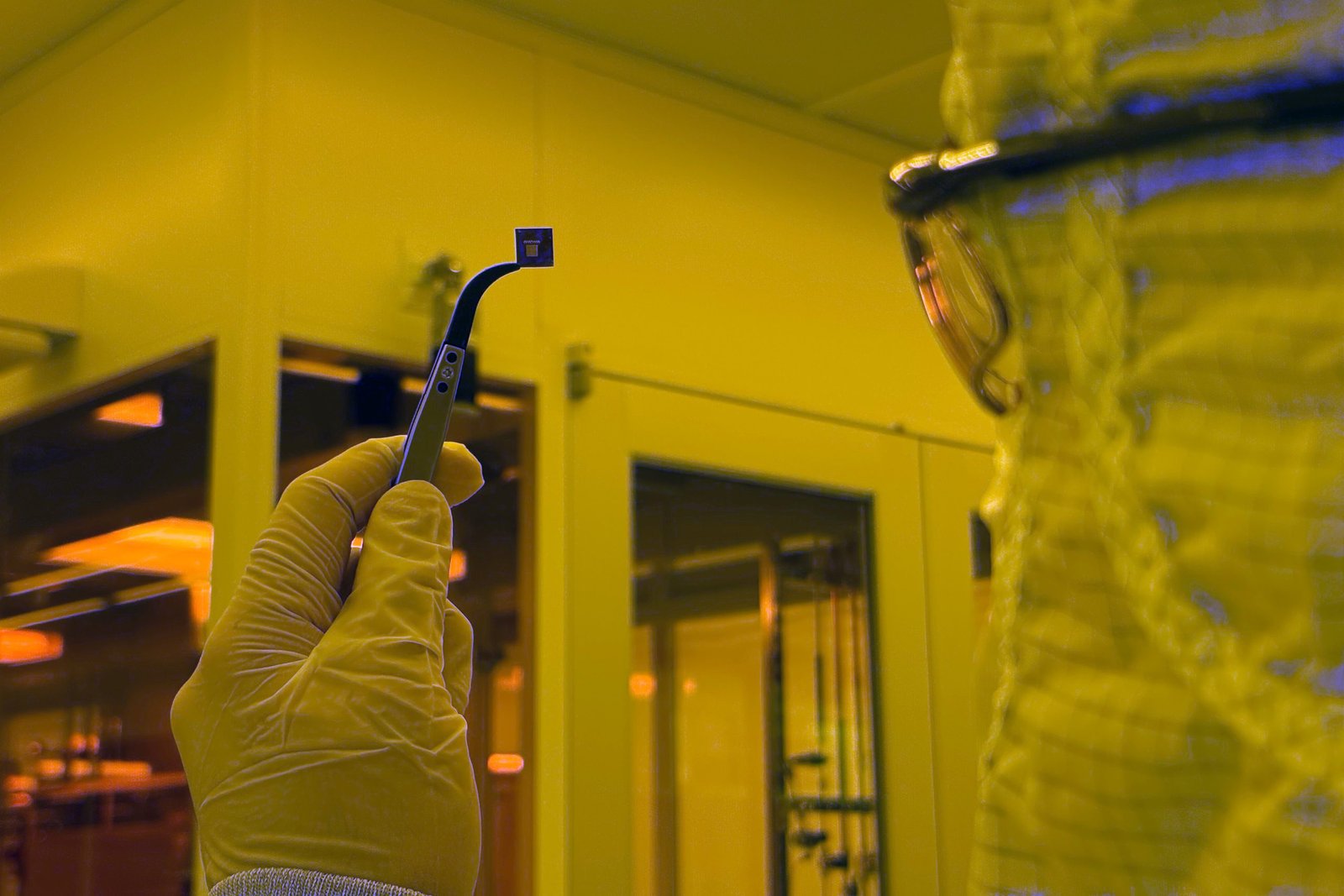
Featured photograph: a researcher holds the experimental chip. Image courtesy of the researchers / MIT News. Images reproduced with credit under the MIT News image-use terms.
Leave a Reply