
A battery headline becomes more interesting when it moves from a laboratory result to a claim about a running factory. ProLogium is making that claim for its latest generation of lithium ceramic cells.
In a 2 September 2026 announcement, the company said its Gen 3.5 battery was in mass production in Taiwan. It reported third-party TÜV measurements of 381 watt-hours per kilogram and 903 watt-hours per litre for a large-format cell. These are company-published descriptions of the test results. ProLogium’s announcement
The first number describes stored energy relative to weight. The second describes stored energy relative to volume. Improving both could give designers useful room to trade between size, weight and capacity.
One good cell does not equal a finished car
The scale becomes easier to understand with a calculation. At 381 Wh/kg, storing 75 kWh would require about 197 kilograms of cells, before adding the rest of a battery system. This is an illustrative calculation using the reported figure, not the specification of a real ProLogium vehicle pack.
A finished pack must also accommodate connections, protective structures, controls and any thermal-management equipment. The mass and volume of those parts affect what eventually reaches a vehicle.
Nor does an energy-density measurement establish useful lifetime, rapid-charging performance or the cost of manufacturing large numbers of consistent cells. Those are separate measures that customers will need to examine.
The company reports an all-solid-state classification under a specified testing standard. That does not establish every aspect of a finished pack’s safety or durability. ProLogium’s testing disclosure
The first useful markets may be broader than cars
A second announcement on 9 September points to another part of the commercial strategy. ProLogium said Kyushu Electric Power was moving forward with a strategic investment, building on an existing relationship. The companies are exploring battery-module manufacturing in Japan, including applications such as construction machinery. Partnership announcement
The announcement does not establish that those proposed manufacturing arrangements are already operating. It does show that the discussion extends beyond passenger-car range claims.
That broader approach makes sense as a commercial possibility. Different customers value different combinations of weight, space, power and price. A battery can find a useful role in a specialised application before it becomes economical for a mass-market car.
Watch deliveries as closely as demonstrations
Our assessment is that the next persuasive evidence will be less glamorous than another energy-density record: sustained output, named applications, repeat orders and performance over prolonged use.
Production announcements deserve scrutiny, but they also shift the discussion towards those practical questions. A promising technology becomes much more consequential when it can be manufactured consistently and integrated into products that people rely on.
For now, ProLogium has put a specific cell-performance claim beside a specific production claim. The opportunity is substantial. Proving how much of that promise survives in a complete, competitive battery system is the next part of the story.
Related reading: Why solid-state batteries take so long to reach cars.
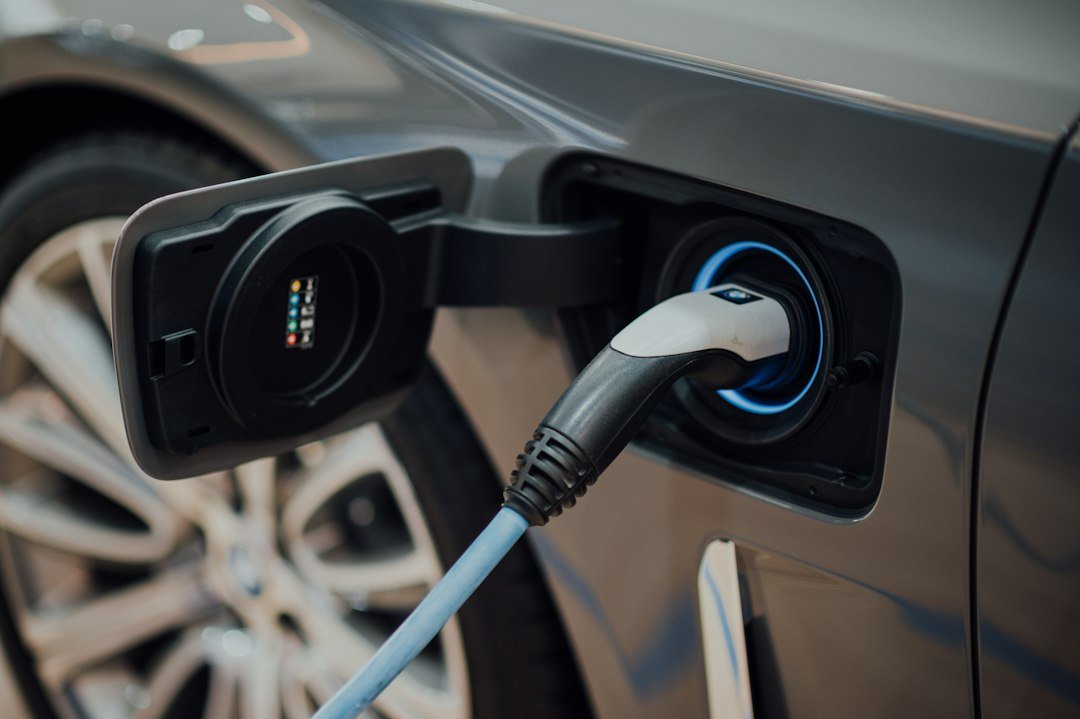
Electric-vehicle charging, shown for context. The photograph does not depict a vehicle fitted with ProLogium’s new cells. Photo: CHUTTERSNAP / Unsplash.
Leave a Reply