

AI can suggest a promising molecule. A laboratory still has to establish what that molecule actually does. Roche’s latest research strategy brings those two activities closer together.
At its Pharma Day in London on 28 September 2026, Roche devoted a research session to its “Lab in a Loop” approach. Genentech research leader Aviv Regev said the company had begun building autonomous AI-driven laboratories. This was an investor presentation about research capabilities and plans, rather than the approval of an AI-designed medicine. Roche event and presentation; Presentation transcript
A prediction returns to the bench
The general idea is a repeated cycle: a model proposes candidates, laboratory equipment performs experiments, and the results inform the next round of predictions. The physical experiment provides a check on the computer’s expectations.
Making that work requires more than a robotic arm. Instrument results need to remain linked to the correct samples, experiment conditions and analyses. Laboratory-software supplier Benchling describes these data connections in its own May 2026 explanation of automated research workflows. That source illustrates the wider approach; it is not evidence that Roche uses a particular Benchling installation. Background on connected laboratory workflows
AI is entering research decisions
Regev also described Target Nexus, an agent system that draws on tools, models, datasets and internal research history to assess potential drug targets. A target is a biological component or process that a treatment aims to influence.
Roche said it was on track for that system to contribute to 80% of research portfolio decisions by the end of 2026. This is a company target for participation in decisions, not a claim that AI independently makes them or that 80% of resulting drugs will succeed. Target Nexus discussion
Clinical evidence remains the deciding test
During questions, Regev emphasised that confidence in novel targets ultimately depends on clinical results. Faster discovery work cannot establish patient benefit on its own. Discussion of clinical validation
Our assessment is that the most revealing future measures would connect these workflows to reproducible experimental results and useful clinical candidates. Counting predictions or automated experiments alone would leave much of the scientific question unanswered.
The significance of Roche’s plan is the attempt to make computation and laboratory learning part of one repeatable process. Whether it produces better medicines will be judged by the evidence that emerges from that process.
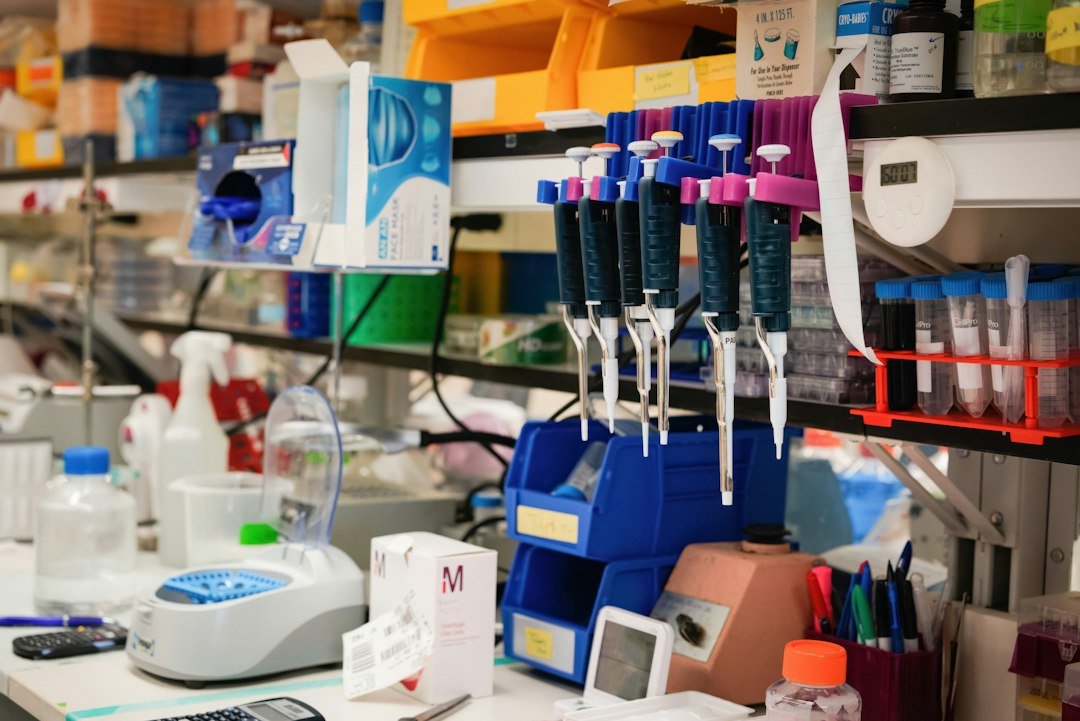
Featured image: representative photograph by Testalize.me / Unsplash. Images illustrate the subject and do not show the specific project or experimental equipment described.
Leave a Reply