
A future antibiotic might defeat bacteria by damaging the boundary that holds them together. Researchers are exploring antimicrobial polymers: long molecular chains designed to disrupt bacterial membranes.
Stanford highlighted a new AI-assisted study on 21 September 2026 in which researchers identified and tested promising candidates against E. coli. This is experimental laboratory work. It does not establish that a new antibiotic is safe or effective in patients. Stanford’s research announcement describes the findings.
An AI search that learned from disagreement
The team considered a library of 1.7 million potential polymers. Because polymer-specific data were limited, the model learned from information about antimicrobial peptides, small protein-like molecules, before applying that knowledge to a different molecular class.
Rather than initially selecting only candidates the models agreed were good, the researchers made and tested 20 disputed candidates. Feeding those results back improved the search. A subsequent set of 10 selected polymers showed strong antimicrobial activity in laboratory testing, with one attracting particular interest for activity against biofilms, communities of bacteria that can be difficult to eliminate.
The research appeared in Matter; the research group’s publication list links the paper and its earlier preprint. A university announcement is useful context, but the experiment remains the relevant unit of evidence.
Why a different mechanism attracts attention
Antimicrobial resistance occurs when microbes stop responding adequately to medicines used against them. It is the microbe that becomes resistant, rather than the patient’s body becoming accustomed to treatment.
The World Health Organization identifies both inappropriate antimicrobial use and inadequate access to diagnostics, medicines, sanitation and infection prevention as contributors to the problem. New drugs are one part of the response, alongside making existing care work better. WHO’s overview explains the wider challenge.
A material that damages a bacterial membrane offers a different approach from targeting a single internal protein. That is a reason to investigate it, not a guarantee that resistance can never evolve. Any claim of permanent resistance-proof protection would go beyond these results.
The gap between a promising material and a medicine
Killing bacteria in a controlled experiment answers an important question, but it leaves many others. A candidate must reach the infection, remain active under real biological conditions and avoid unacceptable harm. Its effects on human cells and beneficial microbes matter alongside its antibacterial potency.
Researchers would also need to establish suitable delivery, dosing, manufacturing consistency and a defensible path into clinical evaluation. Desirable properties in an early screen should not be turned into blanket claims about safety or low cost.
The broader lesson is about the way AI can help science. A useful model can identify which experiment would teach the team most, then be revised when reality disagrees. That is a more informative milestone than a computer merely generating a long list of plausible molecules.
As with new tools for evaluating drug candidates, better discovery methods should ultimately be judged by the quality of the evidence they produce. These antimicrobial polymers are candidates worth investigating, with the decisive work still ahead.
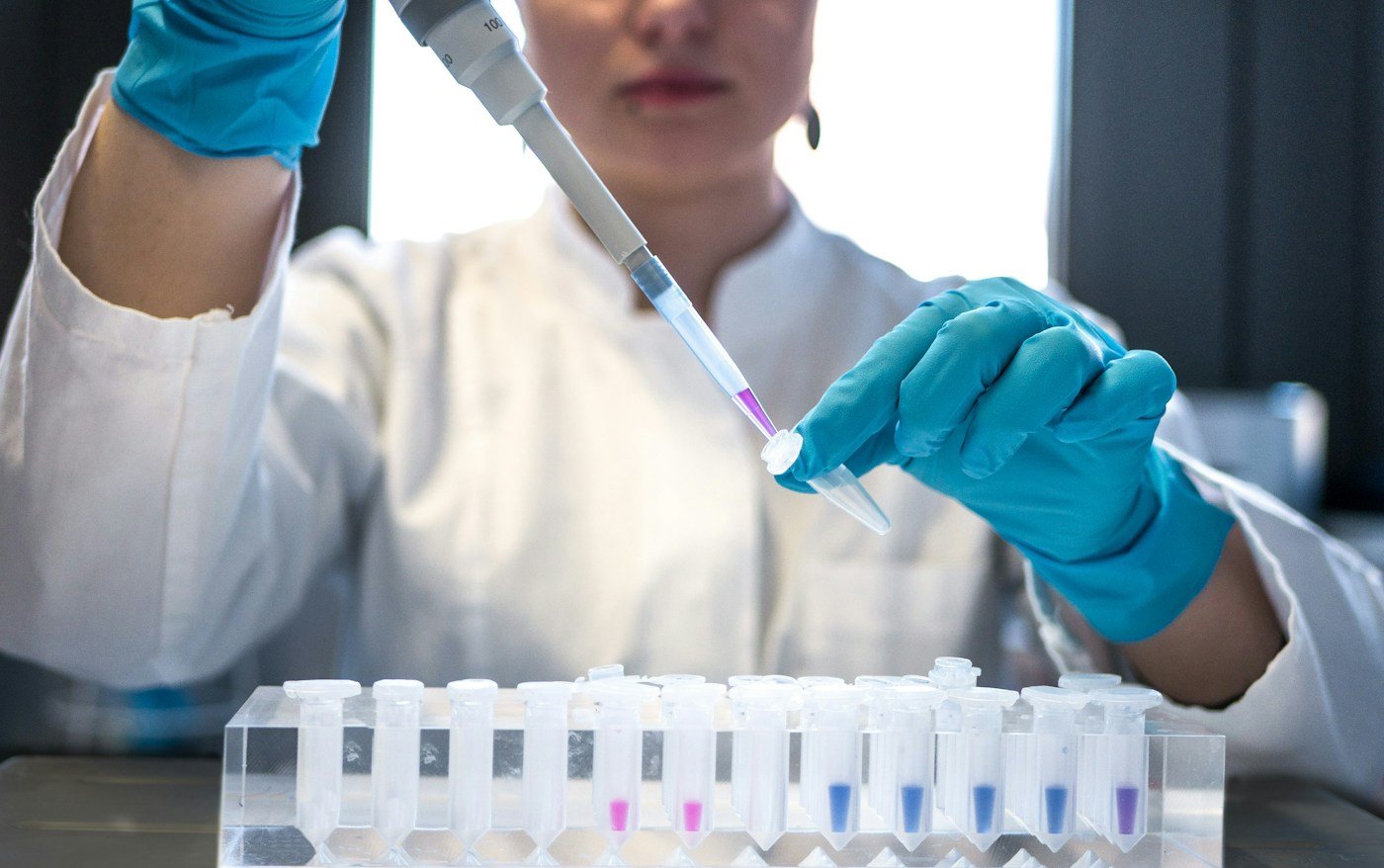
Featured image: representative photograph. Scientist pipetting in a laboratory, a representative research photograph. Credit: Julia Koblitz / Unsplash.
Leave a Reply