
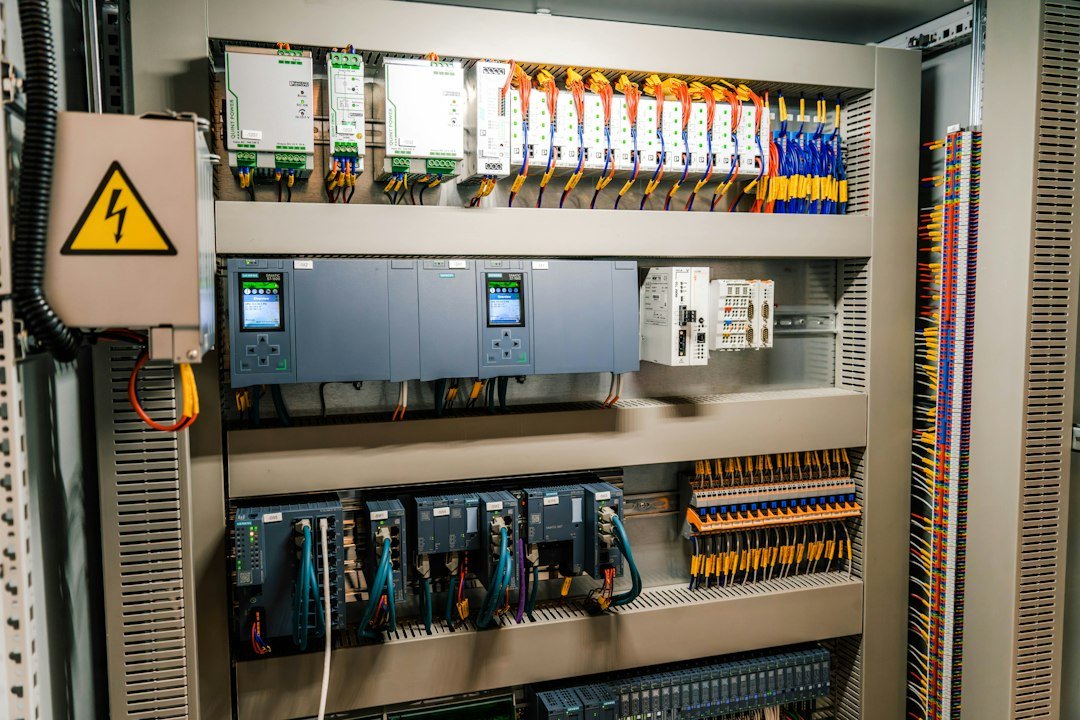
The AI infrastructure race is colliding with a slower system: electricity grids planned years in advance. That mismatch is pushing data-centre developers towards on-site fuel cells—not necessarily because they are the cheapest or cleanest option, but because they can sometimes be installed before a large grid connection is ready.
Reuters reported on 23 October 2026 that US hyperscalers are accelerating fuel-cell procurement as grid interconnections can take three to six years. Rystad Energy projects investment in data-centre fuel cells could climb from $2.8 billion in 2025 to about $30 billion by 2030.
Electricity without combustion inside the stack
A fuel cell converts the chemical energy of a fuel and oxygen directly into electricity through an electrochemical reaction. Solid-oxide fuel cells can run continuously and occupy less land than many renewable projects, making them attractive for power-dense campuses.
But “fuel cell” does not automatically mean zero carbon. Many planned systems will initially run on natural gas. They avoid combustion inside the stack and can reduce some local air pollutants compared with conventional generators, yet reforming and using natural gas still produces carbon dioxide, while upstream methane leakage adds climate impact. Hydrogen compatibility only becomes a low-carbon advantage if clean hydrogen is available at scale.
The order pipeline is large—and not all firm
Oracle’s relationship with Bloom Energy illustrates the scale. An expanded agreement announced in April says Oracle intends to procure up to 2.8 GW of Bloom systems, with 1.2 GW contracted. The separate Project Jupiter plan in New Mexico calls for up to 2.45 GW of installed fuel-cell capacity.
Rystad estimates that industry orders and framework agreements total about 9 GW across customers including Oracle, AEP, Equinix and Brookfield. Framework agreements express a route to future purchases; they should not be counted as guaranteed installations for the full headline capacity.
Bloom told Reuters that it delivered power to an Oracle site in Utah in less than two months and obtained planning-board approval for a Nebius project in New Jersey within three months of signing. Those examples demonstrate speed at particular sites, not a universal construction timetable.
The shortcut still has bottlenecks
Fuel-cell stacks may be modular, but a large campus still needs land, permits, gas or hydrogen connections, transformers, switchgear and skilled construction. Local air permits can matter when natural gas is the fuel. At hundreds of megawatts, site readiness and supporting infrastructure may dominate the schedule.
Manufacturing is another constraint. Rystad expects annual industry capacity to rise from roughly 1.8 GW now to 4 GW in 2030. That is rapid growth, but it remains small beside the power ambitions announced for AI campuses. Suppliers must also prove reliability, maintenance economics and competitive delivered electricity costs over years of operation.
Firm power changes the environmental comparison
Data centres value electricity that is available every second, not only low annual emissions. Fuel cells can supply steady output on site, while wind and solar usually need storage, transmission or grid backup to provide the same service. A fair comparison therefore has to include the complete system that delivers firm power, as well as fuel and equipment emissions.
That does not make natural-gas fuel cells inherently clean. It means the alternative being displaced matters: a diesel-backed delayed grid connection, a new gas turbine, or a renewables-and-storage portfolio can each produce a different result. Developers should disclose fuel assumptions, lifecycle emissions and water use rather than relying on the phrase “hydrogen-ready”.
The trend is commercially significant, not a verdict that data centres have solved their energy problem. Fuel cells can bypass part of the grid queue; they cannot bypass fuel supply, equipment factories, permitting or the carbon consequences of the molecules flowing into them.
Leave a Reply