
A powerful biological instruction is useful only if it reaches a place where it can act. That delivery problem sits behind much of the promise of RNA medicine. MIT’s latest work on automated lipid nanoparticles focuses on the tiny packages used to carry those instructions.
On 25 September, MIT described a system that produces lipid nanoparticles, measures their size and adjusts the manufacturing conditions. The work, published as “Autonomous Lipid Nanoparticle Engineering” in ACS Nano, concerns a research and production method. It does not establish a new therapy or a benefit in patients.
A manufacturing setting becomes an experimental tool
The approach builds on a two-stage mixing method. Changing the delay before a second mixing step gives researchers control over particle growth. The new work automates that process and uses light-scattering measurements to check the resulting sizes, then adjust the settings.
MIT also reports experiments on particle shape and a machine-learning model trained to predict useful production conditions. One limit is especially relevant: shape measurements still take place outside the automated system. The machine does not independently complete every part of characterisation.
The researchers are pursuing commercialisation through BIZON Labs. That is an intended route out of the laboratory, rather than evidence that the method has already become routine pharmaceutical manufacturing.
More controlled comparisons could be the real payoff
Our assessment is that the most interesting opportunity is experimental discipline. Imagine comparing a series of delivery particles while trying to understand whether one physical characteristic affects their behaviour. If several characteristics vary at once, interpreting the result becomes harder.
A more controllable production process could help a research team construct cleaner comparisons. Faster preparation could also make it practical to investigate an unpromising result instead of discarding it after a single attempt.
Those are potential research advantages. They would still need to be demonstrated for the particular formulations and biological experiments a team wants to run. A machine that reliably reaches a target size has completed a different task from showing that the resulting carrier reaches the intended cells.
The next test is the complete workflow
For an outside laboratory, a persuasive evaluation would compare the total work required: preparing materials, operating the system, checking the particles and repeating experiments. It should include unsuccessful runs and the time needed to investigate them, as well as the best examples.
For eventual manufacturing, further questions would include reproducibility between batches, scale, documentation and how the process behaves when ingredients or operating conditions change. None can be answered simply by attaching the word autonomous to a machine.
The same principle applies to the AI component. A prediction is most useful when a new experiment confirms it, including cases beyond the examples used to build the model. The valuable loop is a measured result that improves the next decision.
MIT’s work offers a way to investigate RNA delivery more systematically. The near-term prize is better experimental capability; any claim about a safer or more effective medicine would require its own evidence.
Related reading: the growing role of human-cell testing and organ chips in drug research.
Sources
- MIT: automated lipid nanoparticle engineering, 25 September 2026
- ACS Nano: Autonomous Lipid Nanoparticle Engineering, DOI 10.1021/acsnano.6c15600
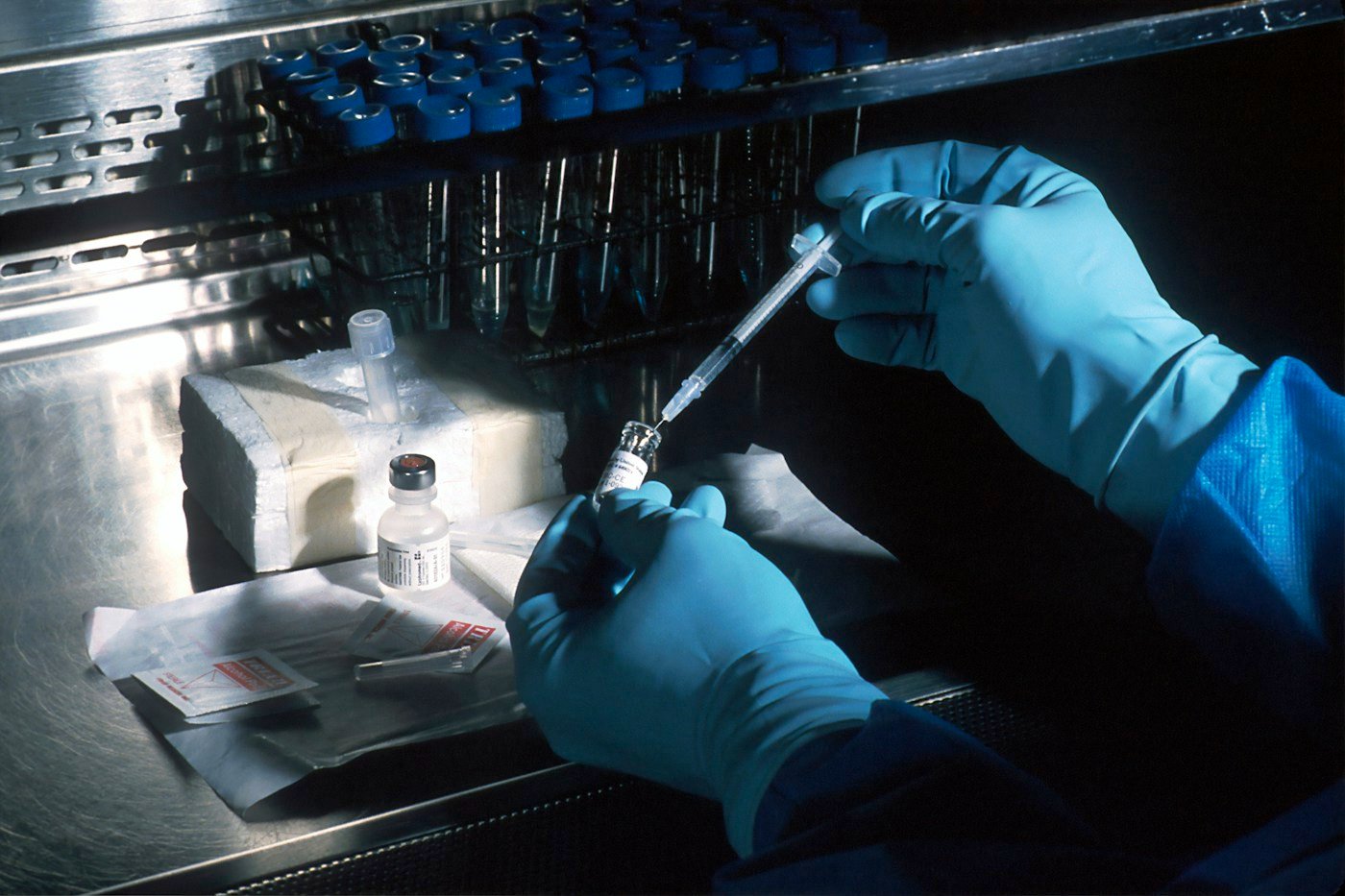
Featured image: Archival laboratory research photograph; it does not show MIT’s new nanoparticle system. Credit: National Cancer Institute.
Leave a Reply