
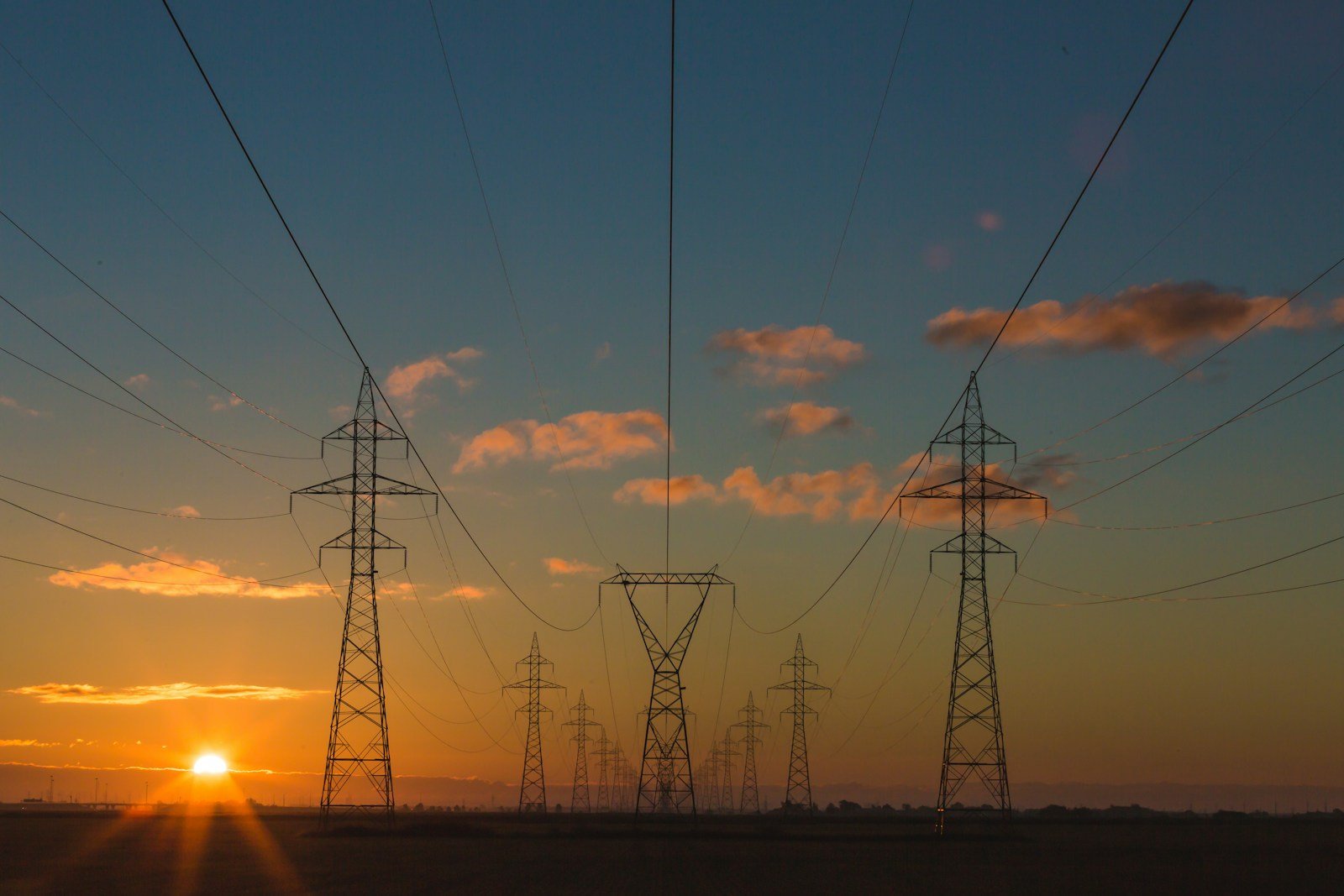
Featured image: Representative electricity infrastructure. Photo: Matthew Henry / Unsplash.
SB Energy’s AI data-centre plans show why the next chapter of artificial intelligence will not be written entirely in software. Some of it will be poured in concrete, connected through substations and negotiated years before a computer switches on.
SB Energy’s proposed stock-market debut offers a revealing example. On 15 September 2026, Reuters reported that the SoftBank-backed developer plans to offer up to US$500 million in new shares to Japanese investors as part of its US initial public offering. The proceeds would support work on data centres, power generation and related infrastructure. This is a financing plan—not US$500 million of completed facilities. Reuters reporting
For readers following the AI race, the interesting question is not what the shares might be worth. It is why a company combining power development with data-centre construction has become part of that race at all.
SB Energy’s power-and-computing plan
SB Energy describes itself as an integrated infrastructure business: it develops, builds and owns power and data-centre projects. Its current website lists roughly 5 gigawatts of power projects operating or under construction, alongside three AI data centres under construction. Those descriptions matter. The power figure combines two different stages, and the construction count is not a count of operating AI campuses. SB Energy company overview
A gigawatt is 1,000 megawatts—a measure of power, not the amount of electricity produced over a year. Nor does a gigawatt of generation automatically equal a gigawatt available to computers at every moment.
The distinction is easy to lose when enormous capacity numbers appear in headlines. A proposed site, a building under construction and a facility serving customers are three different achievements.
SB Energy’s data-centre page, for example, lists a roughly 750-megawatt Milam site as under construction. Other entries describe total site capacity. These are useful indications of scale, but they should not be read as evidence that the full listed capacity is already running. SB Energy project descriptions
OpenAI’s involvement goes beyond a logo
The relationship with OpenAI predates the latest fundraising news. In a 9 January 2026 announcement, SB Energy said OpenAI and SoftBank would each invest US$500 million in the business. It also announced an agreement for SB Energy to build and operate a Milam County data-centre site for OpenAI. January partnership announcement
The companies described a non-exclusive collaboration combining OpenAI’s data-centre designs with SB Energy’s construction and energy-development capabilities. Put simply, the aim is to coordinate the building and its power requirements instead of treating them as separate problems.
There is an important reporting wrinkle: January’s announcement described a 1.2-gigawatt Milam site, while SB Energy’s current project page lists approximately 750 megawatts. The pages do not explain that difference. It would be premature to call it a confirmed cut, assume the figures measure the same thing, or present either as delivered capacity. January announcement and current project page
The IPO is only the beginning
An initial public offering, or IPO, is a company’s first public share offering. It can raise capital; it does not certify that construction targets will be met.
SoftBank’s 2 September announcement confirmed that SB Energy had filed its US registration statement the previous day and applied to list under the symbol SBE. At that announcement, the share count and price range had not been determined, and completion remained conditional. The September 15 news adds a proposed Japanese allocation—not proof that the entire offering has closed. SoftBank’s filing announcement
The construction challenge also runs through NEXTDC’s Australian data-centre expansion. The practical test will come after the financial headlines: which facilities enter service, how much usable capacity they deliver, and whether their power arrangements perform as intended.
Our reading is that SB Energy illustrates a broader shift in the AI story. Access to advanced chips matters, but so does the ability to turn a development plan into a powered, working building. Bringing those tasks together could help. It does not remove the execution risk.
The AI boom may look weightless on a phone screen. Behind it sits an increasingly physical business—and the next meaningful milestone is electricity reaching machines, not another ambitious number on a presentation.
Leave a Reply